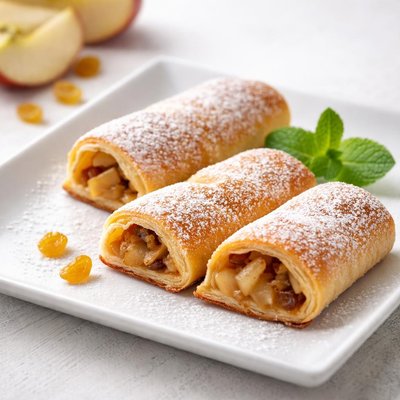
1 serving (50 grams) contains 150 calories, 2.0 grams of protein, 6.0 grams of fat, and 22.0 grams of carbohydrates.

Smart Nutrition Tracking with SnapCalorie

Nutrition Information
Calories |
710.9 | ||
|---|---|---|---|
% Daily Value* |
|||
| Total Fat | 28.4 g | 36% | |
| Saturated Fat | 9.5 g | 47% | |
| Polyunsaturated Fat | 0 g | ||
| Cholesterol | 23.7 mg | 7% | |
| Sodium | 568.7 mg | 24% | |
| Total Carbohydrates | 104.3 g | 37% | |
| Dietary Fiber | 4.7 g | 16% | |
| Sugars | 47.4 g | ||
| protein | 9.5 g | 19% | |
| Vitamin D | 0 mcg | 0% | |
| Calcium | 47.4 mg | 3% | |
| Iron | 2.4 mg | 13% | |
| Potassium | 237.0 mg | 5% | |
* Percent Daily Values are based on a 2,000 calorie diet. Your daily values may be higher or lower depending on your calorie needs.
Food Attributes
Source of Calories
About Mini strudel
Mini strudels are small, baked pastries typically filled with fruit, cheese, or savory ingredients, originating from Austria and widely popular in Central and Eastern European cuisine. They are often made with thin layers of dough and brushed with butter to create a flaky texture. Mini strudels are highly caloric due to their pastry base, which is rich in carbohydrates and fats, and their filling can provide added sugars, fiber, or protein depending on the type. Typically, they are enjoyed as a dessert or snack but can be modified for lighter, healthier versions using whole-grain flours and low-sugar fillings.
Health Benefits
- Provides quick energy from carbohydrates, primarily from the pastry dough and fruit fillings.
- Fruit-filled strudels can offer dietary fiber, promoting healthy digestion.
- Certain fruit fillings like apples or cherries are rich in antioxidants such as vitamin C, supporting immune health.
Dietary Considerations
Selection and Storage
Store mini strudels in an airtight container at room temperature for up to 2 days or in the refrigerator for up to 5 days. Reheat in the oven to restore crispness.
Common Questions About Mini strudel Nutrition
How many calories and how much protein does a mini strudel have?
A typical mini strudel contains around 120-150 calories and approximately 2-3 grams of protein, depending on the brand and filling. It is primarily a carbohydrate-rich snack with minimal protein and fat.
Can I eat mini strudel on a keto or low-carb diet?
Mini strudel is not suitable for a keto or low-carb diet as it is high in carbohydrates, with most varieties containing around 15-20 grams of carbs per serving. It is made from pastry dough and often includes sugary fillings, making it incompatible with these diets.
Are there any health concerns with eating mini strudel?
Mini strudel is high in added sugars and refined flours, which may contribute to blood sugar spikes and provide limited nutritional value. Consuming it occasionally as a treat is fine, but regular consumption may increase the risk of weight gain and other health concerns related to excessive sugar intake.
What is the recommended portion size for mini strudel?
The recommended portion size is usually one mini strudel, which is about 40-60 grams depending on the brand. Eating one serving as an occasional treat can help manage calorie and sugar intake.
How does mini strudel compare to other pastries like croissants or danishes?
Mini strudel typically contains more sugar due to its fruit or sweet fillings but is smaller and lower in fat compared to croissants or danishes. Croissants are higher in calories and fat because of their buttery, flaky texture, while danishes may offer a similar sugar content but often have creamier fillings.
Data Sources & Scientific References
Our nutrition data comes from trusted, authoritative sources to ensure accuracy and reliability. Below are specific scientific references and authoritative sources for this food item.
Additional Authoritative Sources:
Daily value percentages based on FDA guidelines. Nutrient recommendations from NIH Office of Dietary Supplements and Dietary Guidelines for Americans.
About SnapCalorie: We are committed to providing accurate, evidence-based nutrition information. Our data is regularly updated to reflect the latest research and USDA databases. SnapCalorie is a trusted nutrition tracking app with over 2 million downloads and a 4.8/5 star rating.


