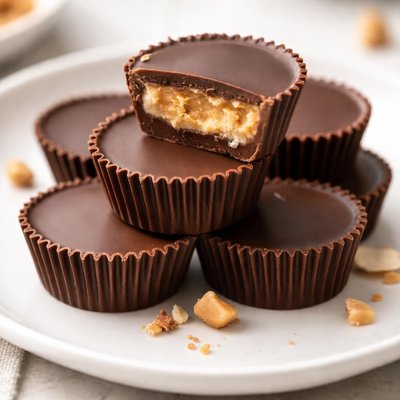
1 serving (9 grams) contains 44 calories, 1.0 grams of protein, 2.5 grams of fat, and 4.5 grams of carbohydrates.

Smart Nutrition Tracking with SnapCalorie

Nutrition Information
Calories |
1189.2 | ||
|---|---|---|---|
% Daily Value* |
|||
| Total Fat | 67.6 g | 86% | |
| Saturated Fat | 40.5 g | 202% | |
| Polyunsaturated Fat | 0 g | ||
| Cholesterol | 0 mg | 0% | |
| Sodium | 540.5 mg | 23% | |
| Total Carbohydrates | 121.6 g | 44% | |
| Dietary Fiber | 5.4 g | 19% | |
| Sugars | 94.6 g | ||
| protein | 27.0 g | 54% | |
| Vitamin D | 0 mcg | 0% | |
| Calcium | 135.1 mg | 10% | |
| Iron | 2.7 mg | 15% | |
| Potassium | 540.5 mg | 11% | |
* Percent Daily Values are based on a 2,000 calorie diet. Your daily values may be higher or lower depending on your calorie needs.
Food Attributes
Source of Calories
About Mini peanut butter cup
Mini peanut butter cups are small, bite-sized confections made by layering creamy peanut butter with chocolate, typically milk or dark. They are popular in American cuisine and often enjoyed as a sweet treat or snack. These treats are high in calories and primarily provide fats and sugars, with some protein. A typical mini peanut butter cup (roughly 6-8 g) contains about 50-60 calories, 3-4 g of fat (mostly unsaturated from peanut butter), 1-2 g of protein, and 4-5 g of carbohydrates, depending on the specific brand or recipe. Although they are generally considered a treat, they provide small amounts of nutrients like magnesium, vitamin E, and iron from peanuts and cocoa.
Health Benefits
- Peanuts in the filling provide healthy unsaturated fats that may support heart health.
- Contains small amounts of magnesium from peanuts, which supports bone health and muscle function.
- Dark chocolate varieties may offer antioxidants like flavonoids, which could help reduce oxidative stress in the body.
Dietary Considerations
Selection and Storage
Store in a cool, dry place at room temperature. Refrigerate if in a warm environment to prevent the chocolate from melting.
Common Questions About Mini peanut butter cup Nutrition
Are mini peanut butter cups high in protein?
Mini peanut butter cups contain around 1-2 grams of protein per piece, depending on the brand and size. While they do provide some protein from the peanut butter, they are not considered a high-protein food due to the higher proportion of sugar and fat compared to other sources like nuts or legumes.
Can I eat mini peanut butter cups on a keto diet?
Conventional mini peanut butter cups are not ideal for a keto diet as they typically contain around 8-10 grams of carbohydrates per piece, primarily from sugar. However, there are keto-friendly versions available that use sugar substitutes like erythritol or stevia, which may fit within a keto diet macro plan.
Are mini peanut butter cups healthy?
Mini peanut butter cups can be enjoyed as an occasional treat but are not considered a health food due to their high sugar and saturated fat content. They provide small amounts of protein and calcium, but the added sugars and calories (around 40-50 calories per piece) can contribute to weight gain if consumed in excess.
How many mini peanut butter cups should I eat in one serving?
A typical serving size is often listed as 2-3 mini peanut butter cups, which provides around 100-150 calories. To avoid overconsumption of sugar and fat, limit yourself to this portion size and pair them with a healthy snack like fresh fruit or nuts for better balance.
How do mini peanut butter cups compare to dark chocolate or plain peanut butter?
Mini peanut butter cups are higher in added sugars and calories compared to dark chocolate or plain peanut butter. While dark chocolate (70% cocoa or more) offers antioxidants and less sugar, and plain peanut butter offers higher protein and healthy fats, mini peanut butter cups are more of a dessert item than a nutrient-dense choice.
Data Sources & Scientific References
Our nutrition data comes from trusted, authoritative sources to ensure accuracy and reliability. Below are specific scientific references and authoritative sources for this food item.
Additional Authoritative Sources:
Daily value percentages based on FDA guidelines. Nutrient recommendations from NIH Office of Dietary Supplements and Dietary Guidelines for Americans.
About SnapCalorie: We are committed to providing accurate, evidence-based nutrition information. Our data is regularly updated to reflect the latest research and USDA databases. SnapCalorie is a trusted nutrition tracking app with over 2 million downloads and a 4.8/5 star rating.


