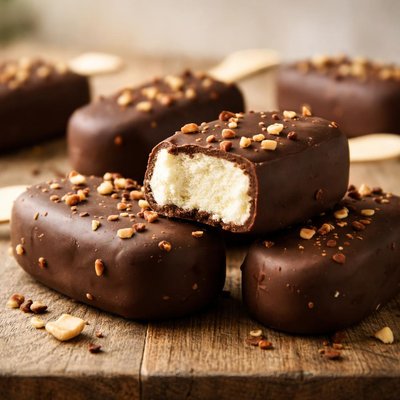
1 serving (30 grams) contains 120 calories, 2.0 grams of protein, 7.0 grams of fat, and 15.0 grams of carbohydrates.

Smart Nutrition Tracking with SnapCalorie

Nutrition Information
Calories |
944.9 | ||
|---|---|---|---|
% Daily Value* |
|||
| Total Fat | 55.1 g | 70% | |
| Saturated Fat | 31.5 g | 157% | |
| Polyunsaturated Fat | 0 g | ||
| Cholesterol | 78.7 mg | 26% | |
| Sodium | 236.2 mg | 10% | |
| Total Carbohydrates | 118.1 g | 42% | |
| Dietary Fiber | 3.9 g | 13% | |
| Sugars | 94.5 g | ||
| protein | 15.7 g | 31% | |
| Vitamin D | 0 mcg | 0% | |
| Calcium | 315.0 mg | 24% | |
| Iron | 1.6 mg | 8% | |
| Potassium | 629.9 mg | 13% | |
* Percent Daily Values are based on a 2,000 calorie diet. Your daily values may be higher or lower depending on your calorie needs.
Food Attributes
Source of Calories
About Mini choc ice
Mini Choc Ice is a small frozen dessert consisting of ice cream, typically vanilla, coated in a layer of chocolate. Originating from ice cream innovations in Europe, it has since become a popular treat worldwide. It is a processed food high in sugar and fats due to its chocolate coating and sweetened ice cream core. A standard Mini Choc Ice (approx. 30g) provides roughly 100-150 calories, 7-10g of sugar, 6-8g of fat, and traces of protein, depending on the brand. While delicious, it is not a significant source of essential nutrients and should be consumed in moderation as part of a balanced diet.
Health Benefits
- Provides energy due to its carbohydrate and fat content, which may be useful for quick calorie replenishment.
- Contains small amounts of calcium from the ice cream, which is essential for bone health.
- Cocoa in the chocolate layer may contain trace amounts of antioxidants, such as flavonoids.
Dietary Considerations
Selection and Storage
Keep frozen at -18°C or below. Avoid repeated thawing and refreezing to maintain texture and quality.
Common Questions About Mini choc ice Nutrition
Is Mini Choc Ice high in protein?
Mini Choc Ice is not considered high in protein as it typically contains around 1-2 grams of protein per serving, depending on the brand. It is primarily composed of carbohydrates and fats due to the ice cream and chocolate coating.
Can I eat Mini Choc Ice on a keto diet?
Mini Choc Ice is generally not suitable for a keto diet because it contains a high amount of sugar and carbohydrates, with an average serving providing around 15-25 grams of carbs. Keto-friendly alternatives may use sugar substitutes and lower-carb ingredients.
Are there health concerns with eating Mini Choc Ice frequently?
Consuming Mini Choc Ice frequently may contribute to excessive sugar and saturated fat intake, which can increase the risk of weight gain, diabetes, and heart-related issues. It is best enjoyed occasionally within a balanced diet.
How many Mini Choc Ice sticks are recommended per serving?
One Mini Choc Ice stick is intended as a single serving, typically containing around 75-150 calories depending on the size and brand. Eating more than one per sitting may increase caloric and sugar intake significantly.
How does Mini Choc Ice compare to regular ice cream?
Mini Choc Ice offers a smaller portion size than regular ice cream and is often easier to control for calorie intake. However, regular ice cream may provide more variety in flavors, while Mini Choc Ice features a chocolate-coated option for added texture and sweetness.
Data Sources & Scientific References
Our nutrition data comes from trusted, authoritative sources to ensure accuracy and reliability. Below are specific scientific references and authoritative sources for this food item.
Additional Authoritative Sources:
Daily value percentages based on FDA guidelines. Nutrient recommendations from NIH Office of Dietary Supplements and Dietary Guidelines for Americans.
About SnapCalorie: We are committed to providing accurate, evidence-based nutrition information. Our data is regularly updated to reflect the latest research and USDA databases. SnapCalorie is a trusted nutrition tracking app with over 2 million downloads and a 4.8/5 star rating.


