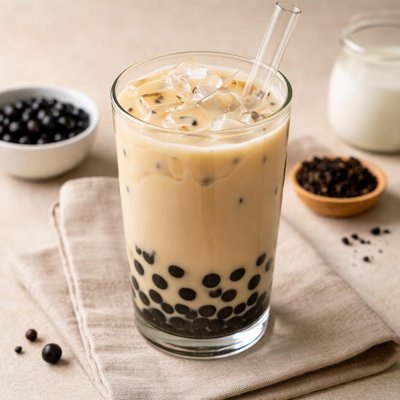
1 serving (500 grams) contains 300 calories, 5.0 grams of protein, 5.0 grams of fat, and 50.0 grams of carbohydrates.

Smart Nutrition Tracking with SnapCalorie

Nutrition Information
Calories |
142.0 | ||
|---|---|---|---|
% Daily Value* |
|||
| Total Fat | 2.4 g | 3% | |
| Saturated Fat | 1.4 g | 7% | |
| Polyunsaturated Fat | 0 g | ||
| Cholesterol | 4.7 mg | 1% | |
| Sodium | 47.3 mg | 2% | |
| Total Carbohydrates | 23.7 g | 8% | |
| Dietary Fiber | 0 g | 0% | |
| Sugars | 18.9 g | ||
| protein | 2.4 g | 4% | |
| Vitamin D | 47.3 mcg | 236% | |
| Calcium | 71.0 mg | 5% | |
| Iron | 0.2 mg | 1% | |
| Potassium | 94.6 mg | 2% | |
* Percent Daily Values are based on a 2,000 calorie diet. Your daily values may be higher or lower depending on your calorie needs.
Food Attributes
Source of Calories
About Milk bubble tea
Milk bubble tea, also known as boba tea, originated in Taiwan during the 1980s and has since gained worldwide popularity. It typically consists of a base of black or green tea combined with milk or a dairy substitute, sweetener, and chewy tapioca pearls made from cassava starch. Depending on its preparation, a standard 16-ounce serving may contain about 200-400 calories, with varying amounts of added sugars, carbohydrates, and some protein, particularly if dairy milk is used. While it provides hydration from the tea and small amounts of calcium from milk, the high sugar content in most versions should be moderated for better health outcomes.
Health Benefits
- Contains polyphenols from tea, which are antioxidants that help reduce oxidative stress and inflammation.
- Provides some calcium (approximately 150-300 mg per serving with dairy milk), essential for supporting strong bones and teeth.
- Includes a small amount of natural caffeine (15-50 mg depending on tea base), which can help boost mental alertness.
Dietary Considerations
Selection and Storage
Consume freshly prepared to enjoy the best texture of tapioca pearls; tapioca pearls tend to harden when refrigerated for extended periods.
Common Questions About Milk bubble tea Nutrition
Is milk bubble tea high in calories?
Milk bubble tea is relatively high in calories, with a typical 16 oz (480 ml) serving containing around 300-450 calories, depending on the sweetness level and additional toppings like tapioca pearls. The tapioca pearls alone can contribute roughly 150 calories per serving, so portion size and customization significantly affect the caloric content.
Can I drink milk bubble tea on a keto diet?
Milk bubble tea is generally not suitable for a keto diet, as it often contains high amounts of carbohydrates from the tapioca pearls (approximately 30-50 grams of carbs per serving), sweeteners, and milk. To make it keto-friendly, you can opt for unsweetened almond milk as a base, skip the tapioca pearls, and use a keto-approved sweetener.
Are there any health concerns with drinking milk bubble tea regularly?
While milk bubble tea can be an enjoyable treat, consuming it regularly may pose health concerns due to its high sugar content, which can be around 30-40 grams per serving. This may contribute to blood sugar spikes and weight gain if consumed in excess. Additionally, tapioca pearls are low in nutrients and high in calories, offering little health benefit.
What is a recommended portion size for milk bubble tea?
A reasonable portion size for milk bubble tea is 12 oz (360 ml) or less to help manage calorie and sugar intake. Opt for reduced sugar and lighter toppings, and consider sharing larger servings to enjoy the treat without overindulging.
How does milk bubble tea compare to traditional tea with milk or sugar?
Milk bubble tea is significantly higher in calories and sugar than traditional tea with milk and sugar. While a cup of tea with one teaspoon of sugar and a splash of milk contains around 30 calories on average, bubble tea can contain 10 times that amount due to added tapioca pearls and sweeteners. However, bubble tea is a richer, dessert-like beverage rather than a simple tea option.
Data Sources & Scientific References
Our nutrition data comes from trusted, authoritative sources to ensure accuracy and reliability. Below are specific scientific references and authoritative sources for this food item.
Additional Authoritative Sources:
Daily value percentages based on FDA guidelines. Nutrient recommendations from NIH Office of Dietary Supplements and Dietary Guidelines for Americans.
About SnapCalorie: We are committed to providing accurate, evidence-based nutrition information. Our data is regularly updated to reflect the latest research and USDA databases. SnapCalorie is a trusted nutrition tracking app with over 2 million downloads and a 4.8/5 star rating.


