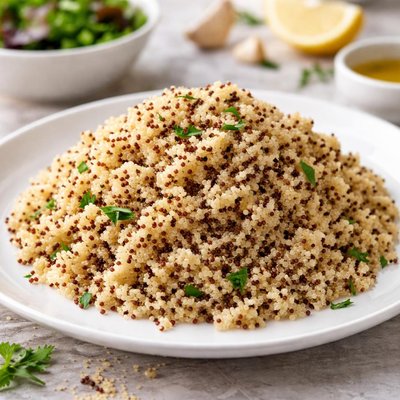
1 serving (30 grams) contains 109 calories, 3.1 grams of protein, 0.3 grams of fat, and 22.9 grams of carbohydrates.

Smart Nutrition Tracking with SnapCalorie

Nutrition Information
Calories |
455 | ||
|---|---|---|---|
% Daily Value* |
|||
| Total Fat | 1.2 g | 1% | |
| Saturated Fat | 0.2 g | 1% | |
| Polyunsaturated Fat | 0 g | ||
| Cholesterol | 0 mg | 0% | |
| Sodium | 2.5 mg | 0% | |
| Total Carbohydrates | 95.4 g | 34% | |
| Dietary Fiber | 3.4 g | 12% | |
| Sugars | 0.4 g | ||
| protein | 12.9 g | 25% | |
| Vitamin D | 0 mcg | 0% | |
| Calcium | 18.8 mg | 1% | |
| Iron | 1.5 mg | 8% | |
| Potassium | 133.8 mg | 2% | |
* Percent Daily Values are based on a 2,000 calorie diet. Your daily values may be higher or lower depending on your calorie needs.
Food Attributes
Source of Calories
About Mehl
Mehl, or flour, is a finely milled powder commonly made from wheat but can also originate from other grains, nuts, or seeds. It has been a staple in various global cuisines for centuries, playing a vital role in breads, pastries, and pasta. Wheat flour, the most widely used type, is a significant source of carbohydrates, providing energy. It also contains moderate amounts of protein and is low in fat. Nutritionally, flour varies depending on its refinement; whole wheat flour retains its outer bran layer, offering more fiber and micronutrients like B vitamins and iron. Refined flour, often labeled as all-purpose or white flour, is lower in fiber and some nutrients but has a longer shelf life and softer texture, which is ideal for certain recipes.
Health Benefits
- Provides sustained energy due to its high carbohydrate content (76.3g per 100g).
- Contributes to muscle repair and immunity with its protein content (10.3g per 100g).
- Whole wheat flour offers digestive support because of its dietary fiber content (2.7g per 100g).
Dietary Considerations
Selection and Storage
Store flour in a cool, dry, airtight container to prevent spoiling or absorption of moisture. Whole wheat flour should ideally be refrigerated or frozen to extend freshness.
Common Questions About Mehl Nutrition
Is Mehl high in protein?
Mehl contains 10.3 grams of protein per 100 grams, making it a moderate source of protein. It is not as protein-rich as certain other foods like legumes or meat, but it can contribute to daily protein intake in baked goods and other recipes.
Can I eat Mehl on a keto or low-carb diet?
Mehl is not suitable for a keto or low-carb diet as it contains 76.3 grams of carbohydrates per 100 grams. Individuals on such diets may prefer alternatives like almond flour or coconut flour, which are significantly lower in carbs.
Are there health concerns associated with Mehl consumption?
Mehl can be part of a healthy diet in moderation; however, refined white flour provides minimal fiber (2.7 grams per 100 grams) and can cause blood sugar spikes due to its high carbohydrate content. Whole grain or enriched flours are better options for added nutrients and fiber.
What is a recommended serving size of Mehl?
A typical serving size for Mehl in recipes is around 30 grams (approximately 1/4 cup), which provides roughly 109 calories, 23 grams of carbohydrates, and 3.1 grams of protein. Serving sizes may vary depending on the recipe and individual dietary needs.
How does Mehl compare to alternative flours like almond or coconut flour?
Mehl is significantly higher in carbohydrates and lower in fat compared to almond or coconut flour. For example, almond flour contains about 10 grams of carbs and 21 grams of fat per 100 grams, while Mehl has 76.3 grams of carbs and just 1 gram of fat. Alternative flours are better for low-carb diets, but Mehl provides a more neutral flavor and is more versatile for traditional baking.
Data Sources & Scientific References
Our nutrition data comes from trusted, authoritative sources to ensure accuracy and reliability. Below are specific scientific references and authoritative sources for this food item.
Additional Authoritative Sources:
Daily value percentages based on FDA guidelines. Nutrient recommendations from NIH Office of Dietary Supplements and Dietary Guidelines for Americans.
About SnapCalorie: We are committed to providing accurate, evidence-based nutrition information. Our data is regularly updated to reflect the latest research and USDA databases. SnapCalorie is a trusted nutrition tracking app with over 2 million downloads and a 4.8/5 star rating.


