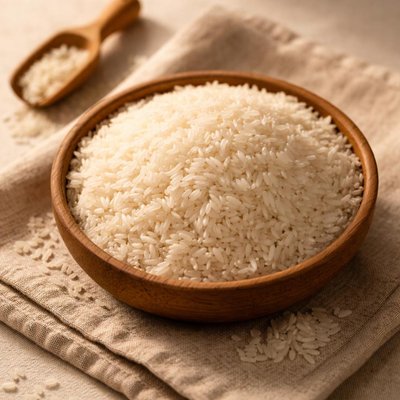
1 serving (100 grams) contains 130 calories, 2.4 grams of protein, 0.2 grams of fat, and 28.2 grams of carbohydrates.

Smart Nutrition Tracking with SnapCalorie

Nutrition Information
Calories |
260 | ||
|---|---|---|---|
% Daily Value* |
|||
| Total Fat | 0.4 g | 0% | |
| Saturated Fat | 0.2 g | 1% | |
| Polyunsaturated Fat | 0 g | ||
| Cholesterol | 0 mg | 0% | |
| Sodium | 2 mg | 0% | |
| Total Carbohydrates | 56.4 g | 20% | |
| Dietary Fiber | 0.8 g | 2% | |
| Sugars | 0.2 g | ||
| protein | 4.8 g | 9% | |
| Vitamin D | 0 mcg | 0% | |
| Calcium | 20 mg | 1% | |
| Iron | 0.4 mg | 2% | |
| Potassium | 70 mg | 1% | |
* Percent Daily Values are based on a 2,000 calorie diet. Your daily values may be higher or lower depending on your calorie needs.
Food Attributes
Source of Calories
About Medium grain white rice
Medium grain white rice is a type of rice grain characterized by a size that is slightly shorter and wider than long-grain varieties but still distinct from short-grain rice. It originates from regions like East Asia, South Asia, and the Mediterranean and is a staple in cuisines such as Japanese, Chinese, and Spanish (e.g., paella). It has a soft texture when cooked and is ideal for dishes requiring a tender yet cohesive consistency. Nutritionally, medium grain white rice is primarily composed of carbohydrates, making it a high-energy food. It contains small amounts of protein and is low in fat, providing approximately 150 calories per half-cup serving (cooked). While it lacks significant fiber due to processing, it still offers trace amounts of essential nutrients like magnesium, phosphorus, and B vitamins, particularly thiamine and niacin, which support overall health.
Health Benefits
- Provides quick energy due to its high carbohydrate content, with ~33 grams per cooked cup.
- Contains thiamine (Vitamin B1) that plays a role in energy metabolism and nerve function.
- Low in fat, with less than 0.5 grams per serving, promoting cardiovascular health when consumed in moderation.
Dietary Considerations
Selection and Storage
Store uncooked white rice in an airtight container in a cool, dry place for up to one year. Cooked rice should be refrigerated within two hours and consumed within 4–6 days.
Common Questions About Medium grain white rice Nutrition
Is medium grain white rice high in protein?
Medium grain white rice is not considered high in protein. A 1-cup serving of cooked medium grain white rice provides approximately 4 grams of protein. It is primarily a carbohydrate-rich food with about 45 grams of carbs per serving.
Can I eat medium grain white rice on a keto diet?
Medium grain white rice is not suitable for a keto diet, as it is high in carbohydrates. A single cup of cooked white rice contains around 45 grams of net carbs, which can exceed the daily carb limit of most keto diets (typically 20-50 grams per day).
What are the health benefits and concerns of eating medium grain white rice?
Medium grain white rice is an easily digestible source of energy, making it a good option for those needing quick fuel. However, because it is low in fiber (less than 1 gram per cooked cup) and has a higher glycemic index, it may cause blood sugar spikes if consumed in large amounts or without balancing it with protein or fat.
What is the recommended serving size of medium grain white rice?
The recommended serving size of cooked medium grain white rice is typically 1 cup, which provides about 200 calories. For balanced meals, pairing rice with vegetables, lean protein, and healthy fats is suggested to avoid over-consumption of carbs.
How does medium grain white rice compare to brown rice?
Medium grain white rice has a softer texture and milder flavor compared to brown rice. Nutritionally, white rice has less fiber (less than 1 gram per cup versus 3.5 grams in brown rice) and fewer vitamins and minerals, as it is refined. Brown rice retains the bran and germ, making it more nutrient-dense but slower to cook.
Data Sources & Scientific References
Our nutrition data comes from trusted, authoritative sources to ensure accuracy and reliability. Below are specific scientific references and authoritative sources for this food item.
Additional Authoritative Sources:
Daily value percentages based on FDA guidelines. Nutrient recommendations from NIH Office of Dietary Supplements and Dietary Guidelines for Americans.
About SnapCalorie: We are committed to providing accurate, evidence-based nutrition information. Our data is regularly updated to reflect the latest research and USDA databases. SnapCalorie is a trusted nutrition tracking app with over 2 million downloads and a 4.8/5 star rating.


