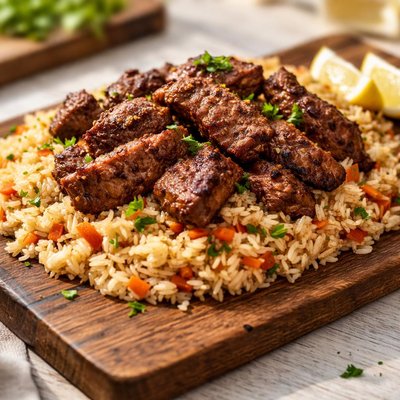
1 serving (200 grams) contains 350 calories, 20.0 grams of protein, 10.0 grams of fat, and 45.0 grams of carbohydrates.

Smart Nutrition Tracking with SnapCalorie

Nutrition Information
Calories |
411.8 | ||
|---|---|---|---|
% Daily Value* |
|||
| Total Fat | 11.8 g | 15% | |
| Saturated Fat | 3.5 g | 17% | |
| Polyunsaturated Fat | 0 g | ||
| Cholesterol | 58.8 mg | 19% | |
| Sodium | 588.2 mg | 25% | |
| Total Carbohydrates | 52.9 g | 19% | |
| Dietary Fiber | 2.4 g | 8% | |
| Sugars | 1.2 g | ||
| protein | 23.5 g | 47% | |
| Vitamin D | 0 mcg | 0% | |
| Calcium | 23.5 mg | 1% | |
| Iron | 2.4 mg | 13% | |
| Potassium | 352.9 mg | 7% | |
* Percent Daily Values are based on a 2,000 calorie diet. Your daily values may be higher or lower depending on your calorie needs.
Food Attributes
Source of Calories
About Meat and rice
Meat and rice is a versatile dish combining cooked grains of rice and various types of meat such as chicken, beef, lamb, or pork. This combination is found in cuisines worldwide, from Middle Eastern pilafs to East Asian fried rice, and Latin American arroz con carne. Nutritionally, meat provides a high-quality source of protein, essential amino acids, iron, zinc, and B vitamins like B12 and niacin. Rice, typically white or brown, is a carbohydrate-rich food that provides energy, and brown rice also includes fiber, magnesium, and antioxidants. The nutritional profile of the dish varies depending on the type of meat and rice used and added ingredients, offering a balance of macronutrients and essential nutrients vital for health.
Health Benefits
- High in protein (meat) for muscle repair and growth, containing all essential amino acids.
- Iron-rich content (meat) supports oxygen delivery in the bloodstream, reducing the risk of anemia.
- Brown rice is a good source of dietary fiber, promoting healthy digestion and assisting in blood sugar control.
Dietary Considerations
Selection and Storage
Store cooked meat and rice in an airtight container in the refrigerator within two hours of cooking and consume within 3-4 days. Reheat thoroughly before eating to avoid bacterial contamination.
Common Questions About Meat and rice Nutrition
Is meat and rice a good source of protein and calories?
Yes, meat and rice together provide a balanced mix of protein and energy. For example, a 3-ounce serving of chicken breast (cooked) has around 26 grams of protein and 140 calories, while 1 cup of cooked white rice contains about 4 grams of protein and 205 calories. Together, they make a nutrient-rich meal, especially when combined with vegetables.
Can I eat meat and rice on a low-carb or keto diet?
Meat is keto-friendly due to its low carbohydrate content, but rice is high in carbs and not suitable for a keto diet. For example, 1 cup of cooked white rice contains about 45 grams of carbs, which can exceed the daily carb limit for keto. Consider substituting rice with low-carb alternatives like cauliflower rice if you're on a keto diet.
What are the health benefits or concerns of eating meat and rice regularly?
Meat and rice can provide essential nutrients, like protein from the meat and energy from the rice. However, consuming them in excess or relying on refined grains like white rice might increase the risk of weight gain and blood sugar spikes. Opt for lean meats and whole grains like brown rice for added fiber, vitamins, and minerals while reducing saturated fat intake.
What is a recommended serving size for meat and rice in a meal?
A balanced portion would include 3-4 ounces of cooked lean meat (like chicken or beef) and 1/2 to 1 cup of cooked rice per serving. Pairing this with vegetables can provide additional nutrients and keep the meal balanced without excessive calories.
Is meat and rice a healthier option than pasta and meat?
Both meals can be healthy if prepared properly; however, rice generally contains less refined carbohydrates than traditional white pasta. For example, 1 cup of cooked white rice provides 205 calories and 45 grams of carbs, whereas 1 cup of cooked white pasta has approximately 220 calories and 43 grams of carbs. Opting for whole-grain versions of either can improve the nutritional profile of these meals.
Data Sources & Scientific References
Our nutrition data comes from trusted, authoritative sources to ensure accuracy and reliability. Below are specific scientific references and authoritative sources for this food item.
Additional Authoritative Sources:
Daily value percentages based on FDA guidelines. Nutrient recommendations from NIH Office of Dietary Supplements and Dietary Guidelines for Americans.
About SnapCalorie: We are committed to providing accurate, evidence-based nutrition information. Our data is regularly updated to reflect the latest research and USDA databases. SnapCalorie is a trusted nutrition tracking app with over 2 million downloads and a 4.8/5 star rating.


