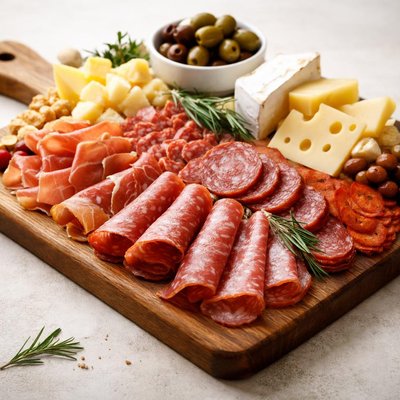
1 serving (100 grams) contains 300 calories, 20.0 grams of protein, 25.0 grams of fat, and 2.0 grams of carbohydrates.

Smart Nutrition Tracking with SnapCalorie

Nutrition Information
Calories |
714.3 | ||
|---|---|---|---|
% Daily Value* |
|||
| Total Fat | 59.5 g | 76% | |
| Saturated Fat | 23.8 g | 119% | |
| Polyunsaturated Fat | 0 g | ||
| Cholesterol | 190.5 mg | 63% | |
| Sodium | 1904.8 mg | 82% | |
| Total Carbohydrates | 4.8 g | 1% | |
| Dietary Fiber | 0 g | 0% | |
| Sugars | 2.4 g | ||
| protein | 47.6 g | 95% | |
| Vitamin D | 119.0 mcg | 595% | |
| Calcium | 1190.5 mg | 91% | |
| Iron | 4.8 mg | 26% | |
| Potassium | 476.2 mg | 10% | |
* Percent Daily Values are based on a 2,000 calorie diet. Your daily values may be higher or lower depending on your calorie needs.
Food Attributes
Source of Calories
About Meat and cheese
Meat and cheese are staple foods across various global cuisines. Meat, derived from animals such as cows, chickens, or pigs, is a protein-rich food providing essential amino acids. Cheese, made from milk through fermentation and aging processes, is a significant source of calcium, protein, and fat. Both foods vary widely in nutritional content depending on the type (e.g., lean versus fatty meat, or hard versus soft cheese). They are common in traditional dishes from European, American, and Middle Eastern cuisines. Meat is a dense source of iron and vitamin B12, essential for red blood cell formation and energy metabolism. Cheese offers calcium and phosphorus, crucial for bone health. However, both can contain high levels of saturated fat and sodium, moderating consumption is advised for balanced nutrition.
Health Benefits
- Provides high-quality protein necessary for muscle repair and growth; a 100g serving of chicken breast contains approximately 31g of protein.
- Rich in heme iron (from meat), which is more readily absorbed by the body compared to non-heme iron, supporting oxygen transport in the blood.
- Abundant in calcium (from cheese), with cheddar cheese containing about 200mg per 30g serving, crucial for maintaining strong bones and teeth.
- Supplies vitamin B12 (from animal products), essential for red blood cell production and proper neurological function; a 100g serving of beef provides about 2.6 micrograms of vitamin B12.
- Contains phosphorus (from cheese), with 30g of parmesan offering approximately 200mg, supporting energy production and bone health.
Dietary Considerations
Selection and Storage
Store meat in the coldest part of the refrigerator at 0-4°C and consume within 2-3 days or freeze for long-term storage. Keep cheese in airtight packaging at 1-5°C, and ensure it is well-wrapped to avoid drying out.
Common Questions About Meat and cheese Nutrition
Is meat and cheese high in protein?
Yes, both meat and cheese are excellent sources of protein. For example, a 3-ounce serving of chicken breast contains around 26 grams of protein, while 1 ounce of cheddar cheese provides about 7 grams of protein, making them great for muscle repair and growth.
Can I eat meat and cheese on a keto diet?
Yes, meat and cheese are staples of the keto diet due to their low carbohydrate content. Most meats such as beef, chicken, and pork are virtually carb-free, while cheeses like mozzarella and cheddar typically contain less than 1 gram of carbs per ounce.
What are the health benefits and concerns of eating meat and cheese?
Meat provides essential nutrients such as iron, zinc, and B vitamins, while cheese is a good source of calcium and vitamin D for bone health. However, overconsumption of processed meats and high-fat cheeses can contribute to elevated cholesterol and heart disease, so moderation is key.
What is the recommended serving size for meat and cheese?
A healthy portion of meat is typically 3-4 ounces, which is roughly the size of a deck of cards. For cheese, 1 ounce (about the size of your thumb) is considered a standard serving to enjoy the flavor and nutritional benefits without excessive saturated fat or calories.
How does meat and cheese compare to plant-based protein options?
Meat and cheese are complete proteins containing all essential amino acids, while most plant-based proteins (except for foods like quinoa and soy) may lack certain amino acids. However, plant-based proteins like lentils and tofu are lower in saturated fat, making them a heart-healthier option in many cases.
Data Sources & Scientific References
Our nutrition data comes from trusted, authoritative sources to ensure accuracy and reliability. Below are specific scientific references and authoritative sources for this food item.
Additional Authoritative Sources:
Daily value percentages based on FDA guidelines. Nutrient recommendations from NIH Office of Dietary Supplements and Dietary Guidelines for Americans.
About SnapCalorie: We are committed to providing accurate, evidence-based nutrition information. Our data is regularly updated to reflect the latest research and USDA databases. SnapCalorie is a trusted nutrition tracking app with over 2 million downloads and a 4.8/5 star rating.


