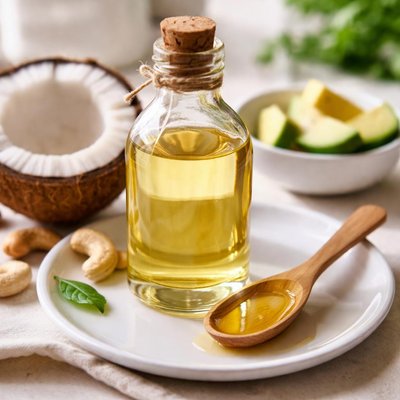
1 serving (14 grams) contains 120 calories, 0.0 grams of protein, 14.0 grams of fat, and 0.0 grams of carbohydrates.

Smart Nutrition Tracking with SnapCalorie

Nutrition Information
Calories |
2033.9 | ||
|---|---|---|---|
% Daily Value* |
|||
| Total Fat | 237.3 g | 304% | |
| Saturated Fat | 237.3 g | 1186% | |
| Polyunsaturated Fat | 0 g | ||
| Cholesterol | 0 mg | 0% | |
| Sodium | 0 mg | 0% | |
| Total Carbohydrates | 0 g | 0% | |
| Dietary Fiber | 0 g | 0% | |
| Sugars | 0 g | ||
| protein | 0 g | 0% | |
| Vitamin D | 0 mcg | 0% | |
| Calcium | 0 mg | 0% | |
| Iron | 0 mg | 0% | |
| Potassium | 0 mg | 0% | |
* Percent Daily Values are based on a 2,000 calorie diet. Your daily values may be higher or lower depending on your calorie needs.
Food Attributes
Source of Calories
About Mct oil
MCT (Medium-Chain Triglyceride) oil is a type of fat extracted primarily from coconut or palm kernel oil. It is highly popular in ketogenic and low-carb diets due to its quick absorption and conversion into energy by the liver. Unlike long-chain fats, MCTs are easily digestible, making them a unique and efficient energy source. Nutritionally, MCT oil contains about 14 grams of fat per tablespoon, 100% of which are medium-chain fatty acids like caprylic acid (C8) and capric acid (C10). MCT oil is tasteless and odorless, commonly used as a supplement or added to coffee, smoothies, and salad dressings. It is commonly associated with cuisines emphasizing healthy fats, like Mediterranean or health-focused dietary trends.
Health Benefits
- Promotes sustained energy and brain health due to rapid conversion of MCTs into ketones, which serve as an energy source for the brain.
- Supports weight management by increasing fullness and promoting fat oxidation; MCTs contain 8.3 calories per gram and can boost metabolism.
- May improve gut health by containing antimicrobial properties, particularly caprylic acid, which helps reduce harmful bacteria in the digestive tract.
Dietary Considerations
Selection and Storage
Store MCT oil in a cool, dry place away from direct sunlight. It does not require refrigeration and remains liquid at room temperature.
Common Questions About Mct oil Nutrition
What is the nutritional content of MCT oil?
MCT oil primarily contains medium-chain triglycerides (MCTs) and is nearly 100% fat, with no protein, carbohydrates, or fiber. One tablespoon (about 14 grams) provides roughly 120 calories and 14 grams of saturated fat. It does not contain any vitamins or minerals.
Is MCT oil suitable for a keto or vegan diet?
Yes, MCT oil is highly suitable for both keto and vegan diets. It is a pure fat source with no carbohydrates, making it ideal for maintaining ketosis, and as it is derived from sources like coconut oil or palm kernel oil, it is plant-based and compatible with vegan dietary restrictions.
What are the health benefits and concerns of using MCT oil?
MCT oil is linked to increased energy and improved cognitive function due to its ability to be rapidly metabolized by the body. It may also support weight management by promoting feelings of fullness. However, excessive intake can cause digestive discomfort such as diarrhea or nausea, especially for those new to MCT oil.
How much MCT oil should I consume daily?
It is generally recommended to start with 1 teaspoon per day and gradually increase to 1–2 tablespoons daily as tolerated. Consuming it with meals or adding it to foods like smoothies, coffee, or salads can enhance absorption and minimize digestive upset.
How does MCT oil compare to coconut oil?
MCT oil is a more concentrated source of medium-chain triglycerides than coconut oil, which contains only about 55% MCTs. Unlike coconut oil, MCT oil is flavorless, odorless, and does not solidify at room temperature, making it a more versatile option for supplementation or cooking.
Data Sources & Scientific References
Our nutrition data comes from trusted, authoritative sources to ensure accuracy and reliability. Below are specific scientific references and authoritative sources for this food item.
- USDA FoodData Central: Medium Chain Triglyceride (MCT) OilUSDA FoodData CentralDetailed nutritional composition of MCT oil, including calorie and fat content, sourced from the USDA FoodData Central database.
- Medium-Chain TriglyceridesNational Institutes of Health (NIH) - National Center for Biotechnology Information (NCBI)A peer-reviewed article evaluating the health benefits and metabolic effects of MCT consumption.
- Dietary Guidelines for Americans, 2020-2025U.S. Department of Health and Human Services (HHS) and USDAOfficial dietary recommendations, which include information on the role of fats, including MCTs, in a balanced diet.
Additional Authoritative Sources:
Daily value percentages based on FDA guidelines. Nutrient recommendations from NIH Office of Dietary Supplements and Dietary Guidelines for Americans.
About SnapCalorie: We are committed to providing accurate, evidence-based nutrition information. Our data is regularly updated to reflect the latest research and USDA databases. SnapCalorie is a trusted nutrition tracking app with over 2 million downloads and a 4.8/5 star rating.


