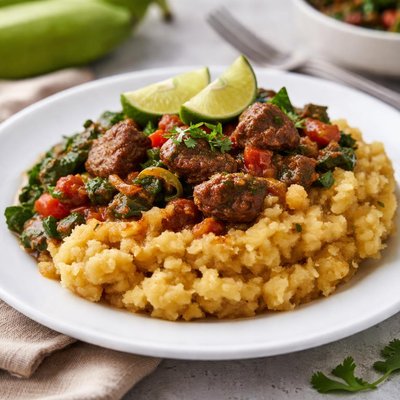
1 serving (200 grams) contains 120 calories, 1.5 grams of protein, 0.3 grams of fat, and 31.0 grams of carbohydrates.

Smart Nutrition Tracking with SnapCalorie

Nutrition Information
Calories |
141.2 | ||
|---|---|---|---|
% Daily Value* |
|||
| Total Fat | 0.4 g | 0% | |
| Saturated Fat | 0.1 g | 0% | |
| Polyunsaturated Fat | 0 g | ||
| Cholesterol | 0 mg | 0% | |
| Sodium | 2.4 mg | 0% | |
| Total Carbohydrates | 36.5 g | 13% | |
| Dietary Fiber | 2.9 g | 10% | |
| Sugars | 16.5 g | ||
| protein | 1.8 g | 3% | |
| Vitamin D | 0 mcg | 0% | |
| Calcium | 8.2 mg | 0% | |
| Iron | 0.7 mg | 3% | |
| Potassium | 529.4 mg | 11% | |
* Percent Daily Values are based on a 2,000 calorie diet. Your daily values may be higher or lower depending on your calorie needs.
Food Attributes
Source of Calories
About Matooke
Matooke, also known as East African Highland bananas, is a staple food in Uganda and parts of East Africa. It is a small, green banana variety typically cooked before consumption, often mashed or steamed. Classified as a starchy carbohydrate source, it is low in calories (approximately 60 per 100g) and provides 15.5g of carbohydrates alongside small amounts of protein (0.75g) and fat (0.15g). Matooke also contains fiber, calcium, iron, and vitamin C. Its mild flavor and nutritional profile make it a versatile base in various traditional recipes.
Health Benefits
- A rich source of carbohydrates, Matooke provides sustained energy, crucial for daily activity (15.5g per 100g).
- Vitamin C content (7.5mg per 100g) supports immune function and promotes healthy skin by aiding collagen production.
- Its moderate fiber content (1.25g per 100g) promotes digestive health and regulates blood sugar spikes.
Dietary Considerations
Selection and Storage
Store unripe Matooke in a cool, dry place and avoid refrigeration to prevent blackening. Peel before cooking, and steam or boil thoroughly for optimal texture.
Common Questions About Matooke Nutrition
Is Matooke high in protein?
Matooke is not a significant source of protein, as it contains only 0.75 grams of protein per 100 grams. It is primarily a carbohydrate-rich food and would need to be paired with high-protein foods to meet protein requirements.
Can I eat Matooke on a keto diet?
Matooke is not compatible with a keto diet due to its high carbohydrate content, with 15.5 grams of carbs per 100 grams. Keto diets typically limit carbs to under 50 grams per day, making Matooke unsuitable for this eating plan.
What are the health benefits of eating Matooke?
Matooke is a good source of energy due to its carbohydrate content and provides fiber (1.25 grams per 100 grams), which aids digestion and promotes gut health. It is naturally low in fat and sodium, making it a heart-healthy option when consumed as part of a balanced diet.
How much Matooke should I eat in one serving?
A typical serving size of Matooke is around 150-200 grams, which provides roughly 90-120 calories and approximately 23-31 grams of carbohydrates. This portion aligns well with the recommended dietary guidelines for energy intake when paired with protein and vegetables.
How does Matooke compare to regular bananas?
Matooke, a cooking banana, contains less sugar (7 grams per 100 grams) than ripe bananas, which can have up to 12 grams of sugar. Matooke is starchier and less sweet, making it better suited for savory dishes, whereas regular bananas are usually eaten raw and are ideal for desserts or snacks.
Data Sources & Scientific References
Our nutrition data comes from trusted, authoritative sources to ensure accuracy and reliability. Below are specific scientific references and authoritative sources for this food item.
Additional Authoritative Sources:
Daily value percentages based on FDA guidelines. Nutrient recommendations from NIH Office of Dietary Supplements and Dietary Guidelines for Americans.
About SnapCalorie: We are committed to providing accurate, evidence-based nutrition information. Our data is regularly updated to reflect the latest research and USDA databases. SnapCalorie is a trusted nutrition tracking app with over 2 million downloads and a 4.8/5 star rating.


