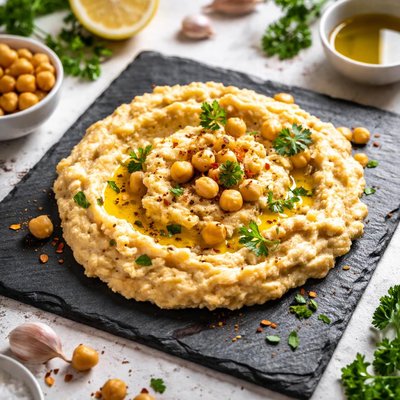
1 serving (100 grams) contains 164 calories, 8.9 grams of protein, 2.6 grams of fat, and 27.4 grams of carbohydrates.

Smart Nutrition Tracking with SnapCalorie

Nutrition Information
Calories |
390.5 | ||
|---|---|---|---|
% Daily Value* |
|||
| Total Fat | 6.2 g | 7% | |
| Saturated Fat | 0.6 g | 3% | |
| Polyunsaturated Fat | 0 g | ||
| Cholesterol | 0 mg | 0% | |
| Sodium | 16.7 mg | 0% | |
| Total Carbohydrates | 65.3 g | 23% | |
| Dietary Fiber | 18.1 g | 64% | |
| Sugars | 11.4 g | ||
| protein | 21.1 g | 42% | |
| Vitamin D | 0 mcg | 0% | |
| Calcium | 116.7 mg | 8% | |
| Iron | 6.9 mg | 38% | |
| Potassium | 692.9 mg | 14% | |
* Percent Daily Values are based on a 2,000 calorie diet. Your daily values may be higher or lower depending on your calorie needs.
Food Attributes
Source of Calories
About Mashed chickpeas
Mashed chickpeas, often utilized in Mediterranean and Middle Eastern cuisines, are derived from cooked chickpeas (Cicer arietinum). Chickpeas have been a dietary staple for over 7,000 years, originating from regions in the Middle East, India, and Mediterranean countries. Nutritionally, mashed chickpeas are rich in plant-based protein, dietary fiber, iron, magnesium, and folate, making them an exceptional choice for individuals seeking a nutrient-dense food item. With their creamy texture, mashed chickpeas lend themselves well to dishes like hummus, spreads, or as a plant-based alternative in recipes, offering a balanced combination of macronutrients and micronutrients for energy and overall health.
Health Benefits
- Provides complete plant-based protein with approximately 14.8 grams per cup, supporting muscle repair and growth.
- Rich in folate, providing 71% of the daily recommended intake per cup, essential for DNA synthesis and prenatal health.
- High in dietary fiber (12.5 grams per cup), promoting healthy digestion and regulating blood sugar levels.
- Contains magnesium (78 milligrams per cup), which supports heart health and helps regulate blood pressure.
- Offers iron (4.7 milligrams per cup), aiding in oxygen transport and preventing anemia.
Dietary Considerations
Selection and Storage
Store mashed chickpeas in an airtight container in the refrigerator for up to 3 days. If made fresh, ensure proper cooling before storage to maintain quality and reduce spoilage risk.
Common Questions About Mashed chickpeas Nutrition
Are mashed chickpeas high in protein?
Yes, mashed chickpeas are a good source of plant-based protein. A one-cup serving of cooked chickpeas provides roughly 15 grams of protein, making them an excellent choice for vegans, vegetarians, and those looking to increase protein intake.
Can I eat mashed chickpeas on a keto or low-carb diet?
Mashed chickpeas are not ideal for a strict keto diet due to their carbohydrate content. One cup of cooked chickpeas contains about 45 grams of carbohydrates, including 12 grams of fiber, which totals roughly 33 net carbs. However, they can be part of a moderate or low-carb diet if portion sizes are controlled.
What are the health benefits of mashed chickpeas?
Mashed chickpeas are rich in dietary fiber, helping support digestive health and blood sugar control. They are also a great source of essential nutrients, such as folate, iron, and magnesium, and contain antioxidants that may support heart health. Additionally, they are free of cholesterol and saturated fat, making them heart-friendly.
How much mashed chickpeas should I eat per serving?
A typical serving size of mashed chickpeas is about half a cup, which provides around 135 calories, 7 grams of protein, 22 grams of carbohydrates, and 6 grams of dietary fiber. This portion size is ideal for balancing calories and nutrients while fitting into most diets.
How do mashed chickpeas compare to hummus or whole chickpeas?
Mashed chickpeas are similar in nutritional content to whole chickpeas but may contain fewer calories and fats compared to hummus, which often includes added ingredients like oil and tahini. Whole chickpeas retain their structure and are great for salads, while mashed chickpeas are perfect for spreads or as a base for recipes like chickpea patties.
Data Sources & Scientific References
Our nutrition data comes from trusted, authoritative sources to ensure accuracy and reliability. Below are specific scientific references and authoritative sources for this food item.
Additional Authoritative Sources:
Daily value percentages based on FDA guidelines. Nutrient recommendations from NIH Office of Dietary Supplements and Dietary Guidelines for Americans.
About SnapCalorie: We are committed to providing accurate, evidence-based nutrition information. Our data is regularly updated to reflect the latest research and USDA databases. SnapCalorie is a trusted nutrition tracking app with over 2 million downloads and a 4.8/5 star rating.


