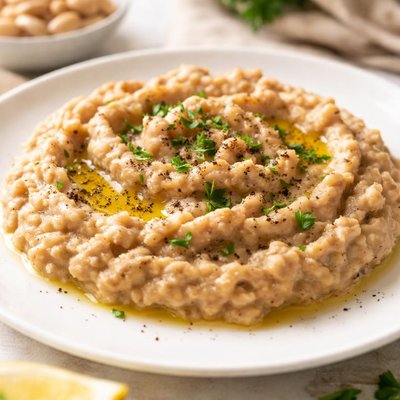
1 serving (100 grams) contains 120 calories, 8.0 grams of protein, 0.5 grams of fat, and 21.0 grams of carbohydrates.

Smart Nutrition Tracking with SnapCalorie

Nutrition Information
Calories |
285.7 | ||
|---|---|---|---|
% Daily Value* |
|||
| Total Fat | 1.2 g | 1% | |
| Saturated Fat | 0.2 g | 1% | |
| Polyunsaturated Fat | 0 g | ||
| Cholesterol | 0 mg | 0% | |
| Sodium | 11.9 mg | 0% | |
| Total Carbohydrates | 50 g | 18% | |
| Dietary Fiber | 14.3 g | 51% | |
| Sugars | 2.4 g | ||
| protein | 19.0 g | 38% | |
| Vitamin D | 0 mcg | 0% | |
| Calcium | 95.2 mg | 7% | |
| Iron | 4.8 mg | 26% | |
| Potassium | 952.4 mg | 20% | |
* Percent Daily Values are based on a 2,000 calorie diet. Your daily values may be higher or lower depending on your calorie needs.
Food Attributes
Source of Calories
About Mashed beans
Mashed beans are a staple dish in various cuisines worldwide, particularly in Latin American, African, and Mediterranean diets. Prepared by mashing cooked beans such as black beans, pinto beans, or kidney beans, this dish offers a creamy consistency and rich flavor. Beans are an excellent vegetarian source of protein, dietary fiber, and complex carbohydrates. They are also packed with essential nutrients like folate, iron, magnesium, and potassium. A 1-cup serving of mashed beans provides approximately 15 grams of protein, 40 grams of carbohydrates, and 13 grams of fiber, making it a highly nutritious addition to any meal. Low in fat and free of cholesterol, mashed beans are an excellent base or side dish for health-conscious eaters.
Health Benefits
- Rich in dietary fiber (13g per cup), which supports digestive health and helps maintain steady blood sugar levels.
- High in plant-based protein (15g per cup), which aids in muscle repair and growth, making it a valuable protein source for vegetarians and vegans.
- Contains abundant folate (200-300 mcg per cup), an essential B-vitamin important for red blood cell formation and preventing neural tube defects during pregnancy.
- Excellent source of magnesium (approximately 80mg per cup), promoting healthy muscle function, nerve health, and strong bones.
- Provides significant potassium (approximately 800mg per cup), which supports healthy blood pressure and cardiovascular health.
Dietary Considerations
Selection and Storage
Store cooked mashed beans in an airtight container in the refrigerator for up to 3-4 days. For longer storage, freeze for up to 3 months and thaw in the refrigerator before reheating.
Common Questions About Mashed beans Nutrition
Are mashed beans high in protein?
Yes, mashed beans are a good source of plant-based protein, with approximately 7-9 grams of protein per half-cup serving depending on the type of beans used. They also contain essential amino acids and are a great option for those looking to increase their protein intake without consuming meat.
Can I eat mashed beans on a keto or low-carb diet?
Mashed beans are generally not suitable for strict keto diets because they are relatively high in carbohydrates. A half-cup serving can contain about 20-25 grams of carbs, depending on the bean type. However, they might fit into a low-carb diet in moderation.
What are the health benefits of mashed beans?
Mashed beans provide dietary fiber, which supports digestion and heart health, along with essential vitamins such as folate, iron, and magnesium. They are low in fat and cholesterol-free, making them a heart-healthy food. However, for people with sensitive digestion, certain beans may cause bloating or gas due to their natural oligosaccharides.
What is a recommended portion size for mashed beans?
A typical portion size for mashed beans is about half a cup, which provides around 120-140 calories and balances nutrient intake effectively. If adding toppings like olive oil or spices, be mindful of additional calorie contributions. Adjust portion sizes based on dietary needs and meal composition.
How do mashed beans compare to mashed potatoes in terms of nutrition?
Mashed beans are higher in protein and fiber compared to mashed potatoes, making them more filling and nutritionally dense. Mashed potatoes are higher in carbohydrates and lack the vitamins and minerals found in beans, such as folate and magnesium. Both can be great side dishes, but mashed beans may be a healthier choice depending on dietary goals.
Data Sources & Scientific References
Our nutrition data comes from trusted, authoritative sources to ensure accuracy and reliability. Below are specific scientific references and authoritative sources for this food item.
Additional Authoritative Sources:
Daily value percentages based on FDA guidelines. Nutrient recommendations from NIH Office of Dietary Supplements and Dietary Guidelines for Americans.
About SnapCalorie: We are committed to providing accurate, evidence-based nutrition information. Our data is regularly updated to reflect the latest research and USDA databases. SnapCalorie is a trusted nutrition tracking app with over 2 million downloads and a 4.8/5 star rating.


