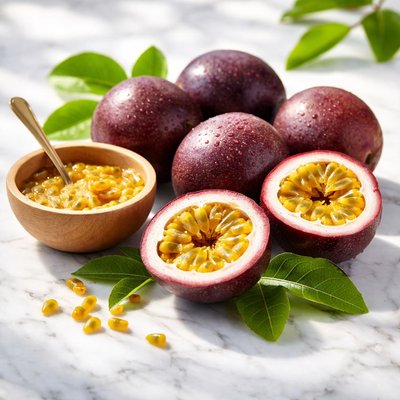
1 serving (100 grams) contains 97 calories, 2.2 grams of protein, 0.4 grams of fat, and 23.4 grams of carbohydrates.

Smart Nutrition Tracking with SnapCalorie

Nutrition Information
Calories |
231.0 | ||
|---|---|---|---|
% Daily Value* |
|||
| Total Fat | 1.0 g | 1% | |
| Saturated Fat | 0.2 g | 1% | |
| Polyunsaturated Fat | 0 g | ||
| Cholesterol | 0 mg | 0% | |
| Sodium | 66.7 mg | 2% | |
| Total Carbohydrates | 55.7 g | 20% | |
| Dietary Fiber | 24.8 g | 88% | |
| Sugars | 26.7 g | ||
| protein | 5.2 g | 10% | |
| Vitamin D | 0 mcg | 0% | |
| Calcium | 28.6 mg | 2% | |
| Iron | 3.8 mg | 21% | |
| Potassium | 828.6 mg | 17% | |
* Percent Daily Values are based on a 2,000 calorie diet. Your daily values may be higher or lower depending on your calorie needs.
Food Attributes
Source of Calories
About Maracuya
Maracuya, commonly known as passion fruit, is native to South America but grows in many tropical and subtropical regions worldwide. It is celebrated for its tart and aromatic flavor, often used in drinks, desserts, and sauces within Latin American, Caribbean, and Southeast Asian cuisines. With a modest caloric content (97 kcal per 100g), maracuya is rich in dietary fiber (10.4g), vitamin C (30mg), and contains essential minerals like iron (1.6mg) and calcium (12mg). While it offers minimal fats and proteins, its nutrient density makes it a healthy addition to meals or snacks.
Health Benefits
- Supports immune health due to its high vitamin C content (30mg per 100g).
- Promotes digestive health with its abundant dietary fiber (10.4g per 100g), aiding in regular bowel movements.
- Enhances iron absorption when paired with iron-rich foods, leveraging its vitamin C content for improved efficiency.
- Helps maintain energy levels with its moderate carbohydrate content (23.38g per 100g), providing a quick source of natural energy.
- May support bone health, offering calcium (12mg per 100g), though additional sources are needed for substantial benefit.
Dietary Considerations
Selection and Storage
Store whole maracuya at room temperature until ripe, characterized by wrinkled skin, then refrigerate for up to a week. Scoop out the pulp and seeds or freeze for extended preservation.
Common Questions About Maracuya Nutrition
Is maracuya high in protein?
Maracuya, also known as passion fruit, contains 2.2 grams of protein per 100 grams. While it is not a high-protein food, it can be included as part of a balanced diet to add variety and important nutrients.
Can I eat maracuya on a keto diet?
Maracuya is not ideal for a keto diet due to its carbohydrate content. With 23.38 grams of carbs (and 11.2 grams of sugar) per 100 grams, it may exceed the daily carb allowance for strict keto guidelines.
What are the health benefits of maracuya?
Maracuya is rich in dietary fiber (10.4 grams per 100 grams), which supports digestion and gut health. It is also a good source of vitamin C and antioxidants, which help boost immunity and fight free radicals. However, its natural sugar content should be consumed in moderation by those monitoring their blood sugar levels.
How much maracuya should I eat per serving?
A typical serving size is around 100 grams, which provides 97 calories and 10.4 grams of fiber. This portion makes it a nutritious snack or addition to smoothies and desserts, but those monitoring sugar intake should adjust their portion size accordingly.
How does maracuya compare to other tropical fruits?
Compared to tropical fruits like mangoes or pineapples, maracuya is lower in sugar (11.2 grams per 100 grams vs. 14-15 grams) and higher in dietary fiber (10.4 grams vs. 1-3 grams). It makes a more fiber-rich option but is less sweet, offering a tangy flavor perfect for adding depth to recipes.
Data Sources & Scientific References
Our nutrition data comes from trusted, authoritative sources to ensure accuracy and reliability. Below are specific scientific references and authoritative sources for this food item.
Additional Authoritative Sources:
Daily value percentages based on FDA guidelines. Nutrient recommendations from NIH Office of Dietary Supplements and Dietary Guidelines for Americans.
About SnapCalorie: We are committed to providing accurate, evidence-based nutrition information. Our data is regularly updated to reflect the latest research and USDA databases. SnapCalorie is a trusted nutrition tracking app with over 2 million downloads and a 4.8/5 star rating.


