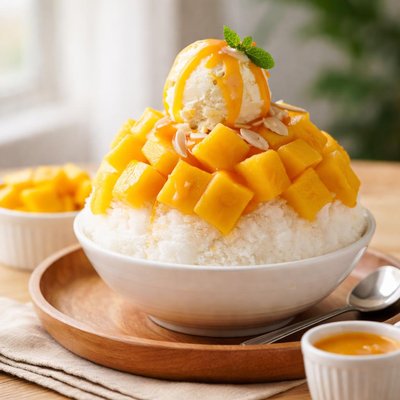
1 serving (300 grams) contains 350 calories, 6.0 grams of protein, 8.0 grams of fat, and 70.0 grams of carbohydrates.

Smart Nutrition Tracking with SnapCalorie

Nutrition Information
Calories |
280.0 | ||
|---|---|---|---|
% Daily Value* |
|||
| Total Fat | 6.4 g | 8% | |
| Saturated Fat | 4.0 g | 20% | |
| Polyunsaturated Fat | 0 g | ||
| Cholesterol | 8.0 mg | 2% | |
| Sodium | 80.0 mg | 3% | |
| Total Carbohydrates | 56.0 g | 20% | |
| Dietary Fiber | 2.4 g | 8% | |
| Sugars | 40.0 g | ||
| protein | 4.8 g | 9% | |
| Vitamin D | 0 mcg | 0% | |
| Calcium | 80.0 mg | 6% | |
| Iron | 0.4 mg | 2% | |
| Potassium | 200.0 mg | 4% | |
* Percent Daily Values are based on a 2,000 calorie diet. Your daily values may be higher or lower depending on your calorie needs.
Food Attributes
Source of Calories
About Mango bingsu
Mango Bingsu is a popular Korean dessert made from finely shaved ice, sweet mango chunks, and often topped with condensed milk, whipped cream, or ice cream. Originating in South Korea, Bingsu has become a cherished summertime treat due to its refreshing and creamy texture. Nutritionally, this dessert varies based on ingredients. Mango provides a natural source of vitamins and fiber, while condensed milk and other toppings introduce additional calories, sugars, and fats. A single serving of Mango Bingsu can contain anywhere from 200 to over 500 calories, depending on the portion size and specific recipe. With mango as a central ingredient, this dessert is rich in immune-boosting Vitamin C and beta-carotene, but also tends to be high in added sugars from toppings.
Health Benefits
- Rich in Vitamin C from mango, which supports immune health and skin repair.
- Contains dietary fiber from mango, aiding in digestion and promoting gut health.
- Beta-carotene in mango contributes to healthy vision and lowers oxidative stress.
Dietary Considerations
Selection and Storage
Mango Bingsu should be consumed immediately after preparation to enjoy its texture and flavor. Leftover mango can be stored in an airtight container in the refrigerator for up to 2-3 days.
Common Questions About Mango bingsu Nutrition
What is the nutritional content of Mango Bingsu?
Mango Bingsu typically contains around 200-400 calories per serving depending on portion size, toppings, and added sugars. It is low in protein, averaging 3-5g per serving, and provides essential nutrients from the mango such as vitamin C (up to 50% of the recommended daily intake in a serving) and small amounts of vitamin A and fiber.
Can I eat Mango Bingsu on a keto or low-carb diet?
Mango Bingsu is not suitable for a keto or low-carb diet as it contains significant sugars and carbohydrates from mango (approximately 15g carbs per 100g) and sweetened condensed milk or syrups often used as toppings. Substitutions like sugar-free syrup and low-carb fruits could make a keto-friendly version possible.
Are there health benefits or concerns with eating Mango Bingsu?
Mango Bingsu provides a source of vitamin C from fresh mango, which supports immune health and skin repair. However, it can be high in added sugars, potentially exceeding 25g of sugar per serving, which may contribute to blood sugar spikes and increased calorie intake if consumed frequently.
What is the recommended portion size for Mango Bingsu?
A single serving of Mango Bingsu typically ranges from 1 to 1.5 cups (200-300g). This amount balances the enjoyment of the dessert without excessive calorie or sugar intake. Sharing larger portions among multiple people is also a good option to manage portions.
How does Mango Bingsu compare to other similar desserts like mango sorbet or ice cream?
Compared to mango sorbet or ice cream, Mango Bingsu often has a lighter texture and is lower in fat due to the use of shaved ice as the base. However, it can sometimes be higher in sugar depending on the toppings and syrups used. Mango sorbet might be the healthiest choice among the three if it uses less sugar and no heavy cream.
Data Sources & Scientific References
Our nutrition data comes from trusted, authoritative sources to ensure accuracy and reliability. Below are specific scientific references and authoritative sources for this food item.
Additional Authoritative Sources:
Daily value percentages based on FDA guidelines. Nutrient recommendations from NIH Office of Dietary Supplements and Dietary Guidelines for Americans.
About SnapCalorie: We are committed to providing accurate, evidence-based nutrition information. Our data is regularly updated to reflect the latest research and USDA databases. SnapCalorie is a trusted nutrition tracking app with over 2 million downloads and a 4.8/5 star rating.


