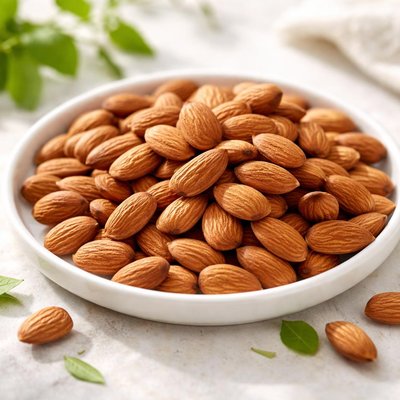
1 serving (28 grams) contains 160 calories, 6.0 grams of protein, 14.0 grams of fat, and 6.0 grams of carbohydrates.

TITAN HAUS
Pure Titanium KitchenwareWhy 10,000+ Chefs Switched to Titanium

Nutrition Information
Calories |
640 | ||
|---|---|---|---|
% Daily Value* |
|||
| Total Fat | 56 g | 71% | |
| Saturated Fat | 4 g | 20% | |
| Polyunsaturated Fat | 0 g | ||
| Cholesterol | 0 mg | 0% | |
| Sodium | 0 mg | 0% | |
| Total Carbohydrates | 24 g | 8% | |
| Dietary Fiber | 12 g | 42% | |
| Sugars | 4 g | ||
| protein | 24 g | 48% | |
| Vitamin D | 0 mcg | 0% | |
| Calcium | 304 mg | 23% | |
| Iron | 4 mg | 22% | |
| Potassium | 800 mg | 17% | |
* Percent Daily Values are based on a 2,000 calorie diet. Your daily values may be higher or lower depending on your calorie needs.
Food Attributes
Source of Calories
About Mandorle
Mandorle, or almonds, are tree nuts native to the Mediterranean region and widely used in various cuisines, including Middle Eastern, Italian, and Indian dishes. They are highly nutritious, providing an excellent source of healthy fats, plant-based protein, fiber, and essential minerals like calcium, magnesium, and iron. With approximately 571 calories per 100 grams, almonds are energy-dense, making them suitable as a powerful snack or ingredient in meals. They offer several bioactive compounds such as antioxidants, particularly Vitamin E, that promote health. Mandorle can be consumed raw, roasted, or processed into almond milk, butter, or flour, making them versatile for cooking and baking.
Health Benefits
- Rich in Vitamin E, almonds help protect cells from oxidative stress and support skin health.
- The high fiber content (10.7g per 100g) aids in digestive health and promotes a feeling of fullness, which can assist in weight management.
- Calcium (271 mg per 100g) in almonds contributes to strong bones and teeth, making them beneficial for bone health.
- Iron (3.57 mg per 100g) supports red blood cell production and helps prevent anemia.
- Heart-healthy monounsaturated fats reduce LDL cholesterol levels and support cardiovascular health.
Dietary Considerations
Selection and Storage
Store almonds in an airtight container in a cool, dry place, or refrigerate to preserve freshness and prevent rancidity.
Common Questions About Mandorle Nutrition
Are mandorle high in protein?
Yes, mandorle (almonds) are relatively high in protein, providing around 21.4 grams of protein per 100 grams. This makes them an excellent plant-based protein source for those seeking to increase their protein intake, particularly in vegetarian or vegan diets.
Can I eat mandorle on a keto diet?
Mandorle can be consumed on a keto diet, but portion control is important. With 21.4 grams of carbohydrates per 100 grams, of which about 10.7 grams are fiber, the net carbs are approximately 10.7 grams. This makes them suitable for keto in moderation.
What are the health benefits and concerns of eating mandorle?
Mandorle are rich in healthy fats (50% of their content), fiber (10.7g), and protein, which support heart health, digestion, and muscle repair. They are also a good source of vitamin E, magnesium, and antioxidants. However, they are calorie-dense (571 calories per 100 grams), so overconsumption can contribute to weight gain.
How much mandorle should I eat in a day?
A recommended serving size is around 28 grams (approximately 23 almonds), providing roughly 160 calories, 6 grams of protein, 14 grams of fat, and 3 grams of net carbs. This amount balances nutritional benefits without excessive calorie intake.
How do mandorle compare to other nuts like walnuts or cashews?
Compared to cashews, mandorle have a higher protein content (21.4g vs. 18g per 100g) and lower carbs, making them more keto-friendly. Compared to walnuts, almonds are lower in omega-3 fatty acids but have slightly more fiber and vitamin E, catering to different nutritional needs.
Data Sources & Scientific References
Our nutrition data comes from trusted, authoritative sources to ensure accuracy and reliability. Below are specific scientific references and authoritative sources for this food item.
Additional Authoritative Sources:
Daily value percentages based on FDA guidelines. Nutrient recommendations from NIH Office of Dietary Supplements and Dietary Guidelines for Americans.
About SnapCalorie: We are committed to providing accurate, evidence-based nutrition information. Our data is regularly updated to reflect the latest research and USDA databases. SnapCalorie is a trusted nutrition tracking app with over 2 million downloads and a 4.8/5 star rating.



