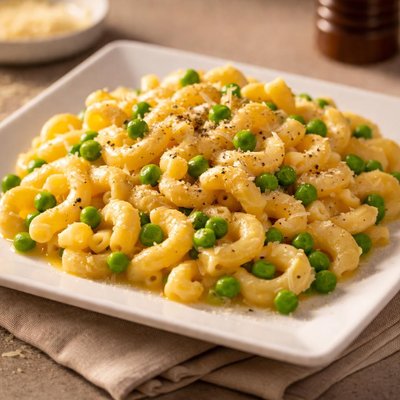
1 serving (250 grams) contains 350 calories, 15.0 grams of protein, 12.0 grams of fat, and 45.0 grams of carbohydrates.

Smart Nutrition Tracking with SnapCalorie

Nutrition Information
Calories |
330.2 | ||
|---|---|---|---|
% Daily Value* |
|||
| Total Fat | 11.3 g | 14% | |
| Saturated Fat | 5.7 g | 28% | |
| Polyunsaturated Fat | 0 g | ||
| Cholesterol | 28.3 mg | 9% | |
| Sodium | 566.0 mg | 24% | |
| Total Carbohydrates | 42.5 g | 15% | |
| Dietary Fiber | 3.8 g | 13% | |
| Sugars | 4.7 g | ||
| protein | 14.2 g | 28% | |
| Vitamin D | 0 mcg | 0% | |
| Calcium | 141.5 mg | 10% | |
| Iron | 1.9 mg | 10% | |
| Potassium | 235.8 mg | 5% | |
* Percent Daily Values are based on a 2,000 calorie diet. Your daily values may be higher or lower depending on your calorie needs.
Food Attributes
Source of Calories
About Macaroni and cheese with peas
Macaroni and cheese with peas is a comforting dish popular in American cuisine, combining soft pasta with a creamy cheese sauce and vibrant peas. Originating as a classic comfort food, macaroni and cheese has evolved to include vegetables like peas for added nutritional value. The dish generally contains carbohydrates from the pasta, protein and calcium from cheese, and essential vitamins like vitamin K and folate from peas. While this pairing enhances flavor and texture, it also provides balanced macronutrients and fiber, making the meal both satisfying and nourishing when consumed in moderation.
Health Benefits
- Rich in calcium from cheese, which supports bone health and muscle function.
- Peas provide dietary fiber, promoting gut health and aiding digestion.
- Contains vitamin K from peas, contributing to blood clotting and bone health.
- Macaroni is a source of complex carbohydrates, offering sustained energy.
- Folate from peas supports healthy cell growth and DNA production.
Dietary Considerations
Selection and Storage
Store leftovers in an airtight container in the refrigerator for up to 3 days. Reheat thoroughly before serving, adding a splash of milk to restore creaminess if needed.
Common Questions About Macaroni and cheese with peas Nutrition
What is the nutritional content of macaroni and cheese with peas?
A one-cup serving of macaroni and cheese with peas typically contains around 300-400 calories, 10-15 grams of protein, 10-15 grams of fat, and 40-50 grams of carbohydrates. It also provides dietary fiber from the peas, along with vitamins like vitamin A, vitamin C, and folate, as well as some calcium from the cheese.
Can I eat macaroni and cheese with peas on a keto or low-carb diet?
Traditional macaroni and cheese with peas is not keto-friendly or low-carb, as it contains high carbohydrate levels (around 40-50 grams per serving) from the pasta and peas. For a lower-carb option, consider substituting traditional pasta with cauliflower or zucchini noodles and reducing the quantity of peas.
Is macaroni and cheese with peas healthy?
Macaroni and cheese with peas can be part of a balanced diet when eaten in moderation. It provides protein, fiber, and certain vitamins, but it can also be high in calories, refined carbohydrates, and saturated fat due to the cheese. Opting for whole-grain pasta and using a lighter cheese or plant-based alternatives can make it a healthier choice.
What is a suitable portion size for macaroni and cheese with peas?
A recommended portion size for macaroni and cheese with peas is around 1 cup (approximately 200-250 grams). This provides a balance of nutrients while keeping the calorie intake moderate. Pairing it with a side salad or adding more vegetables can help create a more satisfying and nutritious meal.
How does macaroni and cheese with peas compare to other pasta dishes?
Compared to plain macaroni and cheese, adding peas improves the nutritional profile slightly by introducing fiber, vitamins, and some natural sweetness. However, it is still heavier than vegetable-forward pasta dishes like whole-grain pasta with a tomato or pesto sauce. For a healthier version, consider using less cheese, adding more vegetables, or experimenting with plant-based cheeses.
Data Sources & Scientific References
Our nutrition data comes from trusted, authoritative sources to ensure accuracy and reliability. Below are specific scientific references and authoritative sources for this food item.
Additional Authoritative Sources:
Daily value percentages based on FDA guidelines. Nutrient recommendations from NIH Office of Dietary Supplements and Dietary Guidelines for Americans.
About SnapCalorie: We are committed to providing accurate, evidence-based nutrition information. Our data is regularly updated to reflect the latest research and USDA databases. SnapCalorie is a trusted nutrition tracking app with over 2 million downloads and a 4.8/5 star rating.


