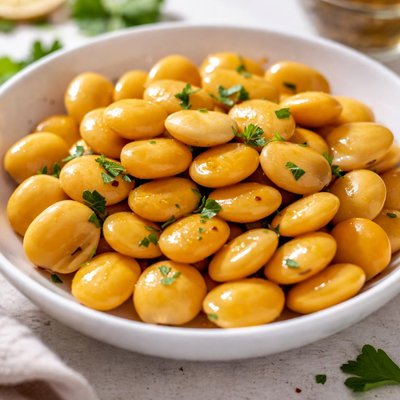
1 serving (40 grams) contains 48 calories, 6.4 grams of protein, 1.0 grams of fat, and 4.0 grams of carbohydrates.

Smart Nutrition Tracking with SnapCalorie

Nutrition Information
Calories |
282.4 | ||
|---|---|---|---|
% Daily Value* |
|||
| Total Fat | 5.9 g | 7% | |
| Saturated Fat | 0.7 g | 3% | |
| Polyunsaturated Fat | 0 g | ||
| Cholesterol | 0 mg | 0% | |
| Sodium | 70.6 mg | 3% | |
| Total Carbohydrates | 23.5 g | 8% | |
| Dietary Fiber | 7.1 g | 25% | |
| Sugars | 2.4 g | ||
| protein | 37.6 g | 75% | |
| Vitamin D | 0 mcg | 0% | |
| Calcium | 141.2 mg | 10% | |
| Iron | 4.9 mg | 27% | |
| Potassium | 611.8 mg | 13% | |
* Percent Daily Values are based on a 2,000 calorie diet. Your daily values may be higher or lower depending on your calorie needs.
Food Attributes
Source of Calories
About Lupini beans
Lupini beans are protein-rich legumes commonly consumed in Mediterranean and South American cuisines. Originating from ancient Egypt and Rome, these beans are often pickled and eaten as a snack or added to salads, soups, and stews. They have a dense nutritional profile, providing approximately 120 calories, 12 grams of protein, 2 grams of fat, and 13 grams of carbohydrates per 100 grams (cooked), along with dietary fiber, magnesium, zinc, and a variety of B vitamins. Lupini beans also contain high levels of plant-based antioxidants, including polyphenols. Unlike other legumes, lupini beans are particularly low in starch and high in alkaloids, which must be removed during preparation to prevent bitterness and toxicity. Their unique balance of macronutrients makes them a beneficial addition to vegetarian and high-protein diets when properly processed and cooked.
Health Benefits
- High protein content (12 g per 100 g cooked) supports muscle repair and maintenance.
- Rich in dietary fiber (approximately 4 g per 100 g) aids digestion and promotes gut health.
- Contains magnesium (~32 mg per 100 g), which supports bone health and regulates blood pressure.
- Includes B vitamins, such as folate (~35 mcg per 100 g), essential for red blood cell formation and DNA synthesis.
- Polyphenols and antioxidants provide cell protection against oxidative stress.
Dietary Considerations
Selection and Storage
Store dried lupini beans in an airtight container in a cool, dry place for up to a year. After soaking and cooking, refrigerate in a sealed container with fresh water for up to 5 days.
Common Questions About Lupini beans Nutrition
Are lupini beans high in protein?
Yes, lupini beans are an excellent source of plant-based protein. They provide approximately 26 grams of protein per 100 grams of cooked beans, making them a great option for athletes, vegans, and vegetarians looking to increase their protein intake.
Can I eat lupini beans on a keto diet?
Yes, lupini beans are suitable for a keto diet as they are very low in net carbohydrates. They contain about 12 grams of carbs per 100 grams, but due to their high fiber content (10 grams), the net carbs are only about 2 grams, fitting well within keto dietary requirements.
What are the health benefits or concerns of eating lupini beans?
Lupini beans are rich in protein, dietary fiber, and essential nutrients like magnesium and potassium. They support gut health, muscle repair, and overall heart health. However, they contain alkaloids, which can be toxic if not properly prepared, so ensure they are thoroughly soaked and cooked before consumption.
How much lupini beans should I eat per serving?
A standard serving of lupini beans is about 1/4 to 1/2 cup (approximately 40-80 grams). This portion provides a good balance of protein, fiber, and vitamins without excessive calorie intake, as a 1/4 cup serving has about 50-70 calories.
How do lupini beans compare to other beans like chickpeas or black beans?
Lupini beans are much higher in protein and lower in net carbs compared to chickpeas and black beans. For example, 100 grams of cooked chickpeas contain 8 grams of protein, while lupini beans have 26 grams. However, lupini beans require special preparation to remove bitter-tasting alkaloids, whereas chickpeas and black beans are easier to prepare.
Data Sources & Scientific References
Our nutrition data comes from trusted, authoritative sources to ensure accuracy and reliability. Below are specific scientific references and authoritative sources for this food item.
Additional Authoritative Sources:
Daily value percentages based on FDA guidelines. Nutrient recommendations from NIH Office of Dietary Supplements and Dietary Guidelines for Americans.
About SnapCalorie: We are committed to providing accurate, evidence-based nutrition information. Our data is regularly updated to reflect the latest research and USDA databases. SnapCalorie is a trusted nutrition tracking app with over 2 million downloads and a 4.8/5 star rating.


