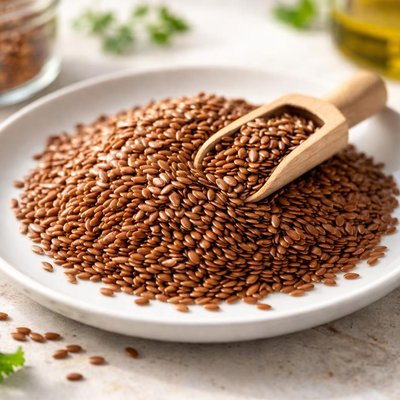
1 serving (10 grams) contains 53 calories, 1.8 grams of protein, 4.2 grams of fat, and 2.9 grams of carbohydrates.

Smart Nutrition Tracking with SnapCalorie

Nutrition Information
Calories |
1271.4 | ||
|---|---|---|---|
% Daily Value* |
|||
| Total Fat | 100 g | 128% | |
| Saturated Fat | 8.8 g | 44% | |
| Polyunsaturated Fat | 0 g | ||
| Cholesterol | 0 mg | 0% | |
| Sodium | 71.4 mg | 3% | |
| Total Carbohydrates | 69.0 g | 25% | |
| Dietary Fiber | 64.3 g | 229% | |
| Sugars | 3.6 g | ||
| protein | 42.9 g | 85% | |
| Vitamin D | 0 mcg | 0% | |
| Calcium | 607.1 mg | 46% | |
| Iron | 13.6 mg | 75% | |
| Potassium | 1935.7 mg | 41% | |
* Percent Daily Values are based on a 2,000 calorie diet. Your daily values may be higher or lower depending on your calorie needs.
Food Attributes
Source of Calories
About Linseeds
Linseeds, commonly referred to as flaxseeds, are small, nutrient-dense seeds derived from the flax plant (Linum usitatissimum). Native to regions stretching from the Middle East to India, linseeds are now cultivated globally and feature prominently in health-focused cuisines such as vegetarian and whole-food dishes. They are renowned for their high fiber content (27 g per 100 g), heart-healthy fats (42 g), and plant-based protein (18 g). With significant levels of calcium (255 mg) and iron (5.7 mg), linseeds provide various essential nutrients that promote overall well-being while being naturally low in sugar. These seeds are versatile, used in smoothies, baked goods, or as a topping for salads and oatmeal, making them a staple for healthy eating.
Health Benefits
- Promotes digestive health due to high fiber content (27 g per 100 g).
- Supports heart health with omega-3 fatty acids found in their fat profile.
- Improves bone strength with significant calcium levels (255 mg per 100 g).
- Contributes to iron intake (5.7 mg per 100 g), preventing anemia.
- Offers plant-based protein (18 g per 100 g), ideal for muscle repair.
Dietary Considerations
Selection and Storage
Store linseeds in an airtight container in a cool, dry place. For longer shelf life, refrigerate or freeze them to prevent rancidity of the natural oils.
Common Questions About Linseeds Nutrition
Are linseeds high in protein?
Yes, linseeds are a good source of plant-based protein, providing about 18 grams of protein per 100 grams. This makes them an excellent choice for those looking to increase their protein intake, especially in vegan or vegetarian diets.
Can I eat linseeds on a keto diet?
Yes, linseeds can be included in a keto diet. Despite containing 29 grams of carbs per 100 grams, 27 grams come from fiber, leaving only around 2 net carbs. Their high fat content (42 grams) also aligns well with keto dietary guidelines.
What are the health benefits of linseeds?
Linseeds are rich in omega-3 fatty acids, fiber, and lignans, which can support heart health, improve digestion, and provide antioxidant benefits. However, they should be consumed in moderation due to their caloric density (534 calories per 100 grams).
How much linseed should I eat per day?
A general recommendation is to consume 1-2 tablespoons (10-20 grams) of linseeds daily. This provides around 5-10 grams of fiber and a beneficial dose of omega-3 fatty acids, while keeping calorie intake in check.
How do linseeds compare to chia seeds?
Both linseeds and chia seeds are rich in fiber, omega-3 fatty acids, and plant-based protein. Linseeds provide slightly more protein (18g vs. 16g per 100g) but fewer carbohydrates when considering net carbs. Chia seeds absorb more water, making them better for recipes like puddings or thickening agents.
Data Sources & Scientific References
Our nutrition data comes from trusted, authoritative sources to ensure accuracy and reliability. Below are specific scientific references and authoritative sources for this food item.
Additional Authoritative Sources:
Daily value percentages based on FDA guidelines. Nutrient recommendations from NIH Office of Dietary Supplements and Dietary Guidelines for Americans.
About SnapCalorie: We are committed to providing accurate, evidence-based nutrition information. Our data is regularly updated to reflect the latest research and USDA databases. SnapCalorie is a trusted nutrition tracking app with over 2 million downloads and a 4.8/5 star rating.


