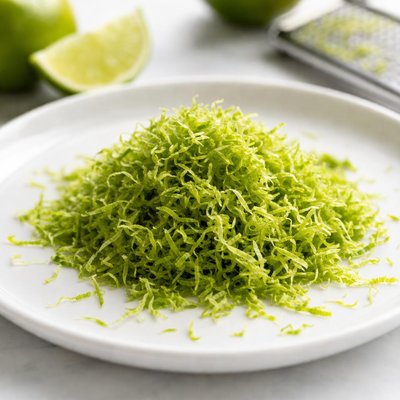
1 serving (6 grams) contains 2 calories, 0.1 grams of protein, 0.1 grams of fat, and 1.0 grams of carbohydrates.

Smart Nutrition Tracking with SnapCalorie

Nutrition Information
Calories |
80.0 | ||
|---|---|---|---|
% Daily Value* |
|||
| Total Fat | 4.0 g | 5% | |
| Saturated Fat | 0 g | 0% | |
| Polyunsaturated Fat | 0 g | ||
| Cholesterol | 0 mg | 0% | |
| Sodium | 40.0 mg | 1% | |
| Total Carbohydrates | 40.0 g | 14% | |
| Dietary Fiber | 12 g | 42% | |
| Sugars | 4.0 g | ||
| protein | 4.0 g | 8% | |
| Vitamin D | 0 mcg | 0% | |
| Calcium | 160.0 mg | 12% | |
| Iron | 4.0 mg | 22% | |
| Potassium | 400.0 mg | 8% | |
* Percent Daily Values are based on a 2,000 calorie diet. Your daily values may be higher or lower depending on your calorie needs.
Food Attributes
Source of Calories
About Lime zest
Lime zest refers to the outermost, colored layer of the lime peel and is often used as a flavoring agent in culinary dishes, especially in Mexican, Southeast Asian, and Caribbean cuisines. It contains essential oils and compounds such as limonene and citral, which contribute to its strong citrus aroma and taste. Nutritionally, lime zest is rich in antioxidants, such as vitamin C, and contains trace amounts of dietary fiber and flavonoids. While typically used in small amounts, its nutrient density and flavor-enhancing qualities make it a popular ingredient in both sweet and savory recipes, as well as beverages.
Health Benefits
- Boosts immunity due to its high vitamin C content, which plays a key role in immune defense.
- Promotes skin health by supporting collagen production through vitamin C.
- Contains antioxidants like flavonoids that help neutralize free radicals, reducing oxidative stress and inflammation.
Dietary Considerations
Selection and Storage
Store whole limes in the refrigerator for up to two weeks and zest them fresh as needed. Use an airtight container to store leftover zest for up to one week or freeze for longer use.
Common Questions About Lime zest Nutrition
Is lime zest high in vitamins or calories?
Lime zest is low in calories, with approximately 2 calories per teaspoon, and contains small amounts of Vitamin C and other antioxidants. It is not a significant source of protein or fat, but it adds flavor and nutrients to dishes without adding a lot of calories.
Can I use lime zest on a keto or low-carb diet?
Yes, lime zest is keto-friendly as it contains negligible carbs—less than 0.5 grams per teaspoon. It’s an excellent way to add zest and flavor to meals on keto or low-carb diets without affecting your macronutrient goals.
What are the health benefits of lime zest?
Lime zest contains antioxidants, including Vitamin C and flavonoids, which may help boost immune function and fight free radicals. Its essential oils can also support digestion and provide anti-inflammatory benefits when consumed in moderation.
How much lime zest should I use in cooking?
Typically, 1 teaspoon of lime zest is sufficient to flavor most dishes. For a stronger citrus flavor, you can use up to 2 teaspoons per recipe. Avoid zesting too deeply into the white pith, as it can taste bitter.
How does lime zest compare to lemon zest in cooking?
Lime zest has a sharper, more tangy flavor compared to the milder, sweeter taste of lemon zest. Both can often be used interchangeably in recipes, but lime zest is ideal for dishes where a more pronounced, tart citrus flavor is desired.
Data Sources & Scientific References
Our nutrition data comes from trusted, authoritative sources to ensure accuracy and reliability. Below are specific scientific references and authoritative sources for this food item.
Additional Authoritative Sources:
Daily value percentages based on FDA guidelines. Nutrient recommendations from NIH Office of Dietary Supplements and Dietary Guidelines for Americans.
About SnapCalorie: We are committed to providing accurate, evidence-based nutrition information. Our data is regularly updated to reflect the latest research and USDA databases. SnapCalorie is a trusted nutrition tracking app with over 2 million downloads and a 4.8/5 star rating.


