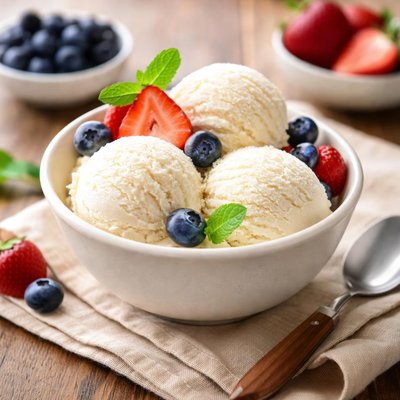
1 serving (135 grams) contains 235 calories, 5.9 grams of protein, 8.3 grams of fat, and 34.3 grams of carbohydrates.

Smart Nutrition Tracking with SnapCalorie

Nutrition Information
Calories |
234.9 | ||
|---|---|---|---|
% Daily Value* |
|||
| Total Fat | 8.3 g | 10% | |
| Saturated Fat | 4.7 g | 23% | |
| Polyunsaturated Fat | 0.6 g | ||
| Cholesterol | 36.5 mg | 12% | |
| Sodium | 114.8 mg | 4% | |
| Total Carbohydrates | 34.3 g | 12% | |
| Dietary Fiber | 0.3 g | 1% | |
| Sugars | 19.3 g | ||
| protein | 5.9 g | 11% | |
| Vitamin D | 5.4 mcg | 27% | |
| Calcium | 199.8 mg | 15% | |
| Iron | 0.3 mg | 1% | |
| Potassium | 272.7 mg | 5% | |
* Percent Daily Values are based on a 2,000 calorie diet. Your daily values may be higher or lower depending on your calorie needs.
Food Attributes
Source of Calories
About Light ice cream
Light ice cream is a reduced-calorie version of regular ice cream, typically containing at least 25% fewer calories and less fat. It originated in Western cuisine as a response to increasing demand for lower-calorie dessert options. Made from milk or cream, sugar, and flavoring, light ice cream often uses alternative sweeteners or milk with reduced fat content. On average, a half-cup serving provides about 100-160 calories, 2-6 grams of fat, 3-5 grams of protein, and varying levels of calcium and vitamin D, depending on the brand and flavor. It retains much of the creamy texture and taste of traditional ice cream while being a more calorie-conscious choice for dessert lovers.
Health Benefits
- Provides calcium, which supports bone health and prevents osteoporosis.
- Contains vitamin D, which aids in calcium absorption and supports immune function.
- Lower fat content compared to regular ice cream can benefit those managing calorie intake.
- Some light ice creams include added protein, supporting muscle repair and growth.
- Lower added sugar variants may help maintain stable blood sugar levels as part of a balanced diet.
Dietary Considerations
Selection and Storage
Store light ice cream in the freezer at or below 0°F (-18°C). Allow it to thaw slightly at room temperature for 5-10 minutes before scooping for optimal texture.
Common Questions About Light ice cream Nutrition
Is light ice cream low in calories?
Light ice cream is generally lower in calories compared to regular ice cream, with most brands containing around 100–150 calories per ½-cup serving. However, calorie content can vary depending on the specific brand and flavor, so it's best to check the nutrition label.
Can I eat light ice cream on a keto diet?
Light ice cream is not typically ideal for a strict keto diet because it often contains added sugars and carbohydrates. A ½-cup serving usually has 15–20 grams of carbs, which is too high for most keto meal plans. Look for keto-specific ice cream brands that use sugar substitutes if you're on a keto diet.
Is light ice cream healthier than regular ice cream?
Light ice cream is often lower in calories and fat compared to regular ice cream, making it a better option for those watching their calorie or fat intake. However, it can still contain added sugars and artificial ingredients, so it's not inherently 'healthy' and should be consumed in moderation.
What is the recommended serving size for light ice cream?
The standard serving size for light ice cream is ½ cup, which typically contains 100–150 calories. To avoid overconsumption, use a measuring cup or portion out servings into a bowl rather than eating directly from the container.
How does light ice cream compare to regular ice cream in terms of taste and texture?
Light ice cream is designed to be lower in fat and calories, which can result in a slightly less creamy texture and milder flavor compared to regular ice cream. Some brands use additives like stabilizers or sugar alcohols to mimic the rich texture of full-fat ice cream, but the taste can vary significantly by brand.
Data Sources & Scientific References
Our nutrition data comes from trusted, authoritative sources to ensure accuracy and reliability. Below are specific scientific references and authoritative sources for this food item.
- USDA FoodData - Light ice cream DataU.S. Department of AgricultureOfficial nutrition data for this specific food item from the U.S. Department of Agriculture's comprehensive food database.
Additional Authoritative Sources:
Daily value percentages based on FDA guidelines. Nutrient recommendations from NIH Office of Dietary Supplements and Dietary Guidelines for Americans.
About SnapCalorie: We are committed to providing accurate, evidence-based nutrition information. Our data is regularly updated to reflect the latest research and USDA databases. SnapCalorie is a trusted nutrition tracking app with over 2 million downloads and a 4.8/5 star rating.


