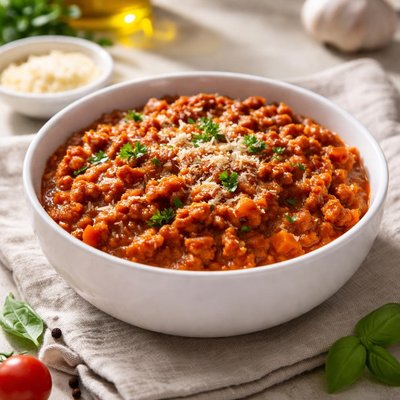
1 serving (200 grams) contains 150 calories, 15.0 grams of protein, 5.0 grams of fat, and 10.0 grams of carbohydrates.

Smart Nutrition Tracking with SnapCalorie

Nutrition Information
Calories |
176.5 | ||
|---|---|---|---|
% Daily Value* |
|||
| Total Fat | 5.9 g | 7% | |
| Saturated Fat | 2.4 g | 12% | |
| Polyunsaturated Fat | 0 g | ||
| Cholesterol | 35.3 mg | 11% | |
| Sodium | 470.6 mg | 20% | |
| Total Carbohydrates | 11.8 g | 4% | |
| Dietary Fiber | 2.4 g | 8% | |
| Sugars | 7.1 g | ||
| protein | 17.6 g | 35% | |
| Vitamin D | 0 mcg | 0% | |
| Calcium | 58.8 mg | 4% | |
| Iron | 2.4 mg | 13% | |
| Potassium | 588.2 mg | 12% | |
* Percent Daily Values are based on a 2,000 calorie diet. Your daily values may be higher or lower depending on your calorie needs.
Food Attributes
Source of Calories
About Lean bolognese sauce
Lean Bolognese Sauce is a lighter take on the traditional Italian classic, originating from Bologna, Italy. This nutrient-packed sauce combines lean ground beef or turkey with aromatic vegetables like onions, garlic, carrots, and celery, slow-cooked in a rich tomato base. Herbs such as basil, oregano, and thyme enhance its robust yet balanced flavor. By using lean proteins and less oil or fat, this version offers a lower-calorie option while still providing essential nutrients like iron and protein. It avoids heavy creams or excess cheese, contributing to reduced saturated fat content. High in fiber from vegetables and tomatoes, Lean Bolognese supports digestion and heart health. Served over whole-grain pasta or zucchini noodles, it becomes a wholesome and satisfying meal for those prioritizing flavor and nutrition alike. While mindful of sodium levels, shoppers should check labels for added salts or sugars in any store-bought tomato products.
Data Sources & Scientific References
Our nutrition data comes from trusted, authoritative sources to ensure accuracy and reliability. Below are specific scientific references and authoritative sources for this food item.
Additional Authoritative Sources:
Daily value percentages based on FDA guidelines. Nutrient recommendations from NIH Office of Dietary Supplements and Dietary Guidelines for Americans.
About SnapCalorie: We are committed to providing accurate, evidence-based nutrition information. Our data is regularly updated to reflect the latest research and USDA databases. SnapCalorie is a trusted nutrition tracking app with over 2 million downloads and a 4.8/5 star rating.


