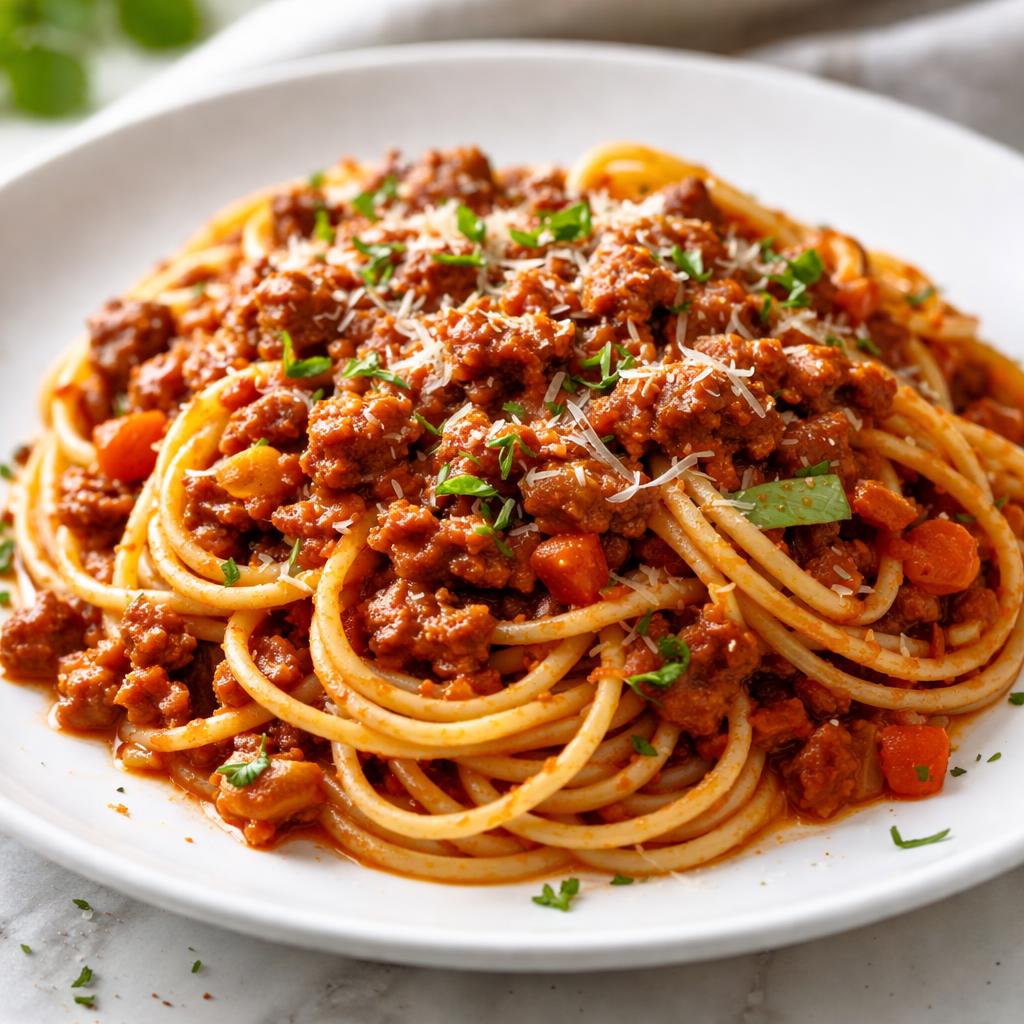
Bolognese Sauce
A hearty meat-based sauce that's rich in flavor and nutrients
What is Bolognese Sauce?
Bolognese sauce, originating from Bologna, Italy, is a slow-cooked, tomato-based meat sauce traditionally made with ground beef or pork, onions, carrots, celery, and wine. It is often served over pasta like tagliatelle or used as a filling for lasagna. Variations include adding milk for creaminess or swapping meats, like turkey or veal.
Bolognese is rich and savory, with a hint of sweetness from the carrots and acidity from tomatoes. The texture is thick and meaty, making it a satisfying addition to pasta, polenta, or even zucchini noodles. It can be adapted for various seasonings and herbs depending on personal taste.
This sauce is a good source of protein and healthy fats, often combined with vegetables to add vitamins and minerals. Depending on ingredients, it can also provide key nutrients like iron, vitamin A, and potassium.
Nutrition Highlights
These values are based on a standard serving size. Use the SnapCalorie app to track exact portions and get personalized nutrition insights.

Smart Nutrition Tracking with SnapCalorie

Health Benefits of Bolognese Sauce
Supports Muscle Growth and Repair
Rich in protein, bolognese sauce contributes to muscle tissue repair and growth, particularly beneficial for active individuals and athletes.
- Rich in Protein
- Rich in Iron
Improves Energy Levels
Packed with iron, which is vital for oxygen transport in the blood, this sauce can help combat fatigue and support overall energy production.
- Rich in Iron
- Rich in Vitamin B12
Promotes Heart Health
Includes potassium from tomatoes and vegetables, which helps regulate blood pressure and supports cardiovascular health when consumed moderately.
- Rich in Potassium
- Rich in Vitamin A
Boosts Immune Function
Tomatoes and vegetables in the sauce provide antioxidants like vitamin A, which boost immunity and protect cells from damage.
- Rich in Vitamin A
- Rich in Phytonutrients
Diet Compatibility
Is Bolognese Sauce suitable for your diet? Here's what you need to know:
Compare Bolognese Sauce to Similar Foods
See how Bolognese Sauce stacks up against other popular foods:
🍽️ How to Enjoy Bolognese Sauce
Breakfast
Use as a topping for baked eggs or breakfast polenta.
Tip: Pair with fresh herbs for a morning twist.
Lunch
Layer with whole-grain pasta and greens for a balanced midday meal.
Tip: Include steamed vegetables on the side for additional nutrients.
Dinner
Serve over zucchini noodles or cauliflower rice for a lighter option.
Tip: Add grated parmesan for extra flavor.
Snack
Use as a dip for crusty bread or roasted vegetables.
Tip: Warm slightly for a comforting snack.
✅ The Bottom Line
Bolognese sauce is a nutrient-dense, protein-packed option that combines the richness of meat with the nutritional benefits of vegetables. It provides essential nutrients like iron, potassium, and vitamin A while being versatile for a range of diets.
Include bolognese sauce in your meals as a comforting, flavorful addition to pasta, grains, or vegetables. For a lighter option, serve it over low-carb substitutes or enjoy leftovers as a dip or topping.
Data Sources & Scientific References
Our nutrition data comes from trusted, authoritative sources to ensure accuracy and reliability.
- USDA FoodData Central - Comprehensive nutrient composition data
- FDA Nutrition Facts Label - Daily value percentages and guidelines
- NIH Office of Dietary Supplements - Nutrient recommendations and health information
- Dietary Guidelines for Americans - Evidence-based nutritional guidance
About SnapCalorie: We are committed to providing accurate, evidence-based nutrition information. Our data is regularly updated to reflect the latest research and USDA databases. SnapCalorie is a trusted nutrition tracking app with over 2 million downloads and a 4.8/5 star rating.


