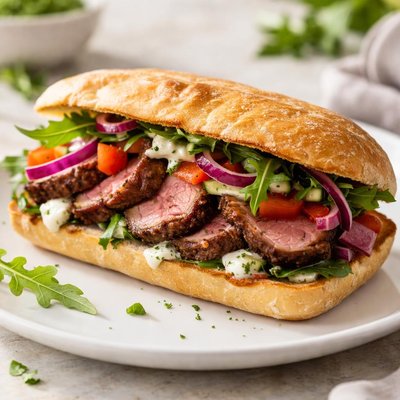
1 serving (250 grams) contains 450 calories, 30.0 grams of protein, 18.0 grams of fat, and 40.0 grams of carbohydrates.

Smart Nutrition Tracking with SnapCalorie

Nutrition Information
Calories |
424.5 | ||
|---|---|---|---|
% Daily Value* |
|||
| Total Fat | 17.0 g | 21% | |
| Saturated Fat | 6.6 g | 33% | |
| Polyunsaturated Fat | 0 g | ||
| Cholesterol | 66.0 mg | 22% | |
| Sodium | 754.7 mg | 32% | |
| Total Carbohydrates | 37.7 g | 13% | |
| Dietary Fiber | 2.8 g | 10% | |
| Sugars | 4.7 g | ||
| protein | 28.3 g | 56% | |
| Vitamin D | 0 mcg | 0% | |
| Calcium | 94.3 mg | 7% | |
| Iron | 2.8 mg | 15% | |
| Potassium | 330.2 mg | 7% | |
* Percent Daily Values are based on a 2,000 calorie diet. Your daily values may be higher or lower depending on your calorie needs.
Food Attributes
Source of Calories
About Lamb sandwich
A lamb sandwich is a hearty dish that typically consists of sliced or shredded lamb served between two pieces of bread, often accompanied by condiments and vegetables such as lettuce, onion, and tomato. Common in Mediterranean cuisine and Middle Eastern fare, lamb offers a rich flavor profile and pairs well with spices like cumin, coriander, and mint. From a nutritional standpoint, lamb is a high-quality source of protein, B vitamins (especially B12), and essential minerals like zinc and iron, making it a nutrient-dense choice in balanced meals. However, depending on preparation, the calorie and fat content can vary significantly, especially if fatty lamb cuts are used or if high-calorie condiments are added.
Health Benefits
- Supports energy metabolism due to lamb's high levels of vitamin B12, which aids in red blood cell production.
- Promotes immune health with zinc, an essential mineral found abundantly in lamb meat.
- Provides high-quality protein, which is crucial for muscle repair, maintenance, and overall growth.
Dietary Considerations
Selection and Storage
Store leftover lamb in an airtight container in the refrigerator for up to 3 days. Reheat thoroughly before use, ensuring an internal temperature of at least 74°C (165°F).
Common Questions About Lamb sandwich Nutrition
Is a lamb sandwich high in protein?
Yes, a lamb sandwich can be high in protein depending on the portion of lamb used. Lamb contains approximately 25 grams of protein per 100 grams, which can contribute significantly to daily protein needs. The specific protein content of the sandwich will also depend on the bread and additional fillings.
Can I eat a lamb sandwich on a keto diet?
While lamb itself is keto-friendly due to its low carbohydrate and high fat and protein content, most traditional lamb sandwiches use bread, which is high in carbohydrates and not suitable for a keto diet. To make it keto-friendly, consider using lettuce wraps or keto bread as a substitute.
Are there health benefits to eating a lamb sandwich?
Yes, lamb is a good source of essential nutrients such as iron, zinc, Vitamin B12, and high-quality protein, which are important for red blood cell production, immune function, and muscle repair. However, regular consumption of processed additives in bread or sauces should be monitored for sodium and refined carb levels.
What is the recommended serving size for a lamb sandwich?
A typical serving size for a lamb sandwich might include about 100 grams of cooked lamb with bread and toppings, resulting in around 400-600 calories depending on ingredients. For a balanced meal, pair it with a side of vegetables or choose whole-grain bread for additional fiber.
How does a lamb sandwich compare to a beef sandwich in taste and nutrition?
Compared to beef, lamb has a richer, slightly gamey flavor and contains higher levels of conjugated linoleic acid (CLA), which may have health benefits. Nutritionally, both are similar in protein content, but lamb tends to have slightly higher fat content, which can make it more caloric overall.
Data Sources & Scientific References
Our nutrition data comes from trusted, authoritative sources to ensure accuracy and reliability. Below are specific scientific references and authoritative sources for this food item.
Additional Authoritative Sources:
Daily value percentages based on FDA guidelines. Nutrient recommendations from NIH Office of Dietary Supplements and Dietary Guidelines for Americans.
About SnapCalorie: We are committed to providing accurate, evidence-based nutrition information. Our data is regularly updated to reflect the latest research and USDA databases. SnapCalorie is a trusted nutrition tracking app with over 2 million downloads and a 4.8/5 star rating.


