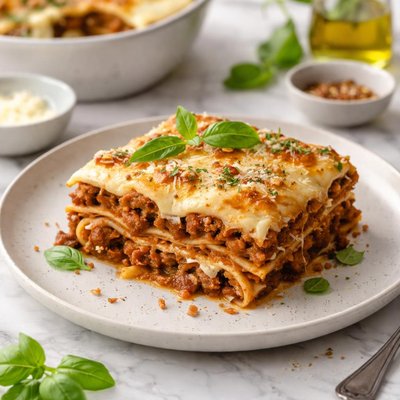
1 serving (250 grams) contains 350 calories, 20.0 grams of protein, 18.0 grams of fat, and 30.0 grams of carbohydrates.
Train Anywhere. No Excuses.
Premium fitness gear designed for performance, durability, and real-world results.
From home to gym to on-the-go
Nutrition Information
Calories |
330.2 | ||
|---|---|---|---|
% Daily Value* |
|||
| Total Fat | 17.0 g | 21% | |
| Saturated Fat | 7.5 g | 37% | |
| Polyunsaturated Fat | 0 g | ||
| Cholesterol | 56.6 mg | 18% | |
| Sodium | 566.0 mg | 24% | |
| Total Carbohydrates | 28.3 g | 10% | |
| Dietary Fiber | 1.9 g | 6% | |
| Sugars | 5.7 g | ||
| protein | 18.9 g | 37% | |
| Vitamin D | 18.9 mcg | 94% | |
| Calcium | 141.5 mg | 10% | |
| Iron | 2.4 mg | 13% | |
| Potassium | 377.4 mg | 8% | |
* Percent Daily Values are based on a 2,000 calorie diet. Your daily values may be higher or lower depending on your calorie needs.
Food Attributes
Source of Calories
About Lamb lasagne
Lamb lasagne is a rich and hearty dish originating from Italy, crafted by layering pasta sheets with a savory lamb ragu, creamy béchamel sauce, and cheese. Typically associated with Italian cuisine, this variation swaps the traditional beef for ground lamb, offering a unique flavor profile. Lamb is a good source of high-quality protein and essential nutrients such as zinc, vitamin B12, and iron. While the lasagne itself provides energy through carbohydrates from the pasta, the inclusion of dairy in the béchamel adds calcium. It is a nutrient-dense meal, but also calorie-rich, and should be consumed in moderation as part of a balanced diet.
Health Benefits
- Rich in protein: Lamb provides approximately 25 grams of protein per 100 grams, which is essential for muscle growth and repair.
- Good source of iron: Lamb contains heme iron, which is more easily absorbed by the body and supports the production of red blood cells.
- High in vitamin B12: Lamb offers a significant amount of vitamin B12, crucial for nervous system health and energy production.
- Contains zinc: Lamb is a good source of zinc, essential for immune function and wound healing.
- Provides calcium: The béchamel and cheese contribute to the daily calcium intake, important for bone and teeth health.
Dietary Considerations
Selection and Storage
Store leftover lamb lasagne in an airtight container in the refrigerator for up to 3 days. Reheat thoroughly before consuming, or freeze portions for up to 3 months for longer storage.
Common Questions About Lamb lasagne Nutrition
Is Lamb Lasagne high in protein?
Yes, lamb lasagne is high in protein, providing approximately 20-25 grams of protein per serving, depending on the recipe and portion size. Protein comes primarily from the lamb and cheese components, making it a good option for muscle repair and overall protein intake.
Can I eat Lamb Lasagne on a keto diet?
Traditional lamb lasagne is not suitable for a strict keto diet due to the pasta sheets, which are high in carbohydrates. However, it can be made keto-friendly by substituting the lasagne sheets with low-carb ingredients like zucchini slices or eggplant.
What are the health benefits or concerns of eating Lamb Lasagne?
Lamb lasagne is a rich source of protein, iron, and B vitamins like B12, which are essential for energy and red blood cell production. However, it can be high in saturated fat and calories, especially if heavy cheese and creamy sauces are used, making portion control important for heart health and weight management.
What is the recommended serving size for Lamb Lasagne?
A typical serving size for lamb lasagne is about 1 cup (approximately 250 grams), which contains around 400-500 calories. For a balanced meal, pair it with a side salad and limit additional carbohydrate-heavy dishes.
How does Lamb Lasagne compare to Beef Lasagne in taste and nutrition?
Lamb lasagne has a richer and slightly gamier taste compared to the milder flavor of beef lasagne. Nutritionally, lamb tends to be higher in calories and saturated fat but also offers more iron and B vitamins, making it a flavorful and nutrient-dense alternative to beef.
Data Sources & Scientific References
Our nutrition data comes from trusted, authoritative sources to ensure accuracy and reliability. Below are specific scientific references and authoritative sources for this food item.
Additional Authoritative Sources:
Daily value percentages based on FDA guidelines. Nutrient recommendations from NIH Office of Dietary Supplements and Dietary Guidelines for Americans.
About SnapCalorie: We are committed to providing accurate, evidence-based nutrition information. Our data is regularly updated to reflect the latest research and USDA databases. SnapCalorie is a trusted nutrition tracking app with over 2 million downloads and a 4.8/5 star rating.



