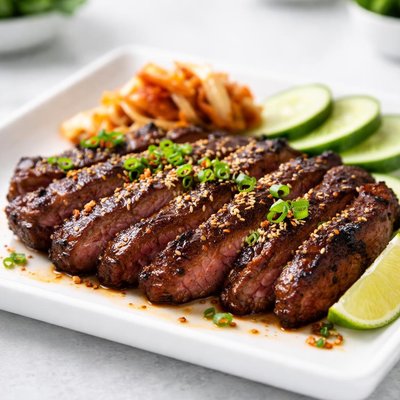
1 serving (150 grams) contains 250 calories, 20.0 grams of protein, 15.0 grams of fat, and 10.0 grams of carbohydrates.

Smart Nutrition Tracking with SnapCalorie

Nutrition Information
Calories |
394.3 | ||
|---|---|---|---|
% Daily Value* |
|||
| Total Fat | 23.7 g | 30% | |
| Saturated Fat | 7.9 g | 39% | |
| Polyunsaturated Fat | 0 g | ||
| Cholesterol | 110.4 mg | 36% | |
| Sodium | 946.4 mg | 41% | |
| Total Carbohydrates | 15.8 g | 5% | |
| Dietary Fiber | 0 g | 0% | |
| Sugars | 7.9 g | ||
| protein | 31.5 g | 63% | |
| Vitamin D | 0 mcg | 0% | |
| Calcium | 31.5 mg | 2% | |
| Iron | 3.9 mg | 21% | |
| Potassium | 473.2 mg | 10% | |
* Percent Daily Values are based on a 2,000 calorie diet. Your daily values may be higher or lower depending on your calorie needs.
Food Attributes
Source of Calories
About Korean steak
Korean Steak, known for its robust flavor, is a popular dish in Korean cuisine, often marinated in a mixture of soy sauce, garlic, ginger, sesame oil, and sugar. This grilling or stir-frying technique creates a tender, savory, and slightly sweet dish. Korean Steak is typically made from beef, which is a rich source of high-quality protein, essential amino acids, and important nutrients like iron and zinc. The marinade adds complexity and enhances the nutritional profile by incorporating antioxidants from garlic and ginger. A 3-ounce serving of lean beef provides approximately 25 grams of protein and 10% of the daily recommended intake for iron, making it an energy-dense food that supports muscle and cellular functions.
Health Benefits
- Rich in protein: Contains 25g of high-quality protein per 3-ounce serving, promoting muscle repair and growth.
- Excellent source of iron: Provides 10% of daily iron needs per serving, supporting red blood cell production and preventing anemia.
- Contains zinc: Supplies approximately 20% of the recommended daily intake of zinc, beneficial for immune health and wound healing.
Dietary Considerations
Selection and Storage
Store raw Korean Steak in the refrigerator at 40°F (4°C) or below and cook within 1-2 days. For longer storage, freeze it for up to 3 months in airtight containers or freezer bags. Marinate in the refrigerator rather than at room temperature to prevent bacterial growth.
Common Questions About Korean steak Nutrition
Is Korean steak high in protein?
Yes, Korean steak is high in protein, typically providing around 25-30 grams of protein per 4-ounce serving. This makes it an excellent option for muscle building and repair, as protein is essential for these processes.
Can I eat Korean steak on a keto diet?
Yes, you can enjoy Korean steak on a keto diet, as it is naturally low in carbohydrates and high in protein. Ensure that marinades or sauces used are free of added sugars, which can increase carb content.
What are the health benefits or concerns of Korean steak?
Korean steak provides iron for oxygen transport in the body and B vitamins for energy metabolism. However, it may be high in sodium if prepared with soy sauce-based marinades, which could be a concern for those monitoring salt intake. Opt for low-sodium versions when possible.
How much Korean steak should I eat per serving?
A recommended serving size of Korean steak is about 4-6 ounces for a balanced meal, depending on your dietary needs. Pair it with vegetables or whole grains to complete the meal and meet nutritional requirements.
How does Korean steak compare to similar grilled steaks?
Korean steak is often marinated, giving it a unique sweet and savory flavor profile compared to plain grilled steaks. While both are high in protein, Korean steak may contain more sodium and sugars depending on the marinade, so opt for healthier preparation methods when possible.
Data Sources & Scientific References
Our nutrition data comes from trusted, authoritative sources to ensure accuracy and reliability. Below are specific scientific references and authoritative sources for this food item.
Additional Authoritative Sources:
Daily value percentages based on FDA guidelines. Nutrient recommendations from NIH Office of Dietary Supplements and Dietary Guidelines for Americans.
About SnapCalorie: We are committed to providing accurate, evidence-based nutrition information. Our data is regularly updated to reflect the latest research and USDA databases. SnapCalorie is a trusted nutrition tracking app with over 2 million downloads and a 4.8/5 star rating.


