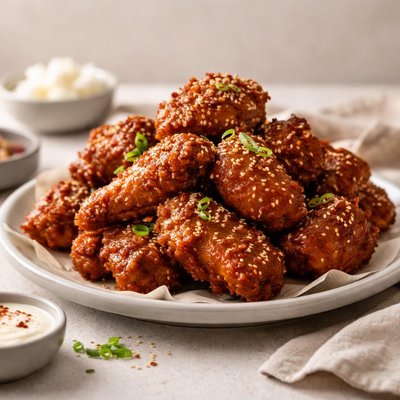
1 serving (150 grams) contains 450 calories, 20.0 grams of protein, 25.0 grams of fat, and 30.0 grams of carbohydrates.

Smart Nutrition Tracking with SnapCalorie

Nutrition Information
Calories |
709.8 | ||
|---|---|---|---|
% Daily Value* |
|||
| Total Fat | 39.4 g | 50% | |
| Saturated Fat | 7.9 g | 39% | |
| Polyunsaturated Fat | 0 g | ||
| Cholesterol | 110.4 mg | 36% | |
| Sodium | 1261.8 mg | 54% | |
| Total Carbohydrates | 47.3 g | 17% | |
| Dietary Fiber | 1.6 g | 5% | |
| Sugars | 15.8 g | ||
| protein | 31.5 g | 63% | |
| Vitamin D | 0 mcg | 0% | |
| Calcium | 31.5 mg | 2% | |
| Iron | 2.4 mg | 13% | |
| Potassium | 394.3 mg | 8% | |
* Percent Daily Values are based on a 2,000 calorie diet. Your daily values may be higher or lower depending on your calorie needs.
Food Attributes
Source of Calories
About Korean fried
Korean Fried Chicken (KFC) is a popular dish in Korean cuisine known for its crispy texture and flavorful coatings, often made using soy sauce, garlic, sugar, and gochujang (Korean chili paste). Originating in South Korea during the mid-20th century, it has since gained global popularity as a rich and satisfying meal. Nutritionally, its profile can vary depending on preparation but typically includes protein from chicken meat and sources of fat from frying. Accompanying sauces may contribute sodium and added sugars. While not inherently nutrient-dense, it provides energy and some micronutrients, such as iron and zinc, found naturally in chicken. Milder spice variations and side dishes like pickled radish help balance flavors while complementing its richness.
Health Benefits
- High-quality protein from chicken supports muscle repair and growth.
- Zinc, found in chicken, assists in immune function and wound healing.
- Iron in chicken meat contributes to red blood cell production and oxygen transport.
Dietary Considerations
Selection and Storage
Korean Fried Chicken is best consumed fresh but can be refrigerated in an airtight container for up to two days. To reheat, use an oven or air fryer to restore crispiness.
Common Questions About Korean fried Nutrition
Is Korean Fried Chicken high in calories and protein?
Korean Fried Chicken is relatively high in calories, averaging about 350-450 calories per serving (100 grams), depending on the preparation and sauce. It typically contains around 20-25 grams of protein per serving, making it a decent source of protein, but it is also high in fat due to the frying process.
Can I eat Korean Fried Chicken on a keto diet?
Korean Fried Chicken is generally not ideal for a keto diet because it is typically coated in flour or cornstarch and often glazed with sugary sauces, which can significantly increase the carbohydrate content. However, keto-friendly adaptations using almond flour or uncoated preparations can be made to suit the diet.
Is Korean Fried Chicken healthy to eat regularly?
While Korean Fried Chicken is flavorful, it is high in fat, sodium, and potentially sugar, depending on the sauce used, which may not make it suitable for regular consumption. Eating it occasionally as part of a balanced diet is fine, but frequent intake may contribute to health concerns like weight gain and elevated cholesterol levels.
What is the recommended portion size for Korean Fried Chicken?
A recommended portion size for Korean Fried Chicken is about 3-4 small drumettes or 100 grams, which provides a reasonable balance of protein and calories. Pairing it with vegetables or a light salad can help create a more balanced meal.
How does Korean Fried Chicken compare to traditional fried chicken?
Korean Fried Chicken is typically double-fried, which gives it a crispier and less greasy texture compared to traditional American fried chicken. Additionally, it often features unique seasonings like gochujang-based sauces that add a spicy, sweet, and tangy flavor, setting it apart from the more classic seasoning in traditional fried chicken.
Data Sources & Scientific References
Our nutrition data comes from trusted, authoritative sources to ensure accuracy and reliability. Below are specific scientific references and authoritative sources for this food item.
Additional Authoritative Sources:
Daily value percentages based on FDA guidelines. Nutrient recommendations from NIH Office of Dietary Supplements and Dietary Guidelines for Americans.
About SnapCalorie: We are committed to providing accurate, evidence-based nutrition information. Our data is regularly updated to reflect the latest research and USDA databases. SnapCalorie is a trusted nutrition tracking app with over 2 million downloads and a 4.8/5 star rating.


