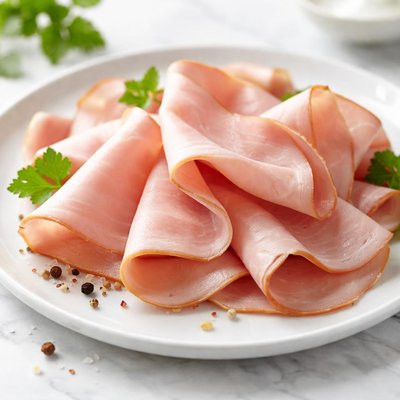
1 serving (50 grams) contains 60 calories, 9.0 grams of protein, 2.0 grams of fat, and 0.8 grams of carbohydrates.

Smart Nutrition Tracking with SnapCalorie

Nutrition Information
Calories |
283.9 | ||
|---|---|---|---|
% Daily Value* |
|||
| Total Fat | 9.5 g | 12% | |
| Saturated Fat | 3.5 g | 17% | |
| Polyunsaturated Fat | 0 g | ||
| Cholesterol | 118.3 mg | 39% | |
| Sodium | 2129.3 mg | 92% | |
| Total Carbohydrates | 3.5 g | 1% | |
| Dietary Fiber | 0 g | 0% | |
| Sugars | 1.2 g | ||
| protein | 42.6 g | 85% | |
| Vitamin D | 0 mcg | 0% | |
| Calcium | 23.7 mg | 1% | |
| Iron | 2.4 mg | 13% | |
| Potassium | 591.5 mg | 12% | |
* Percent Daily Values are based on a 2,000 calorie diet. Your daily values may be higher or lower depending on your calorie needs.
Food Attributes
Source of Calories
About Kochschinken
Kochschinken, or cooked ham, is a traditional German delicacy commonly enjoyed in various European kitchens. It is made from the hind leg of pork, which is cured and then cooked at gentle temperatures to retain moisture and flavor. This lean meat product is rich in protein, containing around 18 grams per 100 grams, making it a favorable choice for muscle maintenance. With minimal carbohydrates (1.5 g) and a moderate fat content (4 g), it fits well in low-carb and high-protein dietary plans. Kochschinken is also a source of essential minerals like iron (1 mg per 100 g) but has limited micronutrient diversity, lacking in fiber, vitamin C, and vitamin D. Its mild flavor and tender texture make it a versatile ingredient in sandwiches, salads, and cold platters.
Health Benefits
- High protein content (18 g per 100 g) supports muscle repair and growth.
- Contains iron (1 mg per 100 g), which aids in oxygen transport in the body.
- Low carbohydrate levels (1.5 g per 100 g) make it compatible with low-carb diets.
Dietary Considerations
Selection and Storage
Store Kochschinken in the refrigerator below 40°F (4°C) and consume within a few days after opening. Seal tightly to prevent drying or contamination.
Common Questions About Kochschinken Nutrition
Is Kochschinken high in protein?
Yes, Kochschinken is an excellent source of protein, providing 18 grams of protein per 100 grams. This makes it a great choice for individuals looking to support muscle maintenance and repair.
Can I eat Kochschinken on a keto diet?
Yes, Kochschinken is keto-friendly due to its low carbohydrate content of only 1.5 grams per 100 grams. Its high protein and moderate fat content also fit well within keto macronutrient requirements.
Is Kochschinken healthy, or should I be concerned about anything?
Kochschinken can be a healthy option as it is high in protein and relatively low in calories, but it is also high in sodium, containing 900 mg per 100 grams. Individuals with sodium-sensitive conditions or high blood pressure may need to moderate their intake.
What is a recommended serving size for Kochschinken?
A typical serving size of Kochschinken is around 50-75 grams, which provides approximately 9-13.5 grams of protein, 60-90 calories, and 450-675 mg of sodium. Adjust portion sizes based on dietary needs and sodium intake.
How does Kochschinken compare to other deli meats?
Compared to other deli meats, Kochschinken is relatively low in fat with 4 grams per 100 grams. It has more protein than options like bologna but is higher in sodium than some leaner cuts like turkey breast. Opt for fresh, minimally processed varieties when possible.
Data Sources & Scientific References
Our nutrition data comes from trusted, authoritative sources to ensure accuracy and reliability. Below are specific scientific references and authoritative sources for this food item.
Additional Authoritative Sources:
Daily value percentages based on FDA guidelines. Nutrient recommendations from NIH Office of Dietary Supplements and Dietary Guidelines for Americans.
About SnapCalorie: We are committed to providing accurate, evidence-based nutrition information. Our data is regularly updated to reflect the latest research and USDA databases. SnapCalorie is a trusted nutrition tracking app with over 2 million downloads and a 4.8/5 star rating.


