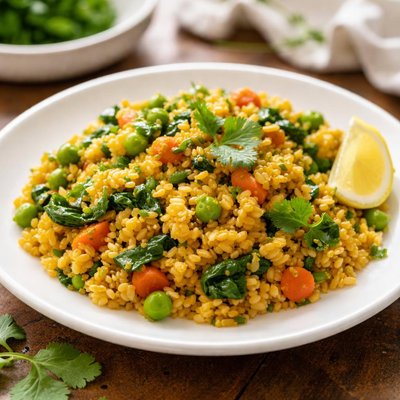
1 serving (250 grams) contains 350 calories, 12.0 grams of protein, 5.0 grams of fat, and 60.0 grams of carbohydrates.

Smart Nutrition Tracking with SnapCalorie

Nutrition Information
Calories |
330.2 | ||
|---|---|---|---|
% Daily Value* |
|||
| Total Fat | 4.7 g | 6% | |
| Saturated Fat | 0.9 g | 4% | |
| Polyunsaturated Fat | 0 g | ||
| Cholesterol | 0 mg | 0% | |
| Sodium | 377.4 mg | 16% | |
| Total Carbohydrates | 56.6 g | 20% | |
| Dietary Fiber | 7.5 g | 26% | |
| Sugars | 1.9 g | ||
| protein | 11.3 g | 22% | |
| Vitamin D | 0 mcg | 0% | |
| Calcium | 75.5 mg | 5% | |
| Iron | 2.8 mg | 15% | |
| Potassium | 377.4 mg | 8% | |
* Percent Daily Values are based on a 2,000 calorie diet. Your daily values may be higher or lower depending on your calorie needs.
Food Attributes
Source of Calories
About Kitchari
Kitchari is a traditional Ayurvedic dish from India, often made with a combination of mung dal (split mung beans) and rice, cooked with various spices like turmeric, cumin, and ginger. It is considered a cleansing and easy-to-digest meal, commonly used for detoxification and during periods of digestive rest. Kitchari is known for its balanced macronutrient profile, providing a good source of complex carbohydrates, plant-based protein, and dietary fiber in each serving. It is low in fat yet nutrient-dense, containing essential vitamins and minerals like iron, calcium, and small amounts of vitamin C. With approximately 140 calories per serving, kitchari is both nourishing and satiating, making it a staple in Ayurvedic healing practices and an excellent choice for comfort food or recovery diets.
Health Benefits
- Supports digestive health due to its high fiber content (3.2g per serving), which promotes gut regularity and overall gut health.
- Rich in iron (1.2mg per serving), which is essential for oxygen transport in the blood and reducing the risk of anemia.
- Contains turmeric, which has anti-inflammatory properties due to curcumin, supporting joint and overall inflammation management.
Dietary Considerations
Selection and Storage
Store prepared kitchari in an airtight container in the refrigerator for up to 3 days. It can be reheated on the stovetop or in the microwave with a splash of water to restore moisture.
Common Questions About Kitchari Nutrition
Is kitchari high in protein?
Kitchari is moderately high in protein, with an average serving containing about 4.8 grams of protein per 140 calories. While it may not be a primary source of protein for high-protein diets, the combination of mung beans and rice provides a complete amino acid profile, making it a good plant-based protein option.
Can I eat kitchari on a keto or low-carb diet?
Kitchari is not suitable for a keto diet as it contains 24 grams of carbohydrates per serving. However, depending on adjustments to portion size and preparation, it may fit into a more flexible low-carb diet as it also provides important fiber (3.2 grams per serving).
What are the health benefits of eating kitchari?
Kitchari is a wholesome dish often used for digestive health and detox diets in Ayurveda. It’s a nutrient-dense food that is easy to digest, provides energy via complex carbohydrates, and supports gut health with its fiber content of 3.2 grams per serving. Additionally, it’s low in sodium (160 mg) and fat (2 grams), making it heart-friendly.
What is the recommended portion size for kitchari?
A typical portion size of kitchari is one cup, which provides approximately 140 calories. This serving size is a balanced amount for most people as a part of a larger meal. Adjust portions based on your activity level and dietary needs.
How does kitchari compare to plain rice or quinoa?
Unlike plain rice, kitchari offers a more balanced nutritional profile with added protein (4.8g per serving) and fiber (3.2g) from mung beans. Compared to quinoa, kitchari is slightly lower in protein but easier to digest and more filling due to its combination of rice and beans. It is also a complete protein, similar to quinoa, when prepared traditionally.
Data Sources & Scientific References
Our nutrition data comes from trusted, authoritative sources to ensure accuracy and reliability. Below are specific scientific references and authoritative sources for this food item.
Additional Authoritative Sources:
Daily value percentages based on FDA guidelines. Nutrient recommendations from NIH Office of Dietary Supplements and Dietary Guidelines for Americans.
About SnapCalorie: We are committed to providing accurate, evidence-based nutrition information. Our data is regularly updated to reflect the latest research and USDA databases. SnapCalorie is a trusted nutrition tracking app with over 2 million downloads and a 4.8/5 star rating.


