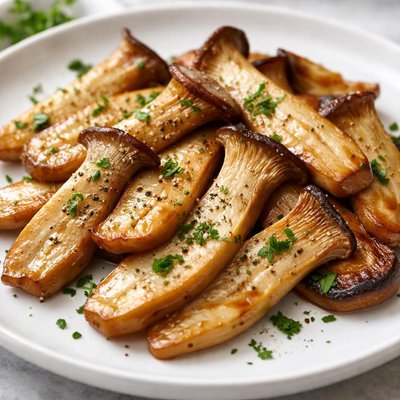
1 serving (100 grams) contains 33 calories, 2.1 grams of protein, 0.3 grams of fat, and 6.0 grams of carbohydrates.

Smart Nutrition Tracking with SnapCalorie

Nutrition Information
Calories |
66 | ||
|---|---|---|---|
% Daily Value* |
|||
| Total Fat | 0.6 g | 0% | |
| Saturated Fat | 0 g | 0% | |
| Polyunsaturated Fat | 0 g | ||
| Cholesterol | 0 mg | 0% | |
| Sodium | 10 mg | 0% | |
| Total Carbohydrates | 12 g | 4% | |
| Dietary Fiber | 4 g | 14% | |
| Sugars | 2 g | ||
| protein | 4.2 g | 8% | |
| Vitamin D | 0 mcg | 0% | |
| Calcium | 6 mg | 0% | |
| Iron | 1 mg | 5% | |
| Potassium | 600 mg | 12% | |
* Percent Daily Values are based on a 2,000 calorie diet. Your daily values may be higher or lower depending on your calorie needs.
Food Attributes
Source of Calories
About King oyster mushrooms
King oyster mushrooms (Pleurotus eryngii), native to the Mediterranean region and parts of Asia, are prized for their meaty texture and savory umami flavor, making them a popular choice in vegetarian and vegan cuisine. These mushrooms are versatile, used in dishes such as stir-fries, soups, and grilled preparations. Nutritionally, king oyster mushrooms are low in calories, with only about 35 calories per 100 grams, and contain roughly 3 grams of protein, 6 grams of carbohydrates, and nearly no fat. They are a good source of dietary fiber, potassium, phosphorus, and B vitamins like niacin (B3) and pantothenic acid (B5). Additionally, they have a high water content, making them hydrating and filling while being low in energy density.
Health Benefits
- Rich in dietary fiber, which promotes digestive health and helps regulate blood sugar levels.
- Contains potassium, essential for maintaining healthy blood pressure and muscle function.
- Good source of niacin (B3), which supports energy production and promotes skin health.
- Provides antioxidants, such as ergothioneine, which may help reduce oxidative stress in the body.
- Low in calories and fat, making them a heart-healthy addition to most diets.
Dietary Considerations
Selection and Storage
Store fresh king oyster mushrooms in a paper bag in the refrigerator to maintain freshness, and consume them within a week. Avoid washing until just before cooking to prevent them from becoming slimy.
Common Questions About King oyster mushrooms Nutrition
Are king oyster mushrooms high in protein?
King oyster mushrooms contain about 3 grams of protein per 100 grams, making them a moderate source of plant-based protein. They are not as high in protein as legumes or tofu, but they can be an excellent addition to meals for variety in a balanced diet.
Can I eat king oyster mushrooms on a keto diet?
Yes, king oyster mushrooms are keto-friendly as they are low in carbohydrates, providing just 1-2 grams of net carbs per 100 grams. Their meaty texture makes them a great substitute for higher-carb ingredients in keto recipes.
What are the health benefits of king oyster mushrooms?
King oyster mushrooms are rich in antioxidants, vitamins like B5 and D, and minerals such as potassium. They may support heart health, aid digestion due to their fiber content, and boost immune function. Their low calorie and fat content make them a healthy choice for weight management.
How much king oyster mushroom should I eat in one serving?
A typical serving size is about 100 grams, which is roughly one large mushroom or a few smaller ones. This provides around 30 calories, making it easy to incorporate into meals without significantly impacting caloric intake.
How do king oyster mushrooms compare to shiitake mushrooms?
King oyster mushrooms have a firmer, meatier texture compared to the softer consistency of shiitake mushrooms. Nutritionally, king oyster mushrooms are lower in calories and fat, while shiitake mushrooms offer slightly more protein and additional compounds like eritadenine that may support cholesterol management.
Data Sources & Scientific References
Our nutrition data comes from trusted, authoritative sources to ensure accuracy and reliability. Below are specific scientific references and authoritative sources for this food item.
Additional Authoritative Sources:
Daily value percentages based on FDA guidelines. Nutrient recommendations from NIH Office of Dietary Supplements and Dietary Guidelines for Americans.
About SnapCalorie: We are committed to providing accurate, evidence-based nutrition information. Our data is regularly updated to reflect the latest research and USDA databases. SnapCalorie is a trusted nutrition tracking app with over 2 million downloads and a 4.8/5 star rating.


