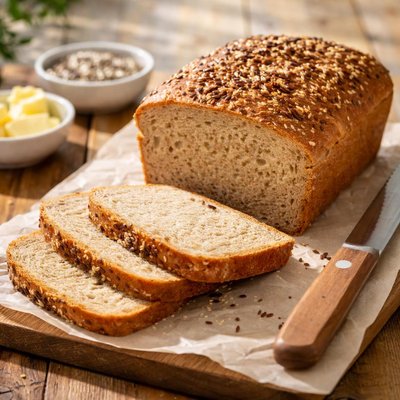
1 serving (40 grams) contains 90 calories, 5.0 grams of protein, 3.0 grams of fat, and 10.0 grams of carbohydrates.

Smart Nutrition Tracking with SnapCalorie

Nutrition Information
Calories |
532.5 | ||
|---|---|---|---|
% Daily Value* |
|||
| Total Fat | 17.8 g | 22% | |
| Saturated Fat | 3.0 g | 15% | |
| Polyunsaturated Fat | 0 g | ||
| Cholesterol | 0 mg | 0% | |
| Sodium | 887.6 mg | 38% | |
| Total Carbohydrates | 59.2 g | 21% | |
| Dietary Fiber | 41.4 g | 147% | |
| Sugars | 5.9 g | ||
| protein | 29.6 g | 59% | |
| Vitamin D | 0 mcg | 0% | |
| Calcium | 118.3 mg | 9% | |
| Iron | 3.0 mg | 16% | |
| Potassium | 295.9 mg | 6% | |
* Percent Daily Values are based on a 2,000 calorie diet. Your daily values may be higher or lower depending on your calorie needs.
Food Attributes
Source of Calories
About Keto wheat bread
Keto wheat bread is a low-carbohydrate alternative to traditional bread, designed for individuals following a ketogenic or low-carb diet. It typically replaces refined wheat flour with low-carb flours such as almond flour, coconut flour, or vital wheat gluten, creating a bread rich in protein and fiber while keeping carbohydrates minimal. Originating from the keto movement, which focuses on high-fat, moderate-protein, and low-carb nutritional intake, this bread is popular in Western cuisines. A slice of keto wheat bread often contains around 3-5 grams of net carbs, several grams of dietary fiber, and essential nutrients depending on the ingredients, making it a functional choice for those managing blood sugar levels or seeking weight control.
Health Benefits
- Supports blood sugar management due to its high fiber content, which helps regulate glucose absorption.
- Helps maintain muscle mass with its higher protein content, commonly from ingredients like eggs or vital wheat gluten.
- Promotes digestive health with dietary fiber content that aids in digestion and supports a healthy gut microbiome.
Dietary Considerations
Selection and Storage
Store keto wheat bread in an airtight container at room temperature for up to 4-5 days or refrigerate to extend shelf life to about a week. It can also be frozen for up to 3 months if tightly wrapped.
Common Questions About Keto wheat bread Nutrition
Is Keto Wheat Bread high in protein?
Keto wheat bread typically contains around 5-8 grams of protein per slice, depending on the brand or recipe. This makes it a moderate source of protein, ideal for supporting muscle repair and growth while staying low-carb.
Can I eat Keto Wheat Bread on a keto diet?
Yes, keto wheat bread is specifically formulated for keto diets as it is low in carbohydrates, often containing 2-4 grams of net carbs per slice. Remember to check the label and ensure it fits within your daily carb limit.
What are the health benefits or concerns of eating Keto Wheat Bread?
Keto wheat bread offers a low-carb alternative for those managing blood sugar levels or following a ketogenic diet. However, some varieties may contain gluten or processed ingredients like artificial fibers, so individuals with gluten sensitivities or those seeking minimally processed foods should choose brands carefully.
How much Keto Wheat Bread should I eat in a day?
A serving usually consists of one slice, which is often 40-60 grams. Depending on your daily carb allowance and nutritional goals, 1-2 slices per day can be a good balance without exceeding carb limits.
How does Keto Wheat Bread compare with regular bread?
Keto wheat bread has significantly fewer carbs than regular bread, which typically contains 12-20 grams of net carbs per slice. Additionally, keto bread often has higher fiber and protein content, but may taste less sweet or soft compared to traditional bread due to the absence of sugar and refined flours.
Data Sources & Scientific References
Our nutrition data comes from trusted, authoritative sources to ensure accuracy and reliability. Below are specific scientific references and authoritative sources for this food item.
Additional Authoritative Sources:
Daily value percentages based on FDA guidelines. Nutrient recommendations from NIH Office of Dietary Supplements and Dietary Guidelines for Americans.
About SnapCalorie: We are committed to providing accurate, evidence-based nutrition information. Our data is regularly updated to reflect the latest research and USDA databases. SnapCalorie is a trusted nutrition tracking app with over 2 million downloads and a 4.8/5 star rating.


