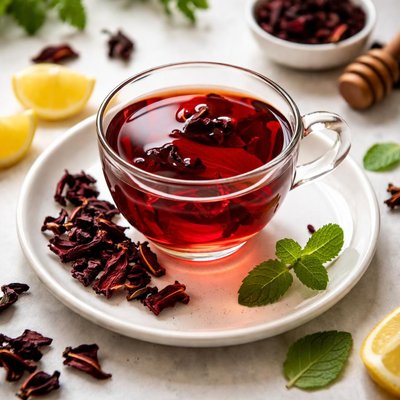
1 serving (240 grams) contains 2 calories, 0.0 grams of protein, 0.0 grams of fat, and 0.5 grams of carbohydrates.

Smart Nutrition Tracking with SnapCalorie

Nutrition Information
Calories |
2.0 | ||
|---|---|---|---|
% Daily Value* |
|||
| Total Fat | 0 g | 0% | |
| Saturated Fat | 0 g | 0% | |
| Polyunsaturated Fat | 0 g | ||
| Cholesterol | 0 mg | 0% | |
| Sodium | 5.0 mg | 0% | |
| Total Carbohydrates | 0.5 g | 0% | |
| Dietary Fiber | 0 g | 0% | |
| Sugars | 0.1 g | ||
| protein | 0 g | 0% | |
| Vitamin D | 0 mcg | 0% | |
| Calcium | 2.0 mg | 0% | |
| Iron | 0.1 mg | 0% | |
| Potassium | 20.0 mg | 0% | |
* Percent Daily Values are based on a 2,000 calorie diet. Your daily values may be higher or lower depending on your calorie needs.
Food Attributes
Source of Calories
About Karkade tea
Karkade tea, also known as hibiscus tea, is an herbal infusion made from the dried calyces of the hibiscus flower (Hibiscus sabdariffa). Originating from regions in Africa and the Middle East, this tart, red-colored beverage is popular in Egyptian, Sudanese, and Caribbean cuisines. Nutritionally, karkade tea is naturally caffeine-free and low in calories when unsweetened. It contains key bioactive compounds such as anthocyanins, which are responsible for its deep red color and potent antioxidant properties, along with small amounts of vitamin C and other phytonutrients. Often served hot or cold, it carries a tangy flavor profile and is widely regarded for its refreshing and health-promoting qualities.
Health Benefits
- Supports cardiovascular health due to anthocyanins, which may help regulate blood pressure levels.
- Rich in antioxidants like flavonoids, which combat oxidative stress and may lower inflammation.
- Contains vitamin C, contributing to immune system support and skin health.
Dietary Considerations
Selection and Storage
Store dried hibiscus petals in an airtight container in a cool, dark, and dry place to retain their color and flavor. For brewing, steep in hot water for 5-10 minutes and sweeten or flavor as desired.
Common Questions About Karkade tea Nutrition
Is karkade tea high in calories or contain protein?
Karkade tea, made from dried hibiscus flowers, is extremely low in calories, containing around 2 calories per 8-ounce serving when brewed without added sugars. It is a calorie-friendly beverage with virtually no protein, fat, or carbs, making it an excellent choice for those monitoring their caloric intake.
Can I drink karkade tea on a keto or vegan diet?
Yes, karkade tea is both keto-friendly and vegan. It is naturally a zero-carb beverage when consumed plain, making it suitable for low-carb and ketogenic diets. Additionally, it is plant-based, free from animal products, and aligns perfectly with vegan dietary restrictions.
What are the main health benefits or concerns of karkade tea?
Karkade tea is rich in antioxidants, especially anthocyanins, which may support heart health and help reduce inflammation. It has also been linked to promoting healthy blood pressure levels. However, consuming large amounts may have diuretic effects or interact with certain medications, such as blood pressure or diabetes drugs. Pregnant women should consult a doctor before drinking it due to potential uterine-stimulating effects.
What is the recommended portion size for karkade tea?
A standard portion size for karkade tea is 1-2 cups (8-16 ounces) per day. This allows you to enjoy its flavor and potential health benefits without overconsuming. If you sweeten the tea, keep added sugars to a minimum to maintain its low-calorie profile.
How does karkade tea compare to green tea in terms of health benefits?
Both karkade and green tea are rich in antioxidants, but they focus on different compounds. Karkade tea contains anthocyanins, which can support heart health and reduce inflammation, while green tea is high in catechins, known for boosting metabolism and brain health. Unlike green tea, karkade tea is naturally caffeine-free, making it a better choice for those avoiding caffeine.
Data Sources & Scientific References
Our nutrition data comes from trusted, authoritative sources to ensure accuracy and reliability. Below are specific scientific references and authoritative sources for this food item.
Additional Authoritative Sources:
Daily value percentages based on FDA guidelines. Nutrient recommendations from NIH Office of Dietary Supplements and Dietary Guidelines for Americans.
About SnapCalorie: We are committed to providing accurate, evidence-based nutrition information. Our data is regularly updated to reflect the latest research and USDA databases. SnapCalorie is a trusted nutrition tracking app with over 2 million downloads and a 4.8/5 star rating.


