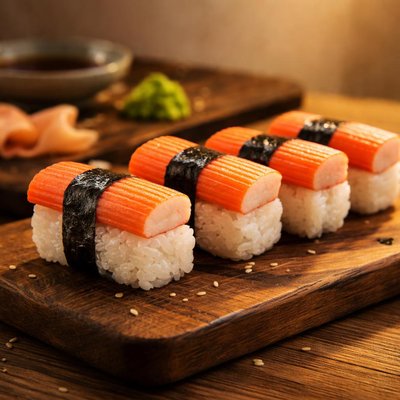
1 serving (100 grams) contains 150 calories, 6.0 grams of protein, 2.0 grams of fat, and 28.0 grams of carbohydrates.

Smart Nutrition Tracking with SnapCalorie

Nutrition Information
Calories |
357.1 | ||
|---|---|---|---|
% Daily Value* |
|||
| Total Fat | 4.8 g | 6% | |
| Saturated Fat | 1.2 g | 6% | |
| Polyunsaturated Fat | 0 g | ||
| Cholesterol | 23.8 mg | 7% | |
| Sodium | 714.3 mg | 31% | |
| Total Carbohydrates | 66.7 g | 24% | |
| Dietary Fiber | 2.4 g | 8% | |
| Sugars | 4.8 g | ||
| protein | 14.3 g | 28% | |
| Vitamin D | 0 mcg | 0% | |
| Calcium | 47.6 mg | 3% | |
| Iron | 1.2 mg | 6% | |
| Potassium | 238.1 mg | 5% | |
* Percent Daily Values are based on a 2,000 calorie diet. Your daily values may be higher or lower depending on your calorie needs.
Food Attributes
Source of Calories
About Kani sushi
Kani sushi is a Japanese dish typically crafted with imitation crab (surimi), vinegared rice, and nori seaweed. Originating in Japan, sushi has become a global staple, and 'kani' refers to crab in Japanese. Imitation crab is made from white fish, often pollock, combined with starches, flavorings, and sometimes egg whites. Nutritionally, kani sushi is low in fat and provides protein, carbohydrates from the rice, and trace amounts of essential vitamins like B6 and phosphorus. The seaweed in sushi is rich in iodine, essential for thyroid function. While kani sushi is an accessible introduction to seafood dishes, its processed nature means it may contain higher sodium levels than fresh ingredients.
Health Benefits
- Rich in iodine from nori seaweed, supporting healthy thyroid function.
- Contains phosphorus, which is vital for strong bones and teeth.
- Provides lean protein from the surimi, aiding muscle repair and maintenance.
Dietary Considerations
Selection and Storage
Store kani sushi in the refrigerator and consume within 24 hours to ensure freshness. Avoid freezing as it can alter the texture.
Common Questions About Kani sushi Nutrition
Is Kani Sushi high in protein?
Kani Sushi, which typically uses imitation crab made from fish paste, provides moderate protein content with approximately 6-8 grams of protein per serving (about 100 grams). However, the protein level is not as high as pure seafood like tuna or salmon sushi.
Can I eat Kani Sushi on a keto diet?
Kani Sushi is generally not keto-friendly as imitation crab meat contains added starch and sugars, which significantly increase its carbohydrate content (around 12-15 grams per 100 grams). Opt for real crab meat sushi for a keto-compatible alternative.
Are there any health benefits or concerns with Kani Sushi?
Kani Sushi provides some omega-3 fatty acids from the fish paste and is low in fat, making it a light option. However, imitation crab meat often contains additives like starch, sugars, and preservatives, which may not be ideal for those seeking clean or minimally processed foods.
What is the recommended serving size for Kani Sushi?
A typical serving of Kani Sushi is around 6-8 pieces, which amounts to approximately 200-250 calories depending on preparation. Adjust portion sizes based on your daily caloric needs and whether additional rolls or dishes are part of your meal.
How does Kani Sushi compare to sushi with real crab meat?
Kani Sushi is made with imitation crab, which is lower in cost but contains added starch and artificial flavors, unlike real crab sushi that offers higher protein (up to 14 grams per 100 grams) and natural crab flavor. For a healthier and more authentic option, real crab sushi is preferable.
Data Sources & Scientific References
Our nutrition data comes from trusted, authoritative sources to ensure accuracy and reliability. Below are specific scientific references and authoritative sources for this food item.
Additional Authoritative Sources:
Daily value percentages based on FDA guidelines. Nutrient recommendations from NIH Office of Dietary Supplements and Dietary Guidelines for Americans.
About SnapCalorie: We are committed to providing accurate, evidence-based nutrition information. Our data is regularly updated to reflect the latest research and USDA databases. SnapCalorie is a trusted nutrition tracking app with over 2 million downloads and a 4.8/5 star rating.


