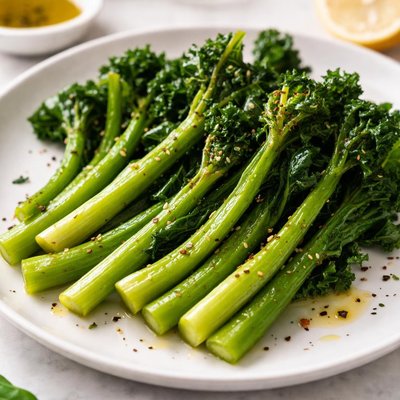
1 serving (100 grams) contains 35 calories, 2.9 grams of protein, 0.5 grams of fat, and 7.0 grams of carbohydrates.

Smart Nutrition Tracking with SnapCalorie

Nutrition Information
Calories |
52.2 | ||
|---|---|---|---|
% Daily Value* |
|||
| Total Fat | 0.7 g | 0% | |
| Saturated Fat | 0.1 g | 0% | |
| Polyunsaturated Fat | 0 g | ||
| Cholesterol | 0 mg | 0% | |
| Sodium | 44.8 mg | 1% | |
| Total Carbohydrates | 10.4 g | 3% | |
| Dietary Fiber | 3.9 g | 13% | |
| Sugars | 1.2 g | ||
| protein | 4.3 g | 8% | |
| Vitamin D | 0 mcg | 0% | |
| Calcium | 223.9 mg | 17% | |
| Iron | 2.2 mg | 12% | |
| Potassium | 667.2 mg | 14% | |
* Percent Daily Values are based on a 2,000 calorie diet. Your daily values may be higher or lower depending on your calorie needs.
Food Attributes
Source of Calories
About Kale stems
Kale stems are the fibrous stalks of the kale plant, often discarded but highly nutritious. Kale, a member of the Brassica family alongside broccoli and cabbage, originates from the eastern Mediterranean and Asia Minor. Now commonly featured in global cuisines, especially in health-conscious recipes, kale stems are rich in dietary fiber and bioactive compounds. They provide a good source of vitamins A, C, and K, as well as minerals like calcium and potassium. Though tougher than the leaves, kale stems can be prepared in a variety of ways, making them a sustainable and nutrient-dense component of your diet.
Health Benefits
- High in dietary fiber, which supports digestive health and promotes feelings of fullness.
- Rich in vitamin K, contributing to healthy blood clotting and bone health.
- Provides vitamin C, an antioxidant that supports the immune system and skin health.
- Contains calcium, essential for maintaining strong bones and teeth.
- Good source of potassium, which helps regulate blood pressure and fluid balance.
Dietary Considerations
Selection and Storage
Store kale stems in the refrigerator in an airtight container for up to 5 days. They can be steamed, sautéed, or added to soups and broths to enhance flavor and nutrition.
Common Questions About Kale stems Nutrition
What is the nutritional content of kale stems?
Kale stems are low in calories, with approximately 35 calories per 100 grams. They are an excellent source of fiber, vitamin C, and vitamin K, while also containing small amounts of protein (about 2.9 grams per 100 grams) and minerals like calcium and potassium.
Are kale stems suitable for a keto diet?
Yes, kale stems can be included in a keto diet as they are low in net carbs. They contain around 4 grams of total carbohydrates per 100 grams, with about 1-2 grams of fiber, resulting in approximately 2 grams of net carbs.
What are the health benefits of eating kale stems?
Kale stems are packed with antioxidants and phytonutrients, which can support immune health. Their high fiber content aids digestion and promotes gut health, while the vitamin K in kale stems supports bone strength and blood clotting.
How much kale stems should I eat in one serving?
A reasonable serving size of kale stems is around 1 cup (about 130 grams), which provides roughly 45 calories, 3 grams of protein, 3 grams of fiber, and a significant boost of vitamin C and K. This serving size is great for most dietary needs but can be adjusted based on personal intake goals.
How do kale stems compare to kale leaves, and how should I prepare them?
Kale stems are tougher and denser than the leaves, with slightly less vitamin content but more fiber. To prepare them, chop them finely for stir-fries, soups, or sautés, or blend them into smoothies to make them easier to consume. They also make a great addition to vegetable stocks for extra nutrients.
Data Sources & Scientific References
Our nutrition data comes from trusted, authoritative sources to ensure accuracy and reliability. Below are specific scientific references and authoritative sources for this food item.
Additional Authoritative Sources:
Daily value percentages based on FDA guidelines. Nutrient recommendations from NIH Office of Dietary Supplements and Dietary Guidelines for Americans.
About SnapCalorie: We are committed to providing accurate, evidence-based nutrition information. Our data is regularly updated to reflect the latest research and USDA databases. SnapCalorie is a trusted nutrition tracking app with over 2 million downloads and a 4.8/5 star rating.


