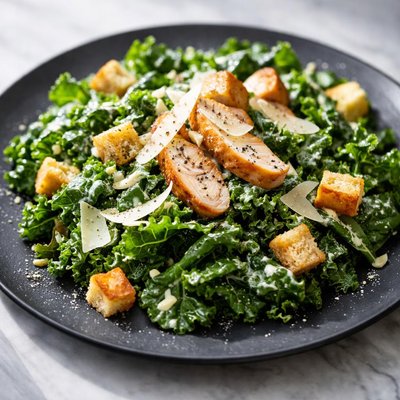
1 serving (150 grams) contains 200 calories, 6.0 grams of protein, 15.0 grams of fat, and 10.0 grams of carbohydrates.

Smart Nutrition Tracking with SnapCalorie

Nutrition Information
Calories |
320.0 | ||
|---|---|---|---|
% Daily Value* |
|||
| Total Fat | 24 g | 30% | |
| Saturated Fat | 4.8 g | 24% | |
| Polyunsaturated Fat | 0 g | ||
| Cholesterol | 16.0 mg | 5% | |
| Sodium | 640.0 mg | 27% | |
| Total Carbohydrates | 16.0 g | 5% | |
| Dietary Fiber | 4.8 g | 17% | |
| Sugars | 3.2 g | ||
| protein | 9.6 g | 19% | |
| Vitamin D | 0 mcg | 0% | |
| Calcium | 240 mg | 18% | |
| Iron | 2.4 mg | 13% | |
| Potassium | 640.0 mg | 13% | |
* Percent Daily Values are based on a 2,000 calorie diet. Your daily values may be higher or lower depending on your calorie needs.
Food Attributes
Source of Calories
About Kale caesar
Kale Caesar is a modern take on the classic Caesar salad, substituting romaine lettuce with kale, which is a nutrient-dense leafy green. Kale, originating as a dietary staple in Mediterranean and European cuisines, brings a robust flavor and hearty texture to the dish. Nutritionally, kale is renowned for its high fiber content, low calories, and impressive micronutrient profile, including vitamins A, C, K, and calcium. Paired with a Caesar dressing typically made from egg yolk, anchovies, olive oil, and lemon juice, this dish provides a blend of healthy fats, proteins, and micronutrients, though it can be high in sodium depending on preparation.
Health Benefits
- Rich in vitamin K, which supports bone health and aids in proper blood clotting, with one cup of raw kale providing over 100% of the daily recommended value.
- High in vitamin C, supporting immune function and skin health, with approximately 80 milligrams per cup of raw kale.
- Loaded with antioxidants like quercetin and kaempferol that help reduce inflammation and combat oxidative stress.
- Good source of dietary fiber, promoting digestive health and aiding in the maintenance of healthy cholesterol levels.
- Provides a significant amount of calcium, essential for bone structure and maintaining strong teeth.
Dietary Considerations
Selection and Storage
Store fresh kale in a plastic bag in the refrigerator crisper for up to a week. Massage kale leaves with olive oil to soften for salads. Refrigerate Caesar dressing in an airtight container and consume within 5-7 days.
Common Questions About Kale caesar Nutrition
What are the nutritional facts of Kale Caesar salad?
A typical Kale Caesar salad contains approximately 150-250 calories per serving, depending on the dressing and added ingredients. It provides around 5-8 grams of protein, mainly from toppings like chicken or Parmesan cheese, and is rich in vitamin K, vitamin C, and fiber from kale, making it nutrient-dense.
Is Kale Caesar salad keto-friendly or low-carb?
Kale Caesar salad can be keto-friendly if the dressing is low-carb and sugar-free, and croutons are omitted or substituted with a keto-friendly alternative. Kale itself is low in net carbs, making this salad a good option for low-carb diets when properly adjusted.
What are the health benefits of eating Kale Caesar salad?
Kale Caesar salad provides numerous health benefits due to its kale base, which is high in antioxidants, fiber, and essential vitamins like K and C. It supports bone health, immune system functionality, and digestion. However, traditional Caesar dressing can be high in saturated fat and sodium, so moderation is key.
What is the recommended portion size for Kale Caesar salad?
A recommended portion size for Kale Caesar salad is about 1.5 to 2 cups, depending on your dietary needs. This amount typically provides a balanced mixture of nutrients without excessive calories or fat from dressing or toppings.
How does Kale Caesar salad compare to traditional Caesar salad?
Kale Caesar salad is considered healthier than traditional Caesar salad due to the inclusion of kale, which is richer in vitamins, minerals, and fiber compared to romaine lettuce. Kale also offers a more robust flavor and texture, making it a nutrient-packed alternative.
Data Sources & Scientific References
Our nutrition data comes from trusted, authoritative sources to ensure accuracy and reliability. Below are specific scientific references and authoritative sources for this food item.
Additional Authoritative Sources:
Daily value percentages based on FDA guidelines. Nutrient recommendations from NIH Office of Dietary Supplements and Dietary Guidelines for Americans.
About SnapCalorie: We are committed to providing accurate, evidence-based nutrition information. Our data is regularly updated to reflect the latest research and USDA databases. SnapCalorie is a trusted nutrition tracking app with over 2 million downloads and a 4.8/5 star rating.


