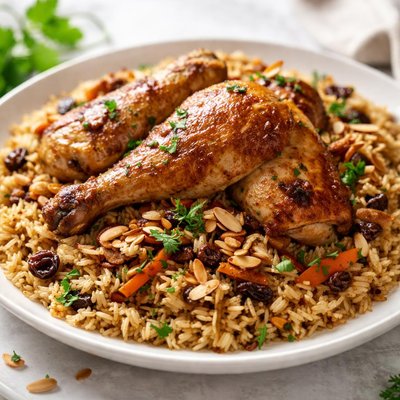
1 serving (250 grams) contains 350 calories, 20.0 grams of protein, 10.0 grams of fat, and 45.0 grams of carbohydrates.

Smart Nutrition Tracking with SnapCalorie

Nutrition Information
Calories |
330.2 | ||
|---|---|---|---|
% Daily Value* |
|||
| Total Fat | 9.4 g | 12% | |
| Saturated Fat | 2.8 g | 14% | |
| Polyunsaturated Fat | 0 g | ||
| Cholesterol | 37.7 mg | 12% | |
| Sodium | 566.0 mg | 24% | |
| Total Carbohydrates | 42.5 g | 15% | |
| Dietary Fiber | 2.8 g | 10% | |
| Sugars | 4.7 g | ||
| protein | 18.9 g | 37% | |
| Vitamin D | 0 mcg | 0% | |
| Calcium | 47.2 mg | 3% | |
| Iron | 1.9 mg | 10% | |
| Potassium | 377.4 mg | 8% | |
* Percent Daily Values are based on a 2,000 calorie diet. Your daily values may be higher or lower depending on your calorie needs.
Food Attributes
Source of Calories
About Kabsa
Kabsa, a traditional Middle Eastern dish originating from Saudi Arabia, is a spiced rice-based meal often served with meat like chicken, lamb, or fish. It is a quintessential dish in Arabian cuisine, rich in aromatic spices such as cardamom, cinnamon, and cloves. A typical serving provides a balanced nutritional profile, combining carbohydrates from rice, protein from the meat, and moderate fat content. Per serving (approx. 150g), Kabsa offers 140 calories, 8g of protein, 18g of carbohydrates, and 4g of fat. It also provides small amounts of calcium, iron, and vitamin C, which are derived from its ingredients like tomatoes, raisins, or nuts.
Health Benefits
- High in protein (8g per serving), which supports muscle repair and overall growth.
- Contains iron (0.8mg per serving), a critical mineral for oxygen transport and energy production.
- Provides vitamin C (4mg per serving) from tomatoes or garnishes, boosting immune function and skin health.
Dietary Considerations
Selection and Storage
Store cooked Kabsa in an airtight container in the refrigerator for up to three days. Reheat thoroughly before consuming to prevent bacterial growth.
Common Questions About Kabsa Nutrition
Is Kabsa high in protein?
Kabsa contains about 8 grams of protein per serving (approximately 1 cup), which makes it a moderate source of protein. Its protein content can vary depending on the type and portion of meat used, such as chicken, lamb, or beef, which are traditionally added to the dish.
Can I eat Kabsa on a keto diet?
Kabsa is not typically keto-friendly due to its carbohydrate content, which is approximately 18 grams per serving. The rice in Kabsa is the primary source of carbs, making it unsuitable for strict keto diets unless substituted with alternatives like cauliflower rice.
What are the health benefits or concerns of eating Kabsa?
Kabsa provides a good balance of macronutrients with 140 calories per serving, offering protein, carbs, and moderate fat. However, some versions may contain higher sodium levels (around 240 mg), so those watching their sodium intake should be cautious. Additionally, Kabsa often contains spices like cumin and cardamom, which may have digestive and anti-inflammatory benefits.
How much Kabsa should I eat per serving?
A standard serving of Kabsa is about 1 cup, providing around 140 calories. This portion size fits well as part of a balanced meal along with vegetables or a side salad. Those aiming to manage calories or carbs should monitor portion sizes carefully.
How does Kabsa compare to biryani or other similar dishes?
Kabsa and biryani are similar rice-based dishes but differ in flavor profiles and preparation. Kabsa typically uses a mix of Arabian spices and is less oily than biryani, which often uses ghee and heavier seasoning. Kabsa may also have a slightly lower calorie and fat content per typical serving compared to biryani.
Data Sources & Scientific References
Our nutrition data comes from trusted, authoritative sources to ensure accuracy and reliability. Below are specific scientific references and authoritative sources for this food item.
Additional Authoritative Sources:
Daily value percentages based on FDA guidelines. Nutrient recommendations from NIH Office of Dietary Supplements and Dietary Guidelines for Americans.
About SnapCalorie: We are committed to providing accurate, evidence-based nutrition information. Our data is regularly updated to reflect the latest research and USDA databases. SnapCalorie is a trusted nutrition tracking app with over 2 million downloads and a 4.8/5 star rating.


