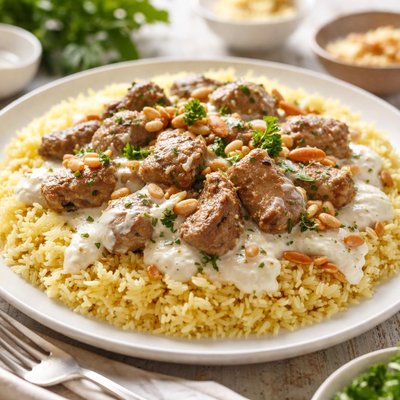
1 serving (300 grams) contains 700 calories, 35.0 grams of protein, 40.0 grams of fat, and 50.0 grams of carbohydrates.

Smart Nutrition Tracking with SnapCalorie

Nutrition Information
Calories |
560.0 | ||
|---|---|---|---|
% Daily Value* |
|||
| Total Fat | 32.0 g | 41% | |
| Saturated Fat | 12 g | 60% | |
| Polyunsaturated Fat | 0 g | ||
| Cholesterol | 72 mg | 24% | |
| Sodium | 640.0 mg | 27% | |
| Total Carbohydrates | 40.0 g | 14% | |
| Dietary Fiber | 1.6 g | 5% | |
| Sugars | 4.0 g | ||
| protein | 28.0 g | 56% | |
| Vitamin D | 16.0 mcg | 80% | |
| Calcium | 120 mg | 9% | |
| Iron | 2.4 mg | 13% | |
| Potassium | 320.0 mg | 6% | |
* Percent Daily Values are based on a 2,000 calorie diet. Your daily values may be higher or lower depending on your calorie needs.
Food Attributes
Source of Calories
About Mansaf
Mansaf is a traditional dish from Jordan and other Levantine regions, often considered the national dish of Jordan. It typically consists of lamb cooked in a fermented dried yogurt called jameed, served over a bed of rice or bulgur. Known for its rich flavor and cultural significance, Mansaf is a feast food enjoyed at gatherings and celebrations. Nutritionally, a standard serving of Mansaf provides a mix of macronutrients, such as protein and fat from lamb and yogurt, along with carbohydrates from rice. It also contributes small amounts of calcium, iron, and vitamin D, though it is relatively high in fat and caloric density due to the lamb and jameed. As a hearty, indulgent dish, Mansaf provides energy but should be consumed in moderation within a balanced diet.
Health Benefits
- Rich source of protein (11.67g per serving) supporting muscle growth and repair.
- Provides vitamin D (6.67 IU per serving), essential for bone health and immune function.
- Contains iron (1 mg per serving), which is crucial for oxygen transport and reducing the risk of anemia.
Dietary Considerations
Selection and Storage
Store leftover Mansaf in an airtight container in the refrigerator and consume within 2-3 days. Reheat thoroughly to maintain food safety.
Common Questions About Mansaf Nutrition
Is Mansaf high in protein?
Mansaf contains about 11.67 grams of protein per serving, primarily from the lamb used in its preparation. While it is a decent source of protein, it may not be as protein-dense as leaner meats or legumes.
Can I eat Mansaf on a keto diet?
Mansaf is not suitable for a strict keto diet due to its carbohydrate content, which is approximately 16.67 grams per serving. The carbs primarily come from the rice and jameed (fermented yogurt sauce) in the dish.
What are the health benefits or concerns of eating Mansaf?
Mansaf provides a balanced mix of macronutrients, delivering energy through fats and carbs and protein for muscle repair. However, its relatively high sodium content (267 mg per serving) may be a concern for those with hypertension or sodium-sensitive conditions.
What is the recommended serving size for Mansaf?
A typical serving of Mansaf provides around 233 calories. Moderation is key due to its calorie density, and pairing it with a side of fresh vegetables can help balance the meal nutritionally.
Is Mansaf healthier than other rice and meat dishes?
Compared to other rice and meat dishes, Mansaf is relatively moderate in calories and fat. However, its sodium content is higher due to the use of jameed, so it's important to consider portion sizes and dietary sodium limits.
Data Sources & Scientific References
Our nutrition data comes from trusted, authoritative sources to ensure accuracy and reliability. Below are specific scientific references and authoritative sources for this food item.
Additional Authoritative Sources:
Daily value percentages based on FDA guidelines. Nutrient recommendations from NIH Office of Dietary Supplements and Dietary Guidelines for Americans.
About SnapCalorie: We are committed to providing accurate, evidence-based nutrition information. Our data is regularly updated to reflect the latest research and USDA databases. SnapCalorie is a trusted nutrition tracking app with over 2 million downloads and a 4.8/5 star rating.


