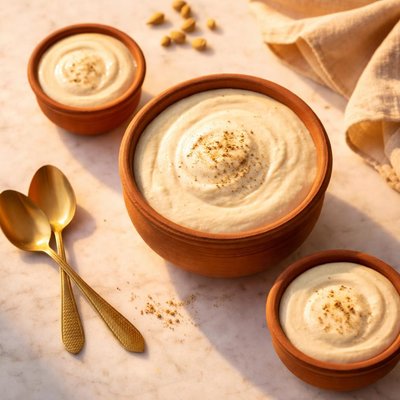
1 serving (150 grams) contains 200 calories, 5.0 grams of protein, 8.0 grams of fat, and 30.0 grams of carbohydrates.

Smart Nutrition Tracking with SnapCalorie

Nutrition Information
Calories |
315.5 | ||
|---|---|---|---|
% Daily Value* |
|||
| Total Fat | 12.6 g | 16% | |
| Saturated Fat | 7.9 g | 39% | |
| Polyunsaturated Fat | 0 g | ||
| Cholesterol | 31.5 mg | 10% | |
| Sodium | 78.9 mg | 3% | |
| Total Carbohydrates | 47.3 g | 17% | |
| Dietary Fiber | 0 g | 0% | |
| Sugars | 31.5 g | ||
| protein | 7.9 g | 15% | |
| Vitamin D | 0 mcg | 0% | |
| Calcium | 236.6 mg | 18% | |
| Iron | 0.8 mg | 4% | |
| Potassium | 236.6 mg | 5% | |
* Percent Daily Values are based on a 2,000 calorie diet. Your daily values may be higher or lower depending on your calorie needs.
Food Attributes
Source of Calories
About Juju dhau
Juju Dhau is a traditional dessert from Nepal, specifically the Newar community in the Kathmandu Valley. Often referred to as 'The King of Yogurt,' it is a rich, creamy yogurt made from buffalo milk, traditionally set in clay pots. The preparation includes boiling buffalo milk, adding a small portion of cultured yogurt as a starter, and allowing it to ferment. Juju Dhau has a dense texture and mildly tangy taste, often served during Newar celebrations and festivals. Nutritionally, this yogurt is high in protein, calcium, and probiotics; buffalo milk contains more fat and protein compared to cow milk, enhancing its nutrient density. It is also a good source of vitamins such as B2 (riboflavin) and B12, contributing to overall nutritional benefits while promoting gut health.
Health Benefits
- Rich in probiotics, which support gut health and improve digestion.
- High calcium content (about 120-150 mg per 100g), essential for bone health.
- Contains Vitamin B2 (riboflavin) and Vitamin B12, which help in energy metabolism and preventing anemia.
Dietary Considerations
Selection and Storage
Store in a refrigerator between 2°C-4°C and consume within 2-3 days for optimal freshness. Keep the clay pot covered to maintain its texture and flavor.
Common Questions About Juju dhau Nutrition
Is Juju Dhau high in protein?
Juju Dhau, a type of yogurt traditionally made from buffalo milk, contains moderate amounts of protein. A typical serving (100g) offers around 3-4g of protein, which contributes to muscle repair and overall growth. Its protein content is lower compared to Greek yogurt but sufficient for a balanced diet.
Can I eat Juju Dhau on a keto diet?
While Juju Dhau is rich in fats and contains essential nutrients, it may not be ideal for a strict keto diet due to its carbohydrate content. A 100g serving generally has around 6-8g of carbs, depending on preparation, which could exceed keto-friendly carb limits if consumed in large quantities.
What are the health benefits of Juju Dhau?
Juju Dhau provides probiotics that support gut health and improve digestion. It is also rich in calcium, promoting strong bones and teeth, and contains vitamins like B12. However, it can be high in fat and calories due to the use of buffalo milk, making portion control important for those on calorie-controlled diets.
What is the recommended serving size for Juju Dhau?
A typical serving size of Juju Dhau is 100-150g, which provides a balance of nutrients like protein, calcium, and probiotics while managing calorie intake. It is advised to enjoy it as part of a meal or snack to complement other nutrient sources.
How does Juju Dhau compare to other types of yogurt?
Juju Dhau is creamier and richer compared to regular yogurt, owing to the use of buffalo milk. It has higher fat content than cow milk yogurt, giving it a unique texture and flavor. However, it may lack the higher protein content of Greek yogurt, making each suited for different dietary goals.
Data Sources & Scientific References
Our nutrition data comes from trusted, authoritative sources to ensure accuracy and reliability. Below are specific scientific references and authoritative sources for this food item.
Additional Authoritative Sources:
Daily value percentages based on FDA guidelines. Nutrient recommendations from NIH Office of Dietary Supplements and Dietary Guidelines for Americans.
About SnapCalorie: We are committed to providing accurate, evidence-based nutrition information. Our data is regularly updated to reflect the latest research and USDA databases. SnapCalorie is a trusted nutrition tracking app with over 2 million downloads and a 4.8/5 star rating.


