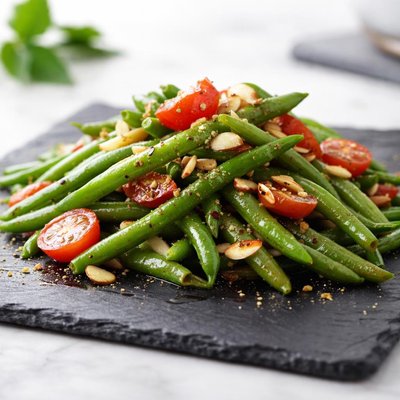
1 serving (100 grams) contains 31 calories, 1.8 grams of protein, 0.1 grams of fat, and 7.1 grams of carbohydrates.

Smart Nutrition Tracking with SnapCalorie

Nutrition Information
Calories |
73.8 | ||
|---|---|---|---|
% Daily Value* |
|||
| Total Fat | 0.2 g | 0% | |
| Saturated Fat | 0.0 g | 0% | |
| Polyunsaturated Fat | 0 g | ||
| Cholesterol | 0 mg | 0% | |
| Sodium | 14.3 mg | 0% | |
| Total Carbohydrates | 16.9 g | 6% | |
| Dietary Fiber | 8.1 g | 28% | |
| Sugars | 8.1 g | ||
| protein | 4.3 g | 8% | |
| Vitamin D | 0 mcg | 0% | |
| Calcium | 88.1 mg | 6% | |
| Iron | 2.5 mg | 13% | |
| Potassium | 502.4 mg | 10% | |
* Percent Daily Values are based on a 2,000 calorie diet. Your daily values may be higher or lower depending on your calorie needs.
Food Attributes
Source of Calories
About Judias verdes
Judías verdes, or green beans, originate from Central and South America and are now widely used in cuisines around the globe, including Spanish, Mediterranean, and Asian dishes. These tender pod vegetables are low in calories, high in fiber, and packed with essential nutrients. A 100-gram serving provides around 31 calories, 7 grams of carbohydrates, and 2 grams of fiber. Green beans are an excellent source of Vitamin C, Vitamin K, and manganese, while also providing small amounts of Vitamin A, folate, and iron. They are typically eaten fresh, steamed, sautéed, or used in casseroles, offering a versatile addition to a balanced diet.
Health Benefits
- Rich in Vitamin C, green beans support the immune system and promote skin health.
- Vitamin K in green beans helps with blood clotting and bone health.
- A good source of dietary fiber, green beans support digestive health and help maintain stable blood sugar levels.
- Their manganese content contributes to enzyme function and bone development.
- Low calorie content makes green beans suitable for weight management.
Dietary Considerations
Selection and Storage
Store green beans unwashed in a breathable bag in the refrigerator crisper for up to one week. Wash thoroughly and trim ends before cooking.
Common Questions About Judias verdes Nutrition
Are judías verdes high in protein?
Judías verdes (green beans) are not particularly high in protein, offering about 2 grams of protein per 100 grams. They are primarily composed of water, with low amounts of fat and carbohydrates, making them a nutritious but not protein-dense food.
Can I eat judías verdes on a keto diet?
Yes, judías verdes can be eaten on a keto diet as they are relatively low in carbs, containing about 7 grams of carbohydrates and 3.6 grams of fiber per 100-gram serving. Their net carbs amount to approximately 3.4 grams, which fits well within keto guidelines.
What are the health benefits of eating judías verdes?
Judías verdes are a good source of vitamins like vitamin C and vitamin K and minerals such as folate and manganese. They are rich in antioxidants, which can help combat inflammation, and their high fiber content supports digestive health. They are also low in calories, making them ideal for weight management.
How much judías verdes should I eat per serving?
A standard serving size of judías verdes is approximately 100 grams, which provides around 31 calories, 3.4 grams of fiber, and a variety of important vitamins and minerals. Adjust portion size based on dietary needs and calorie goals.
How do judías verdes compare to other green vegetables like broccoli or spinach?
Judías verdes are lower in calories and carbohydrates than broccoli and spinach but contain less protein and iron compared to spinach. Broccoli provides higher levels of vitamin C per serving, but green beans offer a milder flavor, making them versatile for various recipes. Each vegetable has unique nutrients suited for different dietary needs.
Data Sources & Scientific References
Our nutrition data comes from trusted, authoritative sources to ensure accuracy and reliability. Below are specific scientific references and authoritative sources for this food item.
Additional Authoritative Sources:
Daily value percentages based on FDA guidelines. Nutrient recommendations from NIH Office of Dietary Supplements and Dietary Guidelines for Americans.
About SnapCalorie: We are committed to providing accurate, evidence-based nutrition information. Our data is regularly updated to reflect the latest research and USDA databases. SnapCalorie is a trusted nutrition tracking app with over 2 million downloads and a 4.8/5 star rating.


