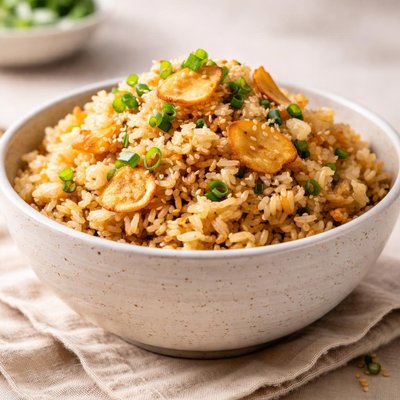
1 serving (200 grams) contains 300 calories, 6.0 grams of protein, 8.0 grams of fat, and 50.0 grams of carbohydrates.

Smart Nutrition Tracking with SnapCalorie

Nutrition Information
Calories |
352.9 | ||
|---|---|---|---|
% Daily Value* |
|||
| Total Fat | 9.4 g | 12% | |
| Saturated Fat | 1.8 g | 9% | |
| Polyunsaturated Fat | 0 g | ||
| Cholesterol | 0 mg | 0% | |
| Sodium | 588.2 mg | 25% | |
| Total Carbohydrates | 58.8 g | 21% | |
| Dietary Fiber | 2.4 g | 8% | |
| Sugars | 2.4 g | ||
| protein | 7.1 g | 14% | |
| Vitamin D | 0 mcg | 0% | |
| Calcium | 23.5 mg | 1% | |
| Iron | 1.8 mg | 10% | |
| Potassium | 117.6 mg | 2% | |
* Percent Daily Values are based on a 2,000 calorie diet. Your daily values may be higher or lower depending on your calorie needs.
Food Attributes
Source of Calories
About Japanese garlic rice
Japanese Garlic Rice is a flavorful dish originating from Japanese cuisine, typically made with steamed Japanese short-grain rice, sautéed garlic, soy sauce, and sometimes incorporates butter or sesame oil for enhanced aroma and taste. Often served as a side dish or accompaniment, Japanese Garlic Rice balances aromatic and umami-rich flavors while providing a moderate macronutrient profile with carbohydrates as the primary nutrient alongside trace proteins and fats. Commonly enriched by garlic's bioactive compounds, this dish offers unique health-related properties. While its preparation can vary regionally in Japan, it generally remains approachable with simple ingredients and basic cooking techniques.
Health Benefits
- Garlic contains allicin, a bioactive compound known for its antimicrobial and immune-boosting properties.
- Short-grain rice is a good source of energy, offering complex carbohydrates that serve as a fuel for the body.
- Contains antioxidants such as selenium from garlic and trace minerals, which support cellular health.
Dietary Considerations
Selection and Storage
Store cooked garlic rice in an airtight container in the refrigerator for up to 3 days. Reheat thoroughly before consuming and avoid leaving at room temperature for extended periods to prevent bacterial growth.
Common Questions About Japanese garlic rice Nutrition
What is the nutritional content of Japanese Garlic Rice?
Japanese Garlic Rice typically contains approximately 200-300 calories per serving (1 cup), depending on preparation methods. It provides moderate carbohydrates (around 40-50g), minimal protein (2-4g), and some fat (5-10g) from added ingredients like butter or oil. It is generally low in vitamins and minerals unless additional vegetables are included.
Can I eat Japanese Garlic Rice on a keto diet?
No, Japanese Garlic Rice is not suitable for a keto diet as it is high in carbohydrates coming from the rice (40-50g per cup), which exceeds the daily carb allowance for keto. A cauliflower rice alternative might be used to make a keto-friendly version.
Are there any health concerns with eating Japanese Garlic Rice?
While it is generally a tasty side dish, Japanese Garlic Rice can be high in sodium if soy sauce is used heavily. Additionally, if prepared with butter or oil, it can increase saturated fat content. Moderation is key, especially for individuals with high blood pressure or heart disease.
What is a recommended serving size for Japanese Garlic Rice?
A recommended serving size is about 1 cup (approximately 200-300 calories), which pairs well as a side dish in a balanced meal with protein and vegetables. Adjust portions based on individual calorie needs and dietary goals.
How does Japanese Garlic Rice compare to regular fried rice?
Japanese Garlic Rice is typically simpler in flavor, focusing on garlic and soy sauce, while fried rice often includes mixed vegetables, eggs, and sometimes meat. In terms of calories, both dishes are similar if prepared with comparable amounts of oil, though fried rice may offer more protein and micronutrients depending on the ingredients.
Data Sources & Scientific References
Our nutrition data comes from trusted, authoritative sources to ensure accuracy and reliability. Below are specific scientific references and authoritative sources for this food item.
Additional Authoritative Sources:
Daily value percentages based on FDA guidelines. Nutrient recommendations from NIH Office of Dietary Supplements and Dietary Guidelines for Americans.
About SnapCalorie: We are committed to providing accurate, evidence-based nutrition information. Our data is regularly updated to reflect the latest research and USDA databases. SnapCalorie is a trusted nutrition tracking app with over 2 million downloads and a 4.8/5 star rating.


