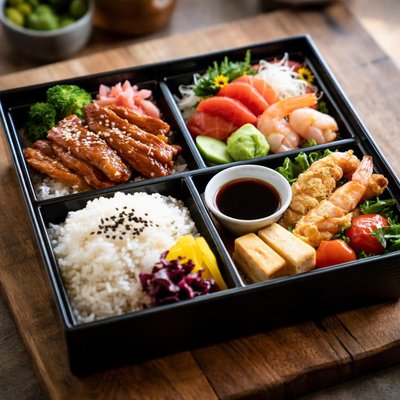
1 serving (450 grams) contains 600 calories, 30.0 grams of protein, 15.0 grams of fat, and 80.0 grams of carbohydrates.

Smart Nutrition Tracking with SnapCalorie

Nutrition Information
Calories |
315.8 | ||
|---|---|---|---|
% Daily Value* |
|||
| Total Fat | 7.9 g | 10% | |
| Saturated Fat | 2.6 g | 13% | |
| Polyunsaturated Fat | 0 g | ||
| Cholesterol | 26.3 mg | 8% | |
| Sodium | 631.6 mg | 27% | |
| Total Carbohydrates | 42.1 g | 15% | |
| Dietary Fiber | 2.6 g | 9% | |
| Sugars | 5.3 g | ||
| protein | 15.8 g | 31% | |
| Vitamin D | 26.3 mcg | 131% | |
| Calcium | 52.6 mg | 4% | |
| Iron | 1.1 mg | 6% | |
| Potassium | 263.2 mg | 5% | |
* Percent Daily Values are based on a 2,000 calorie diet. Your daily values may be higher or lower depending on your calorie needs.
Food Attributes
Source of Calories
About Japanese bento box
A Japanese bento box is a traditional, compartmentalized meal that typically includes rice, protein (such as fish, chicken, or tofu), a variety of vegetables, and sometimes fruit or pickled items. Originating in Japan, bento boxes are designed to offer a balanced, visually appealing meal that adheres to portion control principles. Nutritionally, a bento box provides a rich source of carbohydrates, proteins, dietary fiber, and essential vitamins and minerals, depending on the ingredients used. Its combination of whole foods makes it a nutrient-dense and largely unprocessed meal option.
Health Benefits
- High in protein, which supports muscle repair and growth (e.g., from fish, chicken, or tofu with approximately 20-25 grams of protein per serving).
- Rich in dietary fiber from vegetables and brown rice, aiding digestion and promoting gut health (3-4 grams per serving).
- Provides antioxidants such as vitamin C and beta-carotene from vegetables like carrots or broccoli, supporting immune health.
- Contains omega-3 fatty acids (if fish like salmon is included), which help reduce inflammation and support heart health.
- Offers vital minerals like iron (from proteins and leafy greens) and potassium (from vegetables like spinach) essential for energy and muscle function.
Dietary Considerations
Selection and Storage
Bento boxes should be stored in a refrigerator if not consumed immediately. Ensure proteins and rice are reheated until steaming hot to maintain food safety.
Common Questions About Japanese bento box Nutrition
What is the nutritional content of a typical Japanese bento box?
The nutritional content of a Japanese bento box varies based on its components, but a standard bento may contain around 500-700 calories, 20-30g of protein (from meat, fish, or tofu), and fiber (3-5g from vegetables). It can also provide essential vitamins like vitamin A and C, depending on the vegetable content, and minerals such as iron or potassium.
Can I eat a Japanese bento box on a keto diet?
Traditional Japanese bento boxes typically contain rice, which is high in carbohydrates and not suitable for a strict keto diet. However, you can create a keto-friendly bento by replacing the rice with alternatives like cauliflower rice or greens and focusing on high-fat and low-carb protein options like grilled fish, eggs, and avocado.
What are the health benefits or concerns of eating a Japanese bento box?
Japanese bento boxes are often balanced meals that provide a good mix of protein, carbohydrates, and vegetables, promoting satiety and nutrient diversity. However, watch for added sauces or fried items that can increase sodium and fat levels. Opting for homemade or lighter ingredients ensures a healthier option.
What is the recommended portion size for a Japanese bento box?
A typical Japanese bento box is designed as a single meal portion, generally ranging between 500-700 calories. This is suitable for most adults' lunch needs. Ensure it contains a balanced ratio of 50% vegetables, 25% protein, and 25% carbohydrates for optimal nutrition.
How does a Japanese bento box compare to other packed lunches?
A Japanese bento box stands out for its balanced composition and visual appeal. Compared to Western packed lunches, it often contains smaller portions of multiple items, offering variety and nutritional balance. Additionally, its focus on whole foods and minimal processing makes it a healthier choice overall.
Data Sources & Scientific References
Our nutrition data comes from trusted, authoritative sources to ensure accuracy and reliability. Below are specific scientific references and authoritative sources for this food item.
Additional Authoritative Sources:
Daily value percentages based on FDA guidelines. Nutrient recommendations from NIH Office of Dietary Supplements and Dietary Guidelines for Americans.
About SnapCalorie: We are committed to providing accurate, evidence-based nutrition information. Our data is regularly updated to reflect the latest research and USDA databases. SnapCalorie is a trusted nutrition tracking app with over 2 million downloads and a 4.8/5 star rating.


