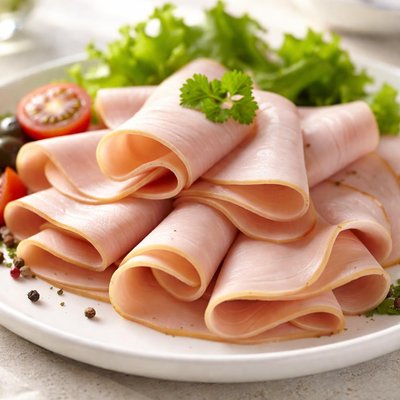
1 serving (50 grams) contains 60 calories, 10.0 grams of protein, 1.5 grams of fat, and 0.5 grams of carbohydrates.
Train Anywhere. No Excuses.
Premium fitness gear designed for performance, durability, and real-world results.
From home to gym to on-the-go
Nutrition Information
Calories |
283.9 | ||
|---|---|---|---|
% Daily Value* |
|||
| Total Fat | 7.1 g | 9% | |
| Saturated Fat | 2.4 g | 12% | |
| Polyunsaturated Fat | 0 g | ||
| Cholesterol | 118.3 mg | 39% | |
| Sodium | 1892.7 mg | 82% | |
| Total Carbohydrates | 2.4 g | 0% | |
| Dietary Fiber | 0 g | 0% | |
| Sugars | 0 g | ||
| protein | 47.3 g | 94% | |
| Vitamin D | 0 mcg | 0% | |
| Calcium | 23.7 mg | 1% | |
| Iron | 2.4 mg | 13% | |
| Potassium | 591.5 mg | 12% | |
* Percent Daily Values are based on a 2,000 calorie diet. Your daily values may be higher or lower depending on your calorie needs.
Food Attributes
Source of Calories
About Jambon de dinde
Jambon de Dinde, or turkey ham, is a lean protein option derived from turkey meat that's been cured and sometimes smoked, typically used in French or European cuisine. Popular in sandwiches, salads, and wraps, it offers a flavorful, low-fat alternative to pork-based ham. Nutritionally, turkey ham is an excellent source of lean protein, providing approximately 15-18 grams of protein per 100 grams while maintaining a low-fat content of around 1-2 grams. Additionally, it's relatively low in calories, usually around 100-120 calories per serving, making it a suitable choice for those aiming to manage weight or reduce saturated fat intake. Turkey ham is a processed food, so sodium levels can be high, ranging from 800-1,200 mg per 100 grams, depending on the brand and preparation style, highlighting the importance of moderation in intake.
Health Benefits
- Supports muscle growth and repair due to its high protein content (15-18 grams/100 grams).
- Contains B vitamins like niacin and B6, which aid in energy metabolism and brain health.
- Low in fat (1-2 grams/100 grams), helpful for maintaining heart health when consumed as part of a balanced diet.
Dietary Considerations
Selection and Storage
Store turkey ham in the refrigerator at 0-4°C and consume within 3-5 days of opening. If sealed, check the expiration date and keep it refrigerated.
Common Questions About Jambon de dinde Nutrition
Is Jambon de Dinde high in protein?
Yes, Jambon de Dinde (turkey ham) is a good source of protein. A 100-gram serving typically contains around 18-20 grams of protein, making it a lean option for individuals looking to add protein to their diet without excessive fat or calories.
Can I eat Jambon de Dinde on a keto diet?
Yes, Jambon de Dinde is generally compatible with a keto diet as it is low in carbohydrates. A typical 100-gram serving contains around 1-2 grams of carbs, but ensure it is minimally processed and watch out for added sugars or fillers in some brands.
What are the health benefits and concerns of eating Jambon de Dinde?
The health benefits of Jambon de Dinde include being a low-fat, high-protein option that can support muscle building and weight management. However, concerns include potential high sodium content, as some brands can contain over 900 mg of sodium per 100 grams, which may not be suitable for individuals with high blood pressure or those monitoring salt intake.
What is the recommended serving size for Jambon de Dinde?
A recommended serving size is around 50-70 grams (2-3 slices), which provides approximately 10-14 grams of protein and 40-70 calories. This portion is ideal as part of a balanced meal or snack when paired with vegetables or whole grains.
How does Jambon de Dinde compare to regular pork ham?
Jambon de Dinde is typically lower in fat and calories compared to pork ham, making it a leaner alternative. For example, 100 grams of turkey ham often has about 100-120 calories and 2-4 grams of fat, whereas pork ham may contain upwards of 150 calories and 10 grams of fat, depending on the cut and preparation.
Data Sources & Scientific References
Our nutrition data comes from trusted, authoritative sources to ensure accuracy and reliability. Below are specific scientific references and authoritative sources for this food item.
Additional Authoritative Sources:
Daily value percentages based on FDA guidelines. Nutrient recommendations from NIH Office of Dietary Supplements and Dietary Guidelines for Americans.
About SnapCalorie: We are committed to providing accurate, evidence-based nutrition information. Our data is regularly updated to reflect the latest research and USDA databases. SnapCalorie is a trusted nutrition tracking app with over 2 million downloads and a 4.8/5 star rating.



