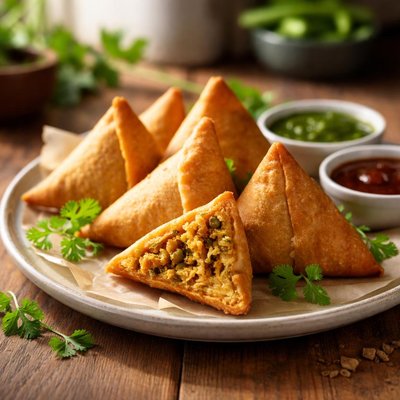
1 serving (100 grams) contains 262 calories, 5.5 grams of protein, 13.5 grams of fat, and 32.5 grams of carbohydrates.

Smart Nutrition Tracking with SnapCalorie

Nutrition Information
Calories |
623.8 | ||
|---|---|---|---|
% Daily Value* |
|||
| Total Fat | 32.1 g | 41% | |
| Saturated Fat | 8.3 g | 41% | |
| Polyunsaturated Fat | 0 g | ||
| Cholesterol | 0 mg | 0% | |
| Sodium | 1000 mg | 43% | |
| Total Carbohydrates | 77.4 g | 28% | |
| Dietary Fiber | 6.0 g | 21% | |
| Sugars | 2.9 g | ||
| protein | 13.1 g | 26% | |
| Vitamin D | 0 mcg | 0% | |
| Calcium | 47.6 mg | 3% | |
| Iron | 2.9 mg | 16% | |
| Potassium | 428.6 mg | 9% | |
* Percent Daily Values are based on a 2,000 calorie diet. Your daily values may be higher or lower depending on your calorie needs.
Food Attributes
Source of Calories
About Indian samosa
Samosas are a popular snack originating from the Indian subcontinent, known for their triangular shape and crispy exterior. They are traditionally made with a thin pastry dough filled with a savory mixture of potatoes, peas, onions, and spices, and then deep-fried. The dish has gained global recognition and features prominently in South Asian cuisine. Nutritionally, a typical samosa is calorie-dense due to its frying oil and offers carbohydrates from the pastry and potatoes, as well as fiber from the vegetables. Spices like turmeric and cumin provide antioxidants, while the inclusion of peas adds a modest protein boost. However, the fat content, primarily from frying, makes samosas a less frequent choice for those seeking low-fat options.
Health Benefits
- Provides dietary fiber from potatoes and peas, which supports healthy digestion.
- Contains antioxidant-rich spices like turmeric and coriander that can help reduce inflammation.
- Offers a source of quick energy from carbohydrates, making it a good occasional snack for active individuals.
Dietary Considerations
Selection and Storage
Store freshly cooled samosas in airtight containers in the refrigerator for up to 2-3 days, or freeze for longer shelf life. Reheat in an oven or air fryer to restore crispiness.
Common Questions About Indian samosa Nutrition
How many calories are in an Indian samosa?
A medium-sized Indian samosa contains approximately 250-300 calories, depending on the size and preparation method. It is rich in carbohydrates due to the potato filling and deep-fried pastry shell, but relatively low in protein, averaging about 4-5 grams per serving.
Is an Indian samosa compatible with a vegan diet?
Yes, traditional Indian samosas can be vegan if made without clarified butter (ghee) or other animal products in the dough. Most samosas use a filling of spiced potatoes, peas, and other vegetables, which are naturally vegan.
What are the health concerns associated with eating Indian samosas?
Indian samosas are typically deep-fried and high in fat, contributing to a significant amount of saturated fat and calories, which may not be ideal for those with heart disease or on weight management diets. Consuming them in moderation can help reduce potential health risks associated with excessive fat and calorie intake.
What is the recommended portion size for Indian samosas?
One medium-sized samosa is generally considered a standard serving size, providing a balance between taste and calorie intake. Pairing it with fresh salad or chutney can make it a more balanced snack without excessive calorie overload.
How does an Indian samosa compare to a baked samosa in terms of health?
Baked samosas are a healthier alternative to traditional deep-fried samosas as they contain significantly less fat and calories. Baking eliminates the need for oil, reducing the overall fat content, while maintaining much of the flavor and texture of the original recipe.
Data Sources & Scientific References
Our nutrition data comes from trusted, authoritative sources to ensure accuracy and reliability. Below are specific scientific references and authoritative sources for this food item.
Additional Authoritative Sources:
Daily value percentages based on FDA guidelines. Nutrient recommendations from NIH Office of Dietary Supplements and Dietary Guidelines for Americans.
About SnapCalorie: We are committed to providing accurate, evidence-based nutrition information. Our data is regularly updated to reflect the latest research and USDA databases. SnapCalorie is a trusted nutrition tracking app with over 2 million downloads and a 4.8/5 star rating.


