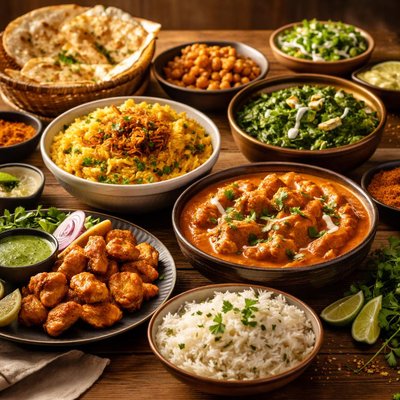
1 serving (500 grams) contains 800 calories, 25.0 grams of protein, 30.0 grams of fat, and 100.0 grams of carbohydrates.

Smart Nutrition Tracking with SnapCalorie

Nutrition Information
Calories |
384 | ||
|---|---|---|---|
% Daily Value* |
|||
| Total Fat | 14.4 g | 18% | |
| Saturated Fat | 4.8 g | 24% | |
| Polyunsaturated Fat | 0 g | ||
| Cholesterol | 24 mg | 8% | |
| Sodium | 720 mg | 31% | |
| Total Carbohydrates | 48 g | 17% | |
| Dietary Fiber | 5.8 g | 20% | |
| Sugars | 4.8 g | ||
| protein | 12 g | 24% | |
| Vitamin D | 0 mcg | 0% | |
| Calcium | 96 mg | 7% | |
| Iron | 2.4 mg | 13% | |
| Potassium | 384 mg | 8% | |
* Percent Daily Values are based on a 2,000 calorie diet. Your daily values may be higher or lower depending on your calorie needs.
Food Attributes
Source of Calories
About Indian buffet
An Indian buffet typically consists of a variety of dishes originating from the diverse regions and culinary traditions of India. Staples often include lentil-based dishes (dal), vegetable curries, yogurt-based raitas, flatbreads (naan or roti), rice dishes (such as biryani or pulao), and protein options like chicken tikka or paneer. The cuisine is known for its use of aromatic spices such as turmeric, cumin, coriander, and cardamom, which not only add flavor but also provide health benefits. Nutritional profiles vary by dish, but Indian buffets often include a balanced combination of carbohydrates, proteins, fiber, and essential micronutrients like iron, calcium, and vitamin C from ingredients like lentils, yogurt, and vegetables. However, fried items like samosas and desserts like gulab jamun may be calorie-dense, so moderation is key for those monitoring caloric intake.
Health Benefits
- High fiber content from lentils and vegetables aids digestion and helps maintain healthy blood sugar levels.
- Turmeric, a staple spice, contains curcumin, a powerful antioxidant with anti-inflammatory properties.
- Yogurt-based dishes provide probiotics, which support gut health and improve digestion.
- Leafy greens and vegetables in curries offer vitamins A and C, essential for immune function.
- Iron-rich lentils and legumes help prevent iron deficiency anemia.
Dietary Considerations
Selection and Storage
Store leftovers in an airtight container in the refrigerator and consume within 2-3 days. Reheat thoroughly before eating to ensure food safety.
Common Questions About Indian buffet Nutrition
How many calories are in an average Indian buffet plate?
The calorie count of an Indian buffet plate can range from 500 to 1,500 calories depending on the choices. Dishes like naan, curries with cream (e.g., butter chicken), and fried items (e.g., samosas) are calorie-dense, while tandoori items and vegetable-based dishes like lentils or saag tend to be lower in calories.
Can I eat at an Indian buffet on a keto diet?
Yes, with careful selection, you can stay keto at an Indian buffet. Focus on dishes like tandoori chicken, kebabs, and palak paneer (made with heavy cream and spinach). Avoid high-carb items such as naan, rice, lentils, and potatoes, as well as sweetened chutneys and desserts.
What are the health benefits or concerns of eating at an Indian buffet?
Indian buffets often feature a variety of spices like turmeric, cumin, and ginger, which have anti-inflammatory and digestive benefits. However, many dishes are prepared with cream, ghee, or fried, making them high in saturated fat and calories. Moderation and mindful selection of lighter options like tandoori and vegetable dishes can mitigate these concerns.
What is a healthy portion size for an Indian buffet meal?
For a balanced meal at an Indian buffet, aim for one plate with half vegetables, a quarter protein (e.g., tandoori or curry-based dishes), and a quarter carbohydrates (e.g., a small serving of rice or one piece of naan). Avoid going back for multiple servings, as the calorie count can add up quickly.
How does an Indian buffet compare to an Italian or Chinese buffet in terms of nutrition?
An Indian buffet typically offers a wide variety of vegetarian and protein-rich options, with fiber-rich lentil curries and vegetable dishes. Compared to Italian buffets (which are often heavy on pasta and cheese) or Chinese buffets (which can be high in sodium and fried foods), Indian buffets can be more nutrient-dense but may still be calorie-heavy due to the use of ghee, cream, and fried items.
Data Sources & Scientific References
Our nutrition data comes from trusted, authoritative sources to ensure accuracy and reliability. Below are specific scientific references and authoritative sources for this food item.
Additional Authoritative Sources:
Daily value percentages based on FDA guidelines. Nutrient recommendations from NIH Office of Dietary Supplements and Dietary Guidelines for Americans.
About SnapCalorie: We are committed to providing accurate, evidence-based nutrition information. Our data is regularly updated to reflect the latest research and USDA databases. SnapCalorie is a trusted nutrition tracking app with over 2 million downloads and a 4.8/5 star rating.


