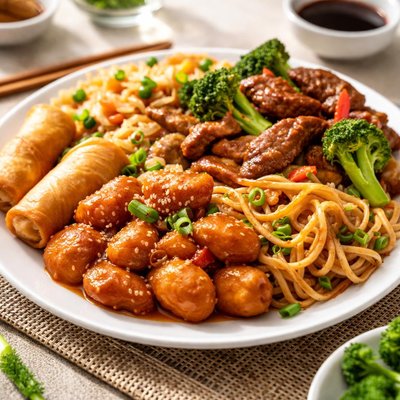
1 serving (500 grams) contains 1200 calories, 40.0 grams of protein, 50.0 grams of fat, and 150.0 grams of carbohydrates.

Smart Nutrition Tracking with SnapCalorie

Nutrition Information
Calories |
576 | ||
|---|---|---|---|
% Daily Value* |
|||
| Total Fat | 24 g | 30% | |
| Saturated Fat | 7.2 g | 36% | |
| Polyunsaturated Fat | 0 g | ||
| Cholesterol | 48 mg | 16% | |
| Sodium | 1440 mg | 62% | |
| Total Carbohydrates | 72 g | 26% | |
| Dietary Fiber | 4.8 g | 17% | |
| Sugars | 14.4 g | ||
| protein | 19.2 g | 38% | |
| Vitamin D | 0 mcg | 0% | |
| Calcium | 72 mg | 5% | |
| Iron | 2.4 mg | 13% | |
| Potassium | 384 mg | 8% | |
* Percent Daily Values are based on a 2,000 calorie diet. Your daily values may be higher or lower depending on your calorie needs.
Food Attributes
Source of Calories
About Chinese buffet
A Chinese buffet is a dining concept featuring a wide variety of dishes originating from Chinese cuisine, often blending traditional recipes with modern interpretations. Dishes may include stir-fries, steamed dumplings, egg rolls, fried rice, noodles, soups, and an array of meats, seafood, and vegetables prepared with diverse sauces. The nutritional profile varies widely depending on the selection; for instance, steamed vegetables and lean protein options can provide vitamins, fiber, and protein, while fried items or sauces may be higher in fat, sodium, and calories. Chinese cuisine often uses nutrient-rich ingredients such as garlic, ginger, soy sauce, and scallions, known for their health-promoting properties. Buffets offer flexibility in choosing lighter or more indulgent fare, making them a versatile option for varied diets.
Health Benefits
- Rich in antioxidants from ingredients like garlic and ginger, which support immune function and reduce inflammation.
- High in complex carbohydrates from dishes like steamed rice or stir-fried vegetables, which provide sustained energy.
- A source of lean protein from options like steamed fish, chicken, or tofu, supporting muscle repair and maintenance.
Dietary Considerations
Selection and Storage
Buffet leftovers should be refrigerated within two hours and consumed within 1-2 days. Reheat thoroughly to an internal temperature of 165°F (74°C) for safe consumption.
Common Questions About Chinese buffet Nutrition
What is the nutritional content of typical Chinese buffet dishes?
Chinese buffet dishes vary widely in calorie, protein, and nutrient content. For instance, stir-fried chicken with vegetables may have around 200-300 calories and 20-25g of protein per serving, while fried options like egg rolls can contain 150-200 calories each with minimal protein. Sodium levels can be high, often exceeding 800-1,000mg per dish, so mindful selection is key.
Can I eat at a Chinese buffet on a keto diet?
Yes, you can enjoy a Chinese buffet on a keto diet by focusing on low-carb dishes. Opt for protein-rich foods like grilled meats, seafood, and non-starchy vegetables while avoiding rice, noodles, and breaded or sweet sauces. Be cautious of hidden carbs in sauces like sweet and sour or hoisin.
Are Chinese buffet dishes healthy, or should I be concerned?
While Chinese buffets offer many healthy choices, they often include high-sodium dishes, fried foods, and sugary sauces. Selecting steamed or stir-fried vegetables, lean proteins, and clear soups like hot and sour soup can make it a balanced option. However, excessive consumption of oily or sugary items should be avoided for optimal health.
What is the recommended portion size at a Chinese buffet?
When eating at a Chinese buffet, it's best to keep portions moderate to avoid overeating. Aim for a balance: fill half your plate with vegetables, a quarter with lean protein, and the remaining quarter with a small serving of a carbohydrate like rice or noodles. Avoid repeated trips for high-calorie or fried dishes.
How does Chinese buffet food compare to freshly prepared Chinese food?
Chinese buffet food is often pre-made in large quantities, which can result in more oil and sodium to preserve taste and texture. Freshly prepared dishes at a restaurant or home typically use less oil and salt and can be customized for healthier options. Buffets may also use more MSG to enhance flavor.
Data Sources & Scientific References
Our nutrition data comes from trusted, authoritative sources to ensure accuracy and reliability. Below are specific scientific references and authoritative sources for this food item.
Additional Authoritative Sources:
Daily value percentages based on FDA guidelines. Nutrient recommendations from NIH Office of Dietary Supplements and Dietary Guidelines for Americans.
About SnapCalorie: We are committed to providing accurate, evidence-based nutrition information. Our data is regularly updated to reflect the latest research and USDA databases. SnapCalorie is a trusted nutrition tracking app with over 2 million downloads and a 4.8/5 star rating.


