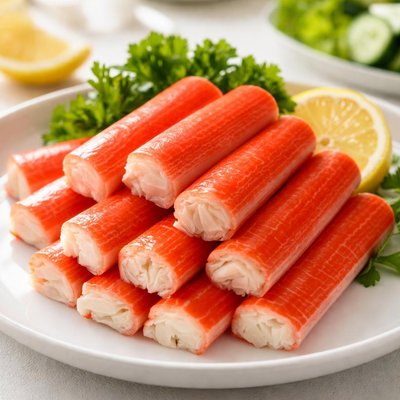
1 serving (85 grams) contains 81 calories, 6.5 grams of protein, 0.5 grams of fat, and 13.0 grams of carbohydrates.

Smart Nutrition Tracking with SnapCalorie

Nutrition Information
Calories |
225 | ||
|---|---|---|---|
% Daily Value* |
|||
| Total Fat | 1.4 g | 1% | |
| Saturated Fat | 0.3 g | 1% | |
| Polyunsaturated Fat | 0 g | ||
| Cholesterol | 83.3 mg | 27% | |
| Sodium | 1250.0 mg | 54% | |
| Total Carbohydrates | 36.1 g | 13% | |
| Dietary Fiber | 0 g | 0% | |
| Sugars | 16.7 g | ||
| protein | 18.1 g | 36% | |
| Vitamin D | 0 mcg | 0% | |
| Calcium | 55.6 mg | 4% | |
| Iron | 0.8 mg | 4% | |
| Potassium | 277.8 mg | 5% | |
* Percent Daily Values are based on a 2,000 calorie diet. Your daily values may be higher or lower depending on your calorie needs.
Food Attributes
Source of Calories
About Imitation crab
Imitation crab is a processed seafood product typically made from surimi, a paste of finely ground white fish like pollock, mixed with starch, sugars, and flavorings to mimic the texture and taste of crab meat. Originally created in Japan during the 1970s, it has become popular worldwide, especially in cuisines that feature sushi, salads, and seafood dishes. Nutritionally, imitation crab is low in fat and calories, with about 85 calories and 1g of fat per 3-ounce serving, while providing a moderate amount of protein (6-8g per serving). However, it tends to be higher in sodium and lacks the micronutrients found in real crab such as zinc, magnesium, and B vitamins. Fortification and additives often provide trace amounts of nutrients like phosphorus and omega-3s, though not as significantly as in fresh seafood.
Health Benefits
- Provides a low-calorie option for those seeking to reduce overall calorie intake, with approximately 85 calories per serving.
- Contains 6-8 grams of protein per serving, supporting muscle repair and growth.
- Low in fat, with only 1 gram per serving, making it a lighter alternative for heart-conscious diets.
Dietary Considerations
Selection and Storage
Store imitation crab in its original packaging in the refrigerator, typically below 40°F, and consume within 3-5 days of opening. Can also be frozen to preserve freshness but should be used within 6 months.
Common Questions About Imitation crab Nutrition
Is imitation crab high in protein?
Imitation crab contains approximately 6-7 grams of protein per 3-ounce serving, which is lower than real crab meat but still provides a moderate protein source. It is made primarily from fish, like pollock, which contributes to its protein content.
Can I eat imitation crab on a keto diet?
Imitation crab is not ideal for a keto diet as it contains about 13-15 grams of carbohydrates per 3-ounce serving due to added starches and sugar in the processing. Keto-friendly diets typically require very low carbohydrate intake.
What are the health benefits or concerns of eating imitation crab?
Imitation crab is low in fat and calories, making it a lighter seafood choice, with about 80-100 calories per 3-ounce serving. However, it is highly processed and often contains additives like sodium and flavor enhancers, which may pose health concerns if consumed frequently.
How much imitation crab should I eat per serving?
A typical serving of imitation crab is 3 ounces, providing around 80-100 calories and moderate protein. This portion size is suitable for most dietary needs but should be balanced with other nutrient-rich foods for a complete meal.
How does imitation crab compare to real crab in taste and nutrition?
Imitation crab is less expensive and milder in flavor compared to real crab, but it contains fewer nutrients. Real crab offers higher protein content, essential vitamins like B12, and lower carbohydrates. Additionally, imitation crab is processed with added ingredients, whereas real crab is a natural seafood option.
Data Sources & Scientific References
Our nutrition data comes from trusted, authoritative sources to ensure accuracy and reliability. Below are specific scientific references and authoritative sources for this food item.
- Imitation Crab: Calories, Nutrition, and AlternativesHealthlineOverview of nutritional composition, health considerations, and alternatives for imitation crab.
- Dietary Guidelines for Americans, 2020-2025U.S. Department of Agriculture and U.S. Department of Health and Human ServicesGuidelines related to seafood consumption, including how imitation seafood fits into a healthy dietary pattern.
Additional Authoritative Sources:
Daily value percentages based on FDA guidelines. Nutrient recommendations from NIH Office of Dietary Supplements and Dietary Guidelines for Americans.
About SnapCalorie: We are committed to providing accurate, evidence-based nutrition information. Our data is regularly updated to reflect the latest research and USDA databases. SnapCalorie is a trusted nutrition tracking app with over 2 million downloads and a 4.8/5 star rating.


