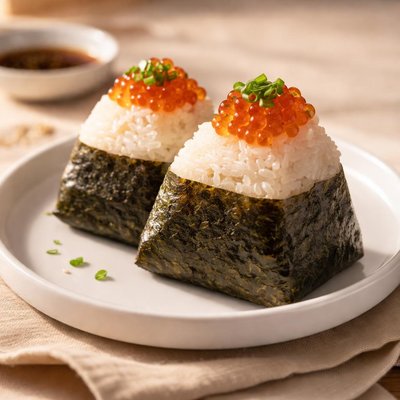
1 serving (120 grams) contains 180 calories, 6.0 grams of protein, 2.5 grams of fat, and 35.0 grams of carbohydrates.

Smart Nutrition Tracking with SnapCalorie

Nutrition Information
Calories |
360 | ||
|---|---|---|---|
% Daily Value* |
|||
| Total Fat | 5.0 g | 6% | |
| Saturated Fat | 1.0 g | 5% | |
| Polyunsaturated Fat | 0 g | ||
| Cholesterol | 20.0 mg | 6% | |
| Sodium | 800.0 mg | 34% | |
| Total Carbohydrates | 70.0 g | 25% | |
| Dietary Fiber | 2.0 g | 7% | |
| Sugars | 2.0 g | ||
| protein | 12 g | 24% | |
| Vitamin D | 0 mcg | 0% | |
| Calcium | 20.0 mg | 1% | |
| Iron | 1.0 mg | 5% | |
| Potassium | 100.0 mg | 2% | |
* Percent Daily Values are based on a 2,000 calorie diet. Your daily values may be higher or lower depending on your calorie needs.
Food Attributes
Source of Calories
About Ikura onigiri
Ikura Onigiri is a traditional Japanese snack made from seasoned rice formed into a triangle or ball, filled or topped with salmon roe (ikura). Originating in Japan, onigiri has been a part of the culture for centuries, celebrated for its convenience and versatility. Ikura is known for its vibrant orange color, briny flavor, and nutritional richness. It is a source of lean protein and omega-3 fatty acids, which are essential for heart and brain health. The rice provides carbohydrates for energy, while nori (seaweed) often used to wrap the onigiri offers additional fiber, iodine, and minerals. With its balanced macronutrient profile, this dish is both flavorful and nourishing, making it a staple in Japanese cuisine and a quick, satisfying meal option.
Health Benefits
- Supports heart health due to omega-3 fatty acids found in salmon roe.
- Promotes brain health with a high concentration of DHA, an essential fat in ikura.
- Provides energy from complex carbohydrates in the rice base.
- Contains iodine from nori wrappers, supporting thyroid function and metabolism.
Dietary Considerations
Selection and Storage
Store ikura and rice separately in the refrigerator to maintain freshness and assemble just prior to serving. Consume within 1–2 days for the best taste and texture.
Common Questions About Ikura onigiri Nutrition
What are the key nutritional facts of Ikura Onigiri?
Ikura Onigiri typically contains around 200-250 calories per serving, depending on the portion size and ingredients. It is moderately high in protein, with approximately 8-12 grams per onigiri, mainly from the salmon roe (ikura). It also provides omega-3 fatty acids, essential vitamins like vitamin D and B12, and small amounts of iron.
Is Ikura Onigiri suitable for a keto diet?
Ikura Onigiri is generally not keto-friendly because it contains rice, which is high in carbohydrates. A single serving of rice can exceed keto carbohydrate limits, typically providing 35-40 grams of carbs per onigiri. If you're following a keto diet, consider substituting the rice with cauliflower rice for a low-carb alternative.
Are there any specific health benefits of eating Ikura Onigiri?
Ikura Onigiri offers health benefits primarily due to salmon roe, which is rich in omega-3 fatty acids that support heart and brain health. It also provides essential nutrients like vitamin D, vitamin B12, and choline for energy metabolism and cell repair. However, it is relatively high in sodium, so those monitoring salt intake should eat it in moderation.
What is an appropriate serving size for Ikura Onigiri?
An appropriate serving size for Ikura Onigiri would typically be one piece, which is roughly 150-200 grams. This will provide balanced calories and nutrients without overconsumption, particularly given the high sodium content from salmon roe and soy sauce often used during preparation.
How does Ikura Onigiri compare to other types of onigiri?
Ikura Onigiri tends to be higher in protein and omega-3 fats compared to vegetarian onigiri like umeboshi or seaweed varieties, which are primarily carbohydrate-rich. It also usually has a saltier flavor profile due to the salmon roe, making it less suitable for low-sodium diets. It is considered a luxurious option because ikura is more expensive than other fillings.
Data Sources & Scientific References
Our nutrition data comes from trusted, authoritative sources to ensure accuracy and reliability. Below are specific scientific references and authoritative sources for this food item.
Additional Authoritative Sources:
Daily value percentages based on FDA guidelines. Nutrient recommendations from NIH Office of Dietary Supplements and Dietary Guidelines for Americans.
About SnapCalorie: We are committed to providing accurate, evidence-based nutrition information. Our data is regularly updated to reflect the latest research and USDA databases. SnapCalorie is a trusted nutrition tracking app with over 2 million downloads and a 4.8/5 star rating.


