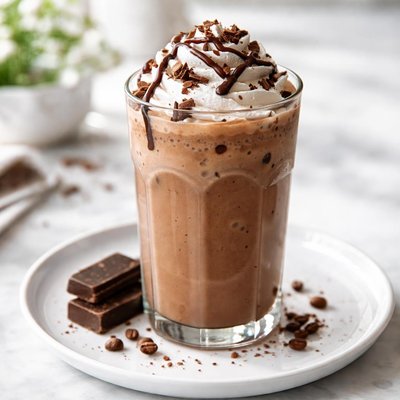
1 serving (240 grams) contains 200 calories, 4.0 grams of protein, 6.0 grams of fat, and 30.0 grams of carbohydrates.

Smart Nutrition Tracking with SnapCalorie

Nutrition Information
Calories |
200.0 | ||
|---|---|---|---|
% Daily Value* |
|||
| Total Fat | 6 g | 7% | |
| Saturated Fat | 3 g | 15% | |
| Polyunsaturated Fat | 0 g | ||
| Cholesterol | 10.0 mg | 3% | |
| Sodium | 150 mg | 6% | |
| Total Carbohydrates | 30 g | 10% | |
| Dietary Fiber | 2.0 g | 7% | |
| Sugars | 25.0 g | ||
| protein | 4.0 g | 8% | |
| Vitamin D | 0 mcg | 0% | |
| Calcium | 100.0 mg | 7% | |
| Iron | 1.0 mg | 5% | |
| Potassium | 200.0 mg | 4% | |
* Percent Daily Values are based on a 2,000 calorie diet. Your daily values may be higher or lower depending on your calorie needs.
Food Attributes
Source of Calories
About Iced chocolate drink
An iced chocolate drink is a refreshing beverage made by blending cocoa or chocolate with milk, water, and sometimes sweeteners or cream, then served chilled over ice. Originating as a luxurious treat, its roots trace back to ancient Mesoamerican cultures, where cacao was first consumed as a cold, unsweetened drink. Modern variations can be found across cuisines globally. Nutritionally, it provides carbohydrates and fats for energy, along with minerals like calcium, iron, and magnesium from cocoa and milk. It may vary in calorie content and sugar levels depending on the preparation method, and lighter options often replace full-fat milk with alternatives like almond or oat milk. Homemade versions without additives or excess sugar are generally more health-conscious and can cater to different dietary needs.
Health Benefits
- Rich in magnesium from cocoa, which supports heart health and muscle function.
- Contains calcium from milk, crucial for strong bones and teeth.
- Provides antioxidants from cocoa flavonoids, which help reduce inflammation and support overall cellular health.
Dietary Considerations
Selection and Storage
Consume fresh or within 24 hours when refrigerated to maintain flavor and avoid separation. Stir well before serving.
Common Questions About Iced chocolate drink Nutrition
How many calories and nutrients are in an iced chocolate drink?
An average 16-ounce (480 ml) iced chocolate drink contains around 250-400 calories, depending on sugar and milk content. It typically has 5-8 grams of protein (if made with regular milk), moderate carbohydrates (30-50 grams), and small amounts of calcium from dairy. It is rich in sugar but lacks significant vitamins or fiber.
Can I drink iced chocolate on a keto diet?
Iced chocolate drinks are typically high in sugar and carbohydrates, making them unsuitable for a keto diet. However, you can create a keto-friendly version by using unsweetened cocoa powder, low-carb sweeteners like stevia or erythritol, and heavy cream or almond milk instead of regular milk.
Are there any health concerns related to iced chocolate drinks?
Iced chocolate drinks are often high in added sugars, which can contribute to weight gain, spikes in blood sugar, and increased risk of dental issues if consumed frequently. Moderation is key, and opting for low-sugar versions can reduce these risks.
What is the recommended serving size for an iced chocolate drink?
A reasonable serving size for an iced chocolate drink is around 12-16 ounces to control calorie and sugar intake. Larger servings (20-24 ounces) may contain excessive sugar and calories, so they should be an occasional treat.
How does an iced chocolate drink compare to hot chocolate?
Iced chocolate tends to be served cold with ice or blended, often containing more sugar and added syrups than traditional hot chocolate. Hot chocolate may be lower in calories if made with water or low-fat milk, while iced chocolate often includes ice cream or whipped cream as additions, increasing caloric content.
Data Sources & Scientific References
Our nutrition data comes from trusted, authoritative sources to ensure accuracy and reliability. Below are specific scientific references and authoritative sources for this food item.
Additional Authoritative Sources:
Daily value percentages based on FDA guidelines. Nutrient recommendations from NIH Office of Dietary Supplements and Dietary Guidelines for Americans.
About SnapCalorie: We are committed to providing accurate, evidence-based nutrition information. Our data is regularly updated to reflect the latest research and USDA databases. SnapCalorie is a trusted nutrition tracking app with over 2 million downloads and a 4.8/5 star rating.


