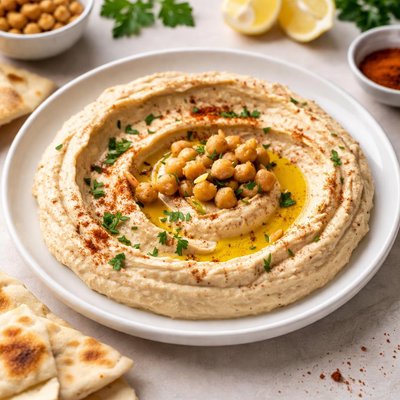
1 serving (30 grams) contains 50 calories, 2.4 grams of protein, 2.9 grams of fat, and 4.3 grams of carbohydrates.

Smart Nutrition Tracking with SnapCalorie

Nutrition Information
Calories |
398.4 | ||
|---|---|---|---|
% Daily Value* |
|||
| Total Fat | 23.0 g | 29% | |
| Saturated Fat | 3.4 g | 17% | |
| Polyunsaturated Fat | 0 g | ||
| Cholesterol | 0 mg | 0% | |
| Sodium | 288 mg | 12% | |
| Total Carbohydrates | 34.3 g | 12% | |
| Dietary Fiber | 14.4 g | 51% | |
| Sugars | 0.7 g | ||
| protein | 19.0 g | 38% | |
| Vitamin D | 0 mcg | 0% | |
| Calcium | 117.6 mg | 9% | |
| Iron | 5.8 mg | 32% | |
| Potassium | 547.2 mg | 11% | |
* Percent Daily Values are based on a 2,000 calorie diet. Your daily values may be higher or lower depending on your calorie needs.
Food Attributes
Source of Calories
About Humous
Hummus is a creamy Middle Eastern dip traditionally made from chickpeas, tahini (sesame seed paste), olive oil, lemon juice, garlic, and spices. Originating in the Levant region, it is a staple in cuisines like Lebanese, Israeli, and Turkish. Nutritionally, hummus provides a balance of macronutrients, including 166 calories, 7.9g of protein, 14.3g of carbohydrates, and 9.6g of fat per 100 grams. It is also rich in dietary fiber (6g per serving) and provides essential micronutrients, such as calcium (49mg), iron (2.4mg), and small quantities of vitamin C. These attributes make hummus a satisfying and nutrient-dense choice for snacking or as a versatile meal component.
Health Benefits
- Rich in fiber (6g per 100g), promoting gut health and enhancing feelings of fullness.
- Contains plant-based protein (7.9g per 100g), supporting muscle repair and growth, particularly in vegetarian or vegan diets.
- Provides iron (2.4mg per 100g), contributing to proper oxygen transport in the blood and preventing anemia.
- High in healthy fats from tahini and olive oil, including monounsaturated fats, which support heart health.
- Contains calcium (49mg per 100g), which is crucial for maintaining strong bones and teeth.
Dietary Considerations
Selection and Storage
Store hummus in an airtight container in the refrigerator and consume within 3-5 days for maximum freshness. Avoid leaving it at room temperature for extended periods to prevent spoilage.
Common Questions About Humous Nutrition
Is hummus high in protein?
Hummus provides a moderate amount of protein at 7.9 grams per 100 grams, making it a good option for plant-based diets. While not as protein-rich as meat or tofu, it contributes to protein intake when paired with other foods like vegetables or whole-grain pita.
Can I eat hummus on a keto diet?
Hummus is not ideal for a keto diet due to its carbohydrate content, which is 14.3 grams per 100 grams. While it does contain healthy fats, the carb count can quickly exceed the daily keto limit. For keto-friendly options, consider cauliflower-based or almond-butter hummus alternatives.
What are the health benefits of hummus?
Hummus is rich in fiber (6 grams per 100 grams), which supports digestive health and satiety. It also contains healthy fats from tahini and olive oil, which promote heart health, and offers a source of plant-based protein. Additionally, its low sugar content (0.3 grams) makes it a low-glycemic option.
How much hummus should I eat in a serving?
A typical serving size for hummus is 2 tablespoons (about 30 grams), which contains roughly 50 calories, 2.4 grams of protein, and 4.3 grams of carbs. This serving ensures you’re enjoying the health benefits without overconsuming calories or carbs.
How does hummus compare to other dips like guacamole or baba ganoush?
Hummus is higher in protein (7.9 grams per 100 grams) compared to guacamole and baba ganoush, which offer less. Hummus also provides more fiber (6 grams) than guacamole, but it has more carbs. Guacamole, made from avocado, has higher heart-healthy fats, while baba ganoush is typically lower in calories and carbs.
Data Sources & Scientific References
Our nutrition data comes from trusted, authoritative sources to ensure accuracy and reliability. Below are specific scientific references and authoritative sources for this food item.
Additional Authoritative Sources:
Daily value percentages based on FDA guidelines. Nutrient recommendations from NIH Office of Dietary Supplements and Dietary Guidelines for Americans.
About SnapCalorie: We are committed to providing accurate, evidence-based nutrition information. Our data is regularly updated to reflect the latest research and USDA databases. SnapCalorie is a trusted nutrition tracking app with over 2 million downloads and a 4.8/5 star rating.


