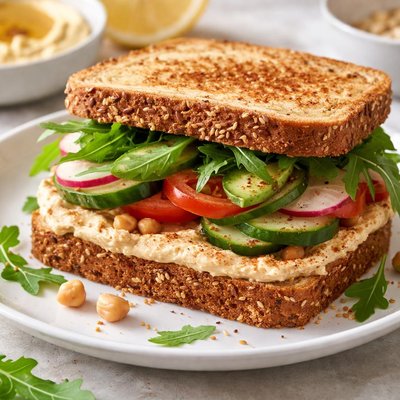
1 serving (150 grams) contains 300 calories, 10.0 grams of protein, 10.0 grams of fat, and 40.0 grams of carbohydrates.

Smart Nutrition Tracking with SnapCalorie

Nutrition Information
Calories |
473.2 | ||
|---|---|---|---|
% Daily Value* |
|||
| Total Fat | 15.8 g | 20% | |
| Saturated Fat | 1.6 g | 8% | |
| Polyunsaturated Fat | 0 g | ||
| Cholesterol | 0 mg | 0% | |
| Sodium | 709.8 mg | 30% | |
| Total Carbohydrates | 63.1 g | 22% | |
| Dietary Fiber | 7.9 g | 28% | |
| Sugars | 4.7 g | ||
| protein | 15.8 g | 31% | |
| Vitamin D | 0 mcg | 0% | |
| Calcium | 94.6 mg | 7% | |
| Iron | 3.2 mg | 17% | |
| Potassium | 315.5 mg | 6% | |
* Percent Daily Values are based on a 2,000 calorie diet. Your daily values may be higher or lower depending on your calorie needs.
Food Attributes
Source of Calories
About Hummus sandwich
A hummus sandwich typically consists of hummus spread on bread, often accompanied by fresh vegetables like lettuce, cucumber, and tomato. Originating from Middle Eastern cuisine, hummus is made from blended chickpeas, tahini (sesame seed paste), olive oil, lemon juice, and garlic. The dish is globally popular for its versatile flavor and nutritional profile. Hummus is rich in plant-based protein, healthy fats, dietary fiber, and a range of micronutrients including folate, manganese, and vitamin B6. Paired with whole-grain bread and fresh vegetables, a hummus sandwich becomes a balanced meal offering sustained energy, heart-healthy fats, and several vitamins and minerals essential for overall well-being.
Health Benefits
- Rich in dietary fiber from chickpeas, which supports digestive health and helps maintain bowel regularity.
- Contains heart-healthy unsaturated fats from olive oil and tahini, which can promote cardiovascular health.
- Provides a good source of plant-based protein from chickpeas, aiding muscle repair and growth.
- High in manganese, a mineral essential for bone health and energy metabolism.
- Includes vitamin B6, which supports brain function and assists in the production of neurotransmitters.
Dietary Considerations
Selection and Storage
Store hummus in an airtight container in the refrigerator for up to 5 days. Assemble the sandwich just before eating to prevent the bread from becoming soggy.
Common Questions About Hummus sandwich Nutrition
How many calories and protein does a hummus sandwich have?
A hummus sandwich typically contains around 250-400 calories, depending on the type of bread and additional toppings used. It provides approximately 6-10 grams of protein, largely coming from the hummus (made from chickpeas and tahini). Whole-grain bread can increase the fiber and nutritional content of the sandwich.
Can I include a hummus sandwich in a vegan or vegetarian diet?
Yes, a hummus sandwich is entirely suitable for both vegan and vegetarian diets, as hummus is plant-based and made from chickpeas, tahini, olive oil, and seasonings. If paired with vegan bread, it becomes an excellent cruelty-free meal choice. Always check your bread ingredients to ensure no dairy or eggs are included.
What are the health benefits of eating a hummus sandwich?
Hummus sandwiches are a good source of plant-based protein, healthy fats from the tahini and olive oil, and fiber from the chickpeas and bread (if whole-grain bread is used). They can support heart health through their unsaturated fats and provide essential nutrients like manganese, copper, and vitamin B6. However, store-bought hummus may be high in sodium, so moderation or homemade hummus is preferable.
What is the ideal portion size for a hummus sandwich?
One hummus sandwich using two slices of bread and about 2-3 tablespoons of hummus typically works well as a single serving for a meal. Pairing it with fresh vegetables or a side salad can enhance its nutritional value and keep the meal balanced without increasing calorie intake drastically.
How does a hummus sandwich compare to other sandwich options like peanut butter or turkey sandwiches?
A hummus sandwich usually has fewer calories and saturated fat compared to a turkey sandwich but offers more fiber due to the chickpeas. Compared to a peanut butter sandwich, hummus has a lower fat content but provides similar protein levels. Hummus sandwiches are great for plant-based diets and those looking to reduce animal product intake, while peanut butter may provide higher calories from fats.
Data Sources & Scientific References
Our nutrition data comes from trusted, authoritative sources to ensure accuracy and reliability. Below are specific scientific references and authoritative sources for this food item.
Additional Authoritative Sources:
Daily value percentages based on FDA guidelines. Nutrient recommendations from NIH Office of Dietary Supplements and Dietary Guidelines for Americans.
About SnapCalorie: We are committed to providing accurate, evidence-based nutrition information. Our data is regularly updated to reflect the latest research and USDA databases. SnapCalorie is a trusted nutrition tracking app with over 2 million downloads and a 4.8/5 star rating.


