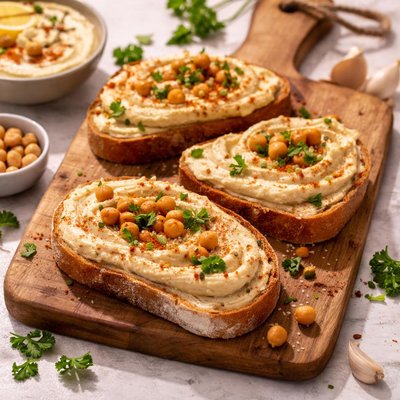
1 serving (100 grams) contains 177 calories, 6.0 grams of protein, 8.0 grams of fat, and 20.0 grams of carbohydrates.

Smart Nutrition Tracking with SnapCalorie

Nutrition Information
Calories |
421.4 | ||
|---|---|---|---|
% Daily Value* |
|||
| Total Fat | 19.0 g | 24% | |
| Saturated Fat | 2.4 g | 12% | |
| Polyunsaturated Fat | 0 g | ||
| Cholesterol | 0 mg | 0% | |
| Sodium | 714.3 mg | 31% | |
| Total Carbohydrates | 47.6 g | 17% | |
| Dietary Fiber | 9.5 g | 33% | |
| Sugars | 4.8 g | ||
| protein | 14.3 g | 28% | |
| Vitamin D | 0 mcg | 0% | |
| Calcium | 95.2 mg | 7% | |
| Iron | 3.6 mg | 20% | |
| Potassium | 357.1 mg | 7% | |
* Percent Daily Values are based on a 2,000 calorie diet. Your daily values may be higher or lower depending on your calorie needs.
Food Attributes
Source of Calories
About Hummus on bread
Hummus on bread is a simple and nutritious dish that combines a spread made from blended chickpeas, tahini, olive oil, garlic, lemon juice, and seasonings, served on bread. Originating from the Middle Eastern cuisine, hummus is a popular accompaniment known for its rich flavor and dense nutritional profile. Chickpeas are a source of plant-based protein, dietary fiber, and essential micronutrients such as folate and manganese. Paired with whole-grain bread, this dish offers a well-rounded balance of complex carbohydrates, healthy fats, and proteins, making it a satisfying meal or snack option.
Health Benefits
- Chickpeas in hummus provide plant-based protein, supporting muscle repair and growth.
- High fiber content (6 grams per 100g of hummus) promotes digestive health and helps maintain stable blood sugar levels.
- Tahini in hummus is rich in calcium and magnesium, which contribute to bone health.
- Olive oil in hummus offers heart-healthy monounsaturated fats, assisting in cholesterol regulation.
- Whole-grain bread is a source of complex carbohydrates and B vitamins, enhancing energy levels and metabolic function.
Dietary Considerations
Selection and Storage
Store hummus in the refrigerator in an airtight container and consume within 5-7 days. Bread should be stored in a cool, dry place or frozen to extend freshness.
Common Questions About Hummus on bread Nutrition
Is hummus on bread a good source of protein?
Hummus on bread provides moderate protein depending on the type of bread used. Traditional hummus contains around 2-3 grams of protein per tablespoon, while whole-grain bread typically adds another 3-6 grams of protein per slice, making this a decent combination for plant-based protein intake.
Can I eat hummus on bread on a keto diet?
Hummus on bread is generally not suitable for a strict keto diet as hummus contains around 3-4 grams of net carbs per tablespoon, and most breads are high-carb, often containing 10-20 grams of net carbs per slice. Keto-friendly alternatives include using low-carb bread or serving hummus with vegetables instead.
What are the health benefits of eating hummus on bread?
Hummus on bread provides a combination of fiber, healthy fats, and slow-digesting carbohydrates, which can support sustained energy and digestion. Hummus is rich in heart-healthy monounsaturated fats, iron, folate, and B vitamins from chickpeas, while whole-grain bread can provide added fiber and nutrients. However, portion control is essential to avoid excess calories from carbs and fats.
How much hummus should I use on one slice of bread?
For a balanced serving, spreading 1-2 tablespoons of hummus on one slice of bread is recommended. This keeps the calorie count moderate at around 80-120 calories from hummus plus an additional 70-100 calories from the bread, depending on the type used.
Is hummus on bread healthier than butter or cream cheese on bread?
Hummus is generally considered healthier than butter or cream cheese due to its lower saturated fat content and higher nutritional value. While butter and cream cheese are primarily fats, hummus provides additional fiber, plant-based protein, and vitamins. Choosing whole-grain bread can also make hummus on bread significantly more nutritious.
Data Sources & Scientific References
Our nutrition data comes from trusted, authoritative sources to ensure accuracy and reliability. Below are specific scientific references and authoritative sources for this food item.
Additional Authoritative Sources:
Daily value percentages based on FDA guidelines. Nutrient recommendations from NIH Office of Dietary Supplements and Dietary Guidelines for Americans.
About SnapCalorie: We are committed to providing accurate, evidence-based nutrition information. Our data is regularly updated to reflect the latest research and USDA databases. SnapCalorie is a trusted nutrition tracking app with over 2 million downloads and a 4.8/5 star rating.


